Broadcast Networks Outdraw Cable for First Time in Six Election Cycles During Midterms

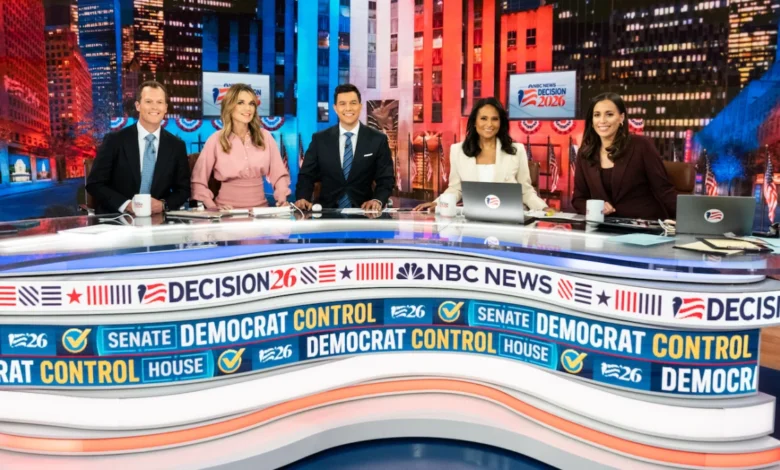
The landscape of American political media experienced a profound realignment during the recent midterm elections, marking a dramatic shift in how citizens consume democracy in action. For the first time in six election cycles, traditional broadcast networks outdrew cable news channels during primetime election coverage, upending a multi-year trend that had long favored cable’s 24-hour news ecosystem.
According to official Nielsen ratings, a combined total of 31.21 million viewers tuned into primetime election coverage across 13 major broadcast and cable outlets on Tuesday. This figure represents a substantial increase compared to the 25.43 million viewers who tuned in for the 2002 midterms. More significantly, the distribution of that audience flipped entirely from previous years: 57 percent of viewers—totaling 17.79 million people—watched via broadcast networks, including NBC, ABC, CBS, Univision, Telemundo, and PBS. Meanwhile, cable channels captured just 43 percent of the audience, accounting for 13.42 million viewers.
This stark division represents the exact inverse of the viewership patterns recorded four years prior, when cable channels dominated 57 percent of the midterm coverage audience. Industry analysts note that it has been 14 years since broadcast networks commanded a clear majority of election night viewers, with the last notable exception being a roughly 50-50 split during the 2016 presidential election. Furthermore, this year marks the first time since 2012 that a traditional broadcast network led all comers in total viewers, with NBC securing the top position nationwide.
A Changing Media Ecosystem and Cord-Cutting Realities
The erosion of cable’s dominance on election night is not an isolated phenomenon, but rather the continuation of a broader, secular decline in traditional multichannel television subscriptions. Over the past four years, the American television landscape has contracted significantly as consumers continue to "cut the cord" in favor of streaming alternatives.
Data indicates that households utilizing multi-channel providers—which encompass traditional cable, satellite, and digital virtual MVPD services such as YouTube TV or Hulu + Live TV—now represent only 42.5 percent of all television-equipped homes in the United States. This is a sharp drop from 52.3 percent just four years ago, reflecting a net loss of more than 10 million subscribing households. As fewer Americans maintain traditional cable packages, the baseline audience available to 24-hour cable news networks naturally shrinks, creating a structural headwind that even major political events struggle to overcome.
Beyond pure subscription metrics, ideological factors may have also played a role in the divergent fortunes of individual networks. Fox News, which traditionally leans to the right politically, experienced a steep decline, shedding nearly 3.5 million viewers compared to the previous midterm cycle. Media analysts suggest that a difficult night for Republican candidates at the ballot box may have depressed enthusiasm among Fox News’ core conservative viewership. Conversely, left-leaning networks saw notable growth, aligning with broader democratic gains in several key legislative races.
Network Performance Breakdown: NBC and ABC Lead the Charge
NBC News emerged as the undisputed titan of the evening, drawing 6.74 million viewers in primetime and more than doubling its average audience from the 2002 midterms. ABC News also enjoyed a massive surge, expanding its audience by 57 percent to reach 5.19 million viewers. CBS News held its ground with 2.76 million viewers, representing an 8 percent improvement over its performance four years prior. Spanish-language broadcasters Univision (1.54 million) and Telemundo (1.06 million), alongside public broadcaster PBS (approximately 500,000), rounded out the robust broadcast totals.
The massive gains registered by the top three broadcast networks collectively eclipsed the losses sustained by Fox News, demonstrating that the shift toward broadcast was driven by positive audience acquisition rather than merely a migration of disaffected cable viewers.
Executives at the leading networks attribute this success to deliberate strategic pivots aimed at broadening their appeal. Marc Greenstein, executive vice president of creative production and field operations for NBC News, emphasized the network’s conscious editorial effort to step away from partisan vitriol. According to Greenstein, initiatives featured on programs like the NBC Nightly News and Meet the Press were specifically designed to bypass what he termed the "left-right food fight," focusing instead on substantive policy issues and areas of common civic ground.
Technological Innovation and Multi-Platform Dominance
NBC’s triumph on election night was not limited to traditional linear television; the network also secured a historic multi-platform victory through its digital and streaming initiatives. Central to this digital dominance was the dedicated "Kornacki Cam"—a continuous live stream tracking data analyst Steve Kornacki as he broke down precinct returns throughout the night.
According to analytics firm Streams Charts, the Kornacki Cam became the most-watched live stream of election coverage, propelling NBC News to the top of streaming metrics with an astounding 4.39 million hours of viewing time across its YouTube channels. For context, independent streaming personality Hasan Piker finished a distant second, accumulating 1.75 million hours of watch time.
Behind this digital triumph lay a significant engineering breakthrough. Kornacki was stationed a mere 15 feet away from the network’s primary anchor desk in the studio, a proximity that typically creates severe audio interference issues during simultaneous broadcasts. To overcome this, NBC engineers utilized advanced audio-filtering software developed by a technology company called Waves.
Greenstein revealed that the engineering team tested the software mere weeks after it had been adopted by NBC’s Saturday Night Live. Despite the inherent risks of deploying new technology during a live, high-stakes broadcast, the network opted to integrate the system into rehearsals. The gamble paid off, allowing both the linear television broadcast and the dedicated digital live stream to operate simultaneously and cleanly from the same studio floor without audio bleed.
Greenstein noted that the digital stream and the on-air telecast ended up mutually reinforcing one another, creating an interconnected viewing experience that drew audiences across multiple screens. Furthermore, NBC’s decision desk earned high marks for speed and accuracy, being among the first to project key race outcomes and the first to forecast Democratic control of the U.S. Senate.
Broad Implications for the Future of Political Broadcasting
While the staggering ratings success caught some network insiders by surprise, leadership at NBC News views the outcome as validation of long-term investments in production quality and event television.
"We like to think we put in really good groundwork and incredible preparation going into the night, so we always hope that the audience will pay us back for that work," Greenstein remarked in an interview with The Hollywood Reporter. "One thing I will say is that I think NBC, maybe more than others, we just do big events well as a network. You look at the Super Bowl, the Olympics, election night—we just have a bigness and a gravitas. I think that matters on these type of nights, and I think that is an advantage we have."
The resurgence of broadcast television during a major political milestone signals a potential inflection point for the media industry. As cable subscriptions continue to decline and audiences increasingly demand accessible, cross-platform integration, traditional broadcast networks have demonstrated a unique capacity to capture the national attention during moments of profound civic importance. Whether this trend will permanently alter the dominance of cable news or prove to be a unique product of this specific election cycle remains to be seen, but the events of Tuesday night have undeniably rewritten the playbook for political broadcasting in the digital age.