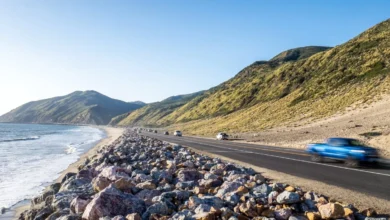
World’s Largest Wildlife Crossing Over California’s 101 Freeway Nears Completion to Protect Local Ecosystems

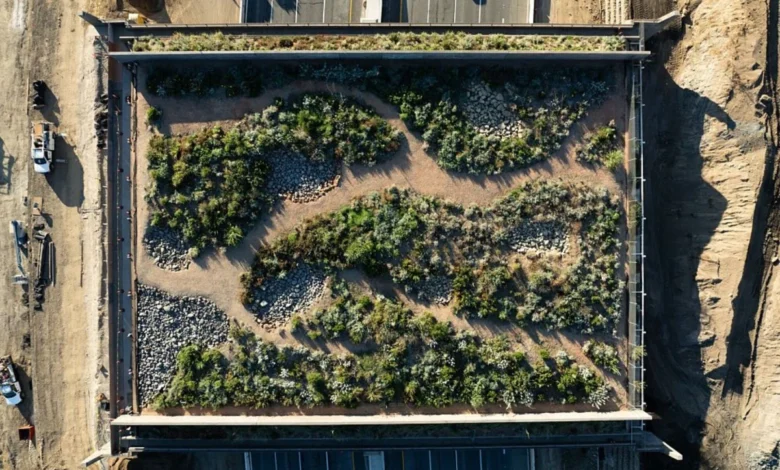
The completion of the Wallis Annenberg Wildlife Crossing marks a monumental milestone in modern conservation architecture, offering a vital lifeline to the fragmented ecosystems of Los Angeles County. Spanning ten lanes of the bustling 101 freeway alongside an access road, this sprawling, heavily vegetated overpass bridges the critical gap between the Santa Monica Mountains and the Simi Hills. As the largest structure of its kind in the world, the crossing is engineered to heal a landscape fractured by decades of rapid urban expansion, vehicular traffic, and concrete infrastructure.
For years, the multi-lane highway has served as an insurmountable barrier for the region’s native fauna. While Southern California commuters speed through the corridor in climate-controlled comfort, the local wildlife population has faced a starkly different reality. Animals attempting to traverse their historic migratory pathways have frequently met deadly fates under the wheels of speeding vehicles. Beyond direct mortality, the freeway has imposed severe geographic and genetic isolation on local species. Trapped within shrinking patches of natural habitat, iconic predators like mountain lions, alongside coyotes, bobcats, deer, and countless species of birds, reptiles, and amphibians, have faced the looming threat of inbreeding and long-term population decline. The Wallis Annenberg Wildlife Crossing arrives as a meticulously planned countermeasure to these compounding ecological crises, designed to restore landscape connectivity and secure the genetic diversity of Southern California’s wildlife for generations to come.
A Decade in the Making: The Chronology of a Conservation Triumph
The realization of the world’s largest wildlife crossing is the culmination of a decade of intensive planning, advocacy, and inter-agency collaboration. The project has been spearheaded by a coalition of prominent conservation organizations, including the National Wildlife Federation, the Mountains Recreation and Conservation Authority, and the National Park Service, operating as part of a nationwide scientific monitoring initiative.
The timeline of the project reflects the immense complexity of building a fully functioning, natural habitat directly over one of the busiest highway systems in the United States.
- 2014–2016 (The Planning Phase): Conservationists and government agencies identified the Agoura Hills section of the 101 freeway as the absolute highest-priority bottleneck for local wildlife movement, particularly for the endangered mountain lion population trapped in the Santa Monica Mountains.
- 2017–2020 (Design and Fundraising): Project leads unveiled preliminary architectural renderings of the vegetated overpass. To finance the multi-million-dollar endeavor, organizers established a robust public-private partnership, combining state transportation funds with an unprecedented wave of philanthropic donations driven by private citizens, corporations, and non-profit foundations.
- 2021–2024 (Groundbreaking and Construction): Heavy construction officially commenced, requiring intricate engineering feats to place massive girders and construct a continuous land bridge capable of supporting deep layers of native soil, mature trees, and dense shrubbery.
- Late 2025–December 2026 (Finalization and Monitoring): As structural work concluded, biologists deployed advanced scientific monitoring equipment, culminating in the official opening scheduled for December 2.
Financing the Future of Conservation
The funding model behind the Wallis Annenberg Wildlife Crossing serves as a pioneering blueprint for future infrastructure projects aimed at human-wildlife coexistence. Rather than relying solely on traditional municipal or federal budgets, the initiative was propelled by a blended financial strategy. Government allocations from state transportation departments ensured structural integration with the existing highway framework, while substantial contributions from private philanthropy—anchored by major foundational gifts, including those from the Annenberg Foundation—closed the financial gap.
This hybrid funding approach highlights a growing recognition among private donors and public officials alike that standard infrastructure must evolve to accommodate the natural world. Environmental economists note that projects of this scale, while requiring significant upfront capital, yield long-term economic and ecological dividends by reducing vehicular accidents caused by wildlife collisions, which routinely result in costly property damage, injuries, and fatalities.
Cutting-Edge Scientific Monitoring and Early Successes

To measure the efficacy of the overpass, the National Park Service and partner organizations have established a comprehensive scientific monitoring program. In the weeks leading up to the public ribbon-cutting ceremony, wildlife biologists began installing an extensive array of recording devices across the structure and its immediate approaches within the Santa Monica Mountains National Recreation Area.
By the official opening date, the crossing will be monitored by a network of 50 high-definition wildlife cameras and four specialized thermal video cameras. While live video feeds will remain restricted to authorized researchers for security and operational reasons, project coordinators have announced that curated photo streams will be made accessible to the public, allowing nature enthusiasts and students to observe the ecosystem’s adaptation in real-time.
Even before the official opening, the crossing has begun yielding remarkable results. Motion-activated cameras recently captured the overpass’s very first documented visitor: a solitary coyote trotting up the earthen incline under the cover of night, unhindered by daytime traffic noise or blinding headlights.
The sighting has electrified the scientific community. Project leaders had initially hypothesized that smaller, highly agile creatures or birds would be the first to test the synthetic landscape. The early arrival of a medium-sized carnivore has shattered previous expectations regarding how quickly animals might adopt the corridor. Beth Pratt of the Wildlife Crossing Fund expressed astonishment at the rapid uptake, noting to regional media that word travels fast through the animal kingdom and raising the exciting prospect that a mountain lion might utilize the span even before the official inauguration ceremony.
Broader Impacts and Implications for Urban Ecology
The completion of the Wallis Annenberg Wildlife Crossing carries profound implications for the field of urban ecology and transportation planning worldwide. As metropolitan areas continue to expand, the fragmentation of natural habitats remains one of the leading drivers of biodiversity loss. Traditional conservation strategies focused exclusively on setting aside protected land often fail when those reserves become isolated biological islands surrounded by asphalt and suburban sprawl.
By retrofitting a major interstate highway with a continuous, native-plant-covered land bridge, Los Angeles County is demonstrating that urban development and ecological preservation do not have to be mutually exclusive. Wildlife corridors of this magnitude facilitate gene flow between isolated animal populations, reducing the risks associated with inbreeding depression and allowing species to adapt more resiliently to environmental stressors such as climate change, drought, and wildfire.
Furthermore, the project serves as a powerful empirical testing ground. Data gathered from the 50 cameras and thermal sensors over the coming years will provide urban planners, civil engineers, and wildlife biologists with invaluable metrics regarding animal behavior, crossing preferences, and the optimal botanical composition required to entice wary species onto human-made structures.
As the December 2 opening date approaches, the Wallis Annenberg Wildlife Crossing stands not merely as a bridge of dirt and flora, but as a testament to what cooperative conservation can achieve. It bridges a deep physical divide on the 101 freeway while offering a hopeful vision for how modern cities can mend the natural world they once bisected.