The conventional narrative in international finance often posits that China is engaged in a long-term, systematic campaign to replace the United States dollar with the renminbi (RMB) as the primary global reserve currency. However, this perspective overlooks the immense structural, political, and economic burdens inherent in managing the world’s leading currency. According to Zongyuan Zoe Liu, a senior fellow for China studies at the Council on Foreign Relations, Beijing’s strategic calculus is far more nuanced: China is not seeking the crown of global hegemony, but rather the creation of a reliable, alternative financial architecture that protects it from the reach of U.S. sanctions.
The Strategic Calculus of Currency Internationalization
For China, the internationalization of the yuan is a defensive maneuver, not an offensive one. The primary driver behind Beijing’s push is the fear of financial weaponization. The 2022 decision by the United States and its allies to exclude Russia from the SWIFT global payment system and freeze its central bank assets served as a sobering wake-up call for Chinese policymakers. If the U.S. could effectively isolate a major nuclear power from the global financial system, Beijing reasoned that it must inoculate itself against similar vulnerability.
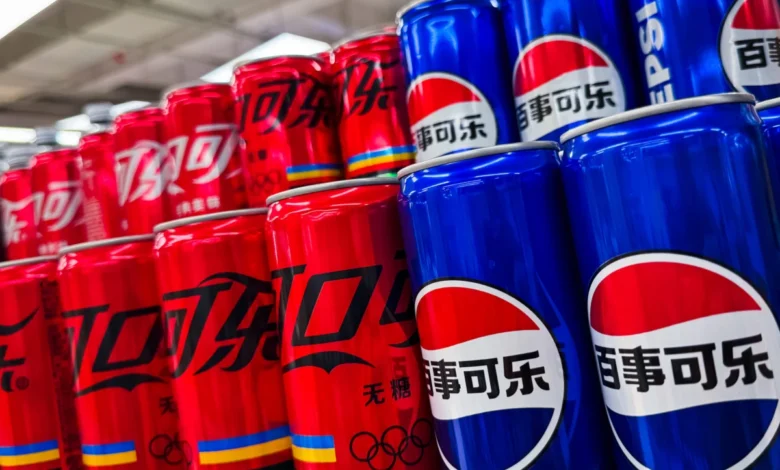
By building a parallel network for cross-border payments—specifically the Cross-Border Interbank Payment System (CIPS)—China aims to ensure that its trade flows can continue even if it faces future geopolitical friction with the West. Liu argues that Beijing aspires to position the renminbi as the "Pepsi to the dollar’s Coca-Cola." This analogy suggests a desire for a viable second-tier status: a currency that is "serviceable in a pinch" and capable of providing an alternative, but not one that requires the massive, transparent, and open capital markets that the U.S. dollar demands.
Maintaining a global reserve currency requires a nation to run persistent current account deficits to supply the world with liquidity, a position that is antithetical to China’s export-oriented economic model. Furthermore, opening capital markets would strip the Communist Party of its ability to exercise granular control over capital allocation—a power that is fundamental to its domestic political stability. Many Chinese elites, who rely on offshore dollar assets as a hedge against internal political volatility, would find a fully internationalized, transparent, and liquid yuan system detrimental to their own personal financial security.
A Chronology of the Renminbi’s Global Evolution
The trajectory of the yuan’s internationalization has been deliberate, marked by several distinct phases over the past two decades:
- 2009: The People’s Bank of China (PBOC) launches pilot programs for cross-border trade settlement in yuan, signaling the first concrete step toward internationalization.
- 2015: The International Monetary Fund (IMF) decides to include the renminbi in its Special Drawing Rights (SDR) basket, providing the currency with a stamp of global legitimacy.
- 2015–2016: A period of significant volatility in Chinese markets leads to tighter capital controls, temporarily stalling the momentum of internationalization as Beijing prioritizes domestic stability over openness.
- 2022: Following the outbreak of the war in Ukraine and subsequent Western sanctions on Russia, China accelerates the expansion of CIPS, prioritizing the integration of "Belt and Road" initiative nations into a yuan-denominated payment ecosystem.
- 2023–2026: A period of aggressive expansion in yuan-denominated lending by Chinese banks to overseas borrowers, alongside the signing of numerous bilateral currency swap agreements with foreign central banks.
Supporting Data and Market Realities
As of June 2026, the reach of CIPS is significant but remains dwarfed by the dollar-based infrastructure. CIPS currently counts 1,829 participants with the ability to facilitate transactions with over 5,200 banks across 191 countries. While these figures represent a formidable network, the volume of transactions remains a small fraction of the global total processed through the U.S.-led system.
The "reinvestment" component of a global reserve currency remains the most significant hurdle for China. For a currency to be a true store of value, international recipients must be willing to hold and reinvest their balances in the issuing country’s assets. Currently, foreign investors hold a mere 1.6% of the Chinese bond market, compared to approximately 27% of the U.S. bond market. This disparity is largely driven by investor concerns regarding Beijing’s unpredictable capital controls and the lack of transparency in the Chinese financial system. Without a massive, freely accessible, and liquid pool of renminbi-denominated assets, the yuan cannot realistically challenge the dollar’s supremacy.
The Rise of the Green Yuan
While the yuan struggles to achieve the status of a global reserve currency, it is finding a niche through the "green yuan" concept. China has effectively secured dominance over the supply chains for critical minerals, clean energy equipment, and electrical infrastructure. By leveraging its scale and cost advantages in these sectors, Beijing is setting industrial standards that favor Chinese technology.
Liu posits that as these green technologies become essential to the global economy, China may possess the leverage to price these goods in renminbi. If countries are forced to purchase Chinese-made solar panels, lithium batteries, and wind infrastructure using yuan, this would create a natural, demand-driven ecosystem for the currency, effectively creating a "green" version of the historical "petrodollar" arrangement.
The Petrodollar and the Middle East Catalyst
The security architecture of the Middle East, which has underpinned the petrodollar since the 1974 agreement between the U.S. and Saudi Arabia, is showing signs of fraying. For decades, the U.S. provided security guarantees—including troop deployments and advanced weaponry—in exchange for Saudi Arabia pricing its oil exclusively in dollars and recycling those proceeds into U.S. Treasury assets.
However, recent geopolitical shifts and the ongoing conflict involving Iran have altered this dynamic. The inability of U.S. air-defense systems to fully protect Gulf energy infrastructure from drone and missile strikes has led to increased skepticism among regional powers regarding the efficacy of the American security shield. Deutsche Bank noted in a March 2026 report that the potential for Gulf nations to accept yuan for oil shipments through the Strait of Hormuz is a development that warrants close monitoring. Should such a shift occur, it would represent a fundamental erosion of the petrodollar system and mark a tangible step toward the emergence of a "petroyuan."
Implications for the Global Financial Order
The implications of this shift are profound. We are likely moving toward a "multipolar" monetary system where the U.S. dollar remains the primary global currency, but is increasingly challenged in specific regional corridors and commodity sectors.
From a policy perspective, the U.S. must recognize that the weaponization of the dollar carries long-term consequences. While sanctions are a potent tool of statecraft, their frequent use creates a powerful incentive for other nations to diversify away from the dollar. Beijing’s strategy is not to win the "cola wars" of global finance, but to ensure that the U.S. cannot unilaterally dictate the terms of global commerce.
For the international community, the emergence of a dual-track system—one dominated by the dollar and another by a China-led network—will complicate trade finance, increase the complexity of cross-border settlements, and potentially bifurcate global financial standards. As China continues to consolidate its hold over the green energy supply chain, the world will likely see an increase in yuan-denominated trade, not because the renminbi is a superior store of value, but because it will become an unavoidable feature of the infrastructure of the future. The dollar remains the incumbent, but its effective monopoly is facing its most significant structural test in the post-Bretton Woods era.