How Norway Turned a Presidential Insult Into a Masterclass in Destination Marketing Through Public Restrooms

The intersection of international diplomacy, political rhetoric, and destination marketing rarely manifests in ways as unorthodox as the recent digital campaign launched by Visit Norway. Following a public rebuke by former United States President Donald Trump—prompted by the Oslo-based Norwegian Nobel Committee’s decision to pass over his candidacy for the Nobel Peace Prize—the Nordic nation’s official tourism board executed a rapid and highly effective pivot. By leaning directly into the derogatory language used during a political rally in Michigan, Visit Norway transformed a diplomatic slight into a viral tourism campaign that generated staggering web traffic within a matter of days.
The episode highlights an increasingly common phenomenon in modern public relations: destination marketing organizations (DMOs) weaponizing humor, self-awareness, and internet culture to capture global attention. Rather than issuing a formal diplomatic rebuttal or ignoring the rhetoric entirely, Norwegian tourism officials chose to reclaim the insult, utilizing pre-existing digital assets to highlight the country’s celebrated architectural infrastructure—specifically, its world-renowned public restrooms.
The Chronology of the Dispute
The sequence of events began over the weekend during a campaign-style rally in the state of Michigan. Addressing a crowd of supporters, Donald Trump expressed deep frustration regarding the Oslo-based Nobel Committee, which is responsible for awarding the prestigious Nobel Peace Prize. Having frequently voiced his belief that his diplomatic achievements in the Middle East and elsewhere warranted the international honor, Trump reacted sharply to being overlooked.
During his speech, the former president leveled harsh criticism against the Scandinavian nation. Using colloquial and inflammatory language, Trump bashed Norway, referring to it as a “shit house country” and declaring bluntly, “Frankly, Norway sucks.” The remarks immediately drew international media attention, creating a brief public relations dilemma for official bodies representing the Norwegian government and its associated agencies.
While diplomatic channels typically avoid responding directly to off-the-cuff political attacks from foreign figures, tourism marketing agencies operate under a different set of rules. Recognizing an unexpected opportunity for cultural engagement, Visit Norway’s digital marketing team convened late Monday night to formulate a response. Instead of drafting a defensive press release, the organization decided to embrace the literal interpretation of the former president’s phrasing.
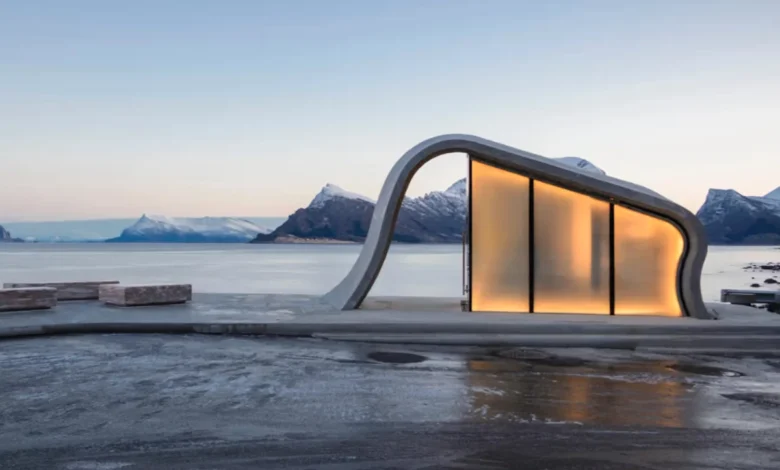
By modifying an existing web page dedicated to Norway’s national scenic routes—which feature striking, architecturally avant-garde public restrooms built in remote landscapes—the marketing team inserted tongue-in-cheek references. Most notably, the updated copy proclaimed that the nation’s infrastructure efforts were focused on making restrooms “great again!”
Viral Metrics and the Power of Organic Reach
The gamble taken by Visit Norway’s marketing team yielded immediate and measurable results. By Friday of that same week, analytics data released by the organization revealed a monumental surge in digital engagement. Page views for the previously niche section of the website skyrocketed, recording figures more than 540 times higher than the traffic observed during the corresponding week of the previous year.
The sudden influx of international web traffic caught even seasoned tourism analysts by surprise. Social media users across platforms such as X (formerly Twitter), Reddit, and TikTok began sharing screenshots of the modified web page, transforming a political insult into a viral meme. Visitors from the United States, Europe, and Asia flooded the site to view the architectural marvels featured along the Norwegian fjords and mountain passes.
“What can we say, we do have some of the world’s most beautiful and spectacular toilets,” representatives for Visit Norway noted in follow-up communications as the web traffic continued to climb. The agency managed to maintain a lighthearted, non-confrontational tone that disarmed critics and amused global observers, effectively neutralizing any negative sentiment generated by the original political remark.
The Architecture Behind the Joke: Norway’s Scenic Route Restrooms
To understand the irony of the viral campaign, it is necessary to examine the actual subject of Visit Norway’s highlighted web pages: the National Tourist Routes project. Overseen by the Norwegian Public Roads Administration, this ambitious civil engineering and architectural initiative spans 18 designated routes across the country’s breathtaking coastal and mountainous landscapes.
Started decades ago, the project was designed not merely to facilitate transportation, but to enhance the traveler experience through innovative architecture, landscaping, and design. World-class architects, many of them Norwegian, were commissioned to design viewpoints, rest stops, and—crucially—public restrooms that blend harmoniously with the rugged natural environment.
Structures such as the Ureddplassen rest area along the Helgeland coast feature wave-shaped concrete benches, cascading staircases leading down to the sea, and minimalist, softly illuminated glass restroom facilities equipped with high-end fixtures. Similarly, the Stegastein viewpoint and various stops along the Atlantic Ocean Road feature sanitation facilities that have been lauded in architectural journals globally.
For years, these restrooms have served as minor tourist attractions in their own right, praised by design aficionados for proving that public infrastructure can be both functional and deeply aesthetic. By pivoting their marketing focus toward these specific amenities, Visit Norway leveraged a genuine, high-quality cultural asset to counter a baseless political claim.
Official Responses and Institutional Silence
While Visit Norway leaned into the moment with humor, traditional diplomatic bodies maintained a measured and formal silence. The Ministry of Foreign Affairs in Oslo declined to issue a statement regarding the former president’s remarks, adhering to standard diplomatic protocols that discourage direct engagement with personal insults or campaign rhetoric from foreign political figures.
Political scientists and international relations experts noted that this divide between state diplomacy and destination marketing is becoming increasingly pronounced. Government ministries must navigate complex geopolitical alliances and maintain decorum, whereas tourism boards are explicitly tasked with maximizing global visibility, driving economic impact, and engaging consumer audiences through contemporary media channels.
By decoupling the nation’s image from formal government-to-government friction, Visit Norway successfully repositioned the country as secure, confident, and culturally resilient. Rather than appearing slighted or defensive, the Scandinavian nation projected an image of self-deprecating wit, a trait that resonates strongly with modern digital consumers.
Broader Implications for Destination Marketing
The rapid success of Visit Norway’s impromptu campaign offers several valuable lessons for the broader tourism and public relations industries. In an era dominated by algorithmic feeds, viral moments, and hyper-fast news cycles, traditional long-term marketing campaigns often struggle to cut through the digital noise. Conversely, reactive marketing—when executed with precision, timing, and cultural awareness—can yield millions of dollars in equivalent earned media value overnight.
However, industry experts caution that such strategies carry inherent risks. Had Visit Norway’s response been perceived as overly aggressive, partisan, or defensive, the campaign could easily have backfired, alienating potential visitors from the United States or embroiling the agency in unwanted political controversies. The success of the initiative hinged entirely on its pivot toward self-deprecation and tangible, undeniable assets: the world-class architecture of its scenic route facilities.
Furthermore, the incident underscores the shifting role of national tourism boards. No longer confined to distributing glossy brochures at trade fairs or purchasing traditional television ad spots, DMOs must now act as agile digital newsrooms capable of responding to global events in real time. The ability to monitor cultural conversations, assess reputational risks, and execute creative pivots within hours is now an essential competency for modern destination management.
Economic Impact and Future Outlook
While the immediate spike in web traffic represents a purely digital victory, Norwegian tourism officials anticipate tangible economic dividends. Increased digital engagement frequently translates into heightened curiosity, higher search rankings, and, ultimately, increased bookings for hotels, car rentals, and guided tours along the national scenic routes.
As the news cycle moves forward, the legacy of this unexpected exchange will likely be studied in public relations classrooms as a textbook example of crisis turned opportunity. Norway did not merely survive a high-profile verbal attack; it co-opted the rhetoric to direct millions of pairs of eyes toward some of its finest civil engineering achievements.
In the end, what began as a disgruntled political reaction in a Michigan convention center concluded as a triumph for Scandinavian public relations. By transforming a pointed insult into an invitation to inspect their award-winning public infrastructure, the people of Norway demonstrated that sometimes, the best response to political vitriol is to simply flush the negativity away and invite the world to look at something genuinely remarkable.
Related posts: