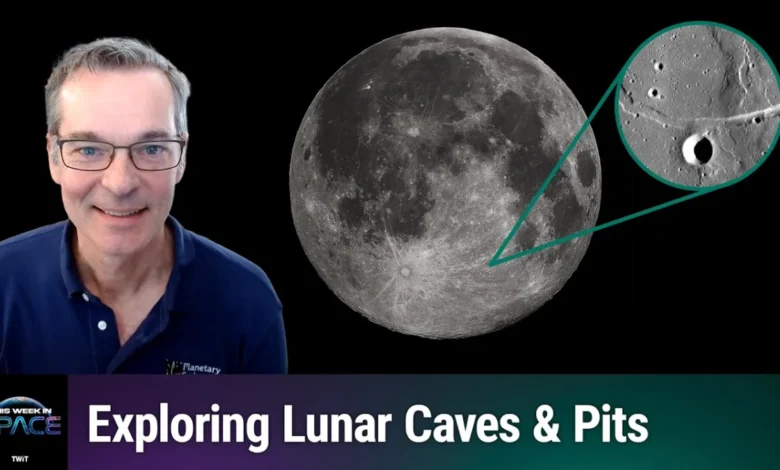
The pursuit of sustainable human presence on the lunar surface has transitioned from the realm of science fiction to a central pillar of international space agency strategy. As NASA’s Artemis program aims to return humans to the Moon, researchers are increasingly looking beneath the lunar regolith to solve one of the most daunting challenges of long-term habitation: protection from the harsh, radiation-heavy lunar environment. Central to this inquiry is the investigation of lunar lava tubes, particularly the Marius Hills Pit, which represents a potential subterranean sanctuary for future astronauts.
The Geological Rationale for Subterranean Habitats
Lunar lava tubes are natural conduits that formed billions of years ago during the Moon’s volcanically active period. As basaltic lava flowed across the surface, the outer layers cooled and solidified, creating insulated crusts. Beneath these, the molten material continued to flow, eventually draining away to leave behind vast, hollowed-out cylindrical caverns.
These structures are not merely geological curiosities; they represent high-value real estate for human exploration. The Moon lacks a protective atmosphere and a global magnetic field, leaving the surface exposed to intense solar radiation, galactic cosmic rays, and the constant threat of micrometeoroid impacts. Furthermore, surface temperatures fluctuate wildly, dropping to minus 280 degrees Fahrenheit (minus 173 degrees Celsius) during the lunar night and rising to 260 degrees Fahrenheit (127 degrees Celsius) during the day. Subterranean environments, by contrast, offer a thermally stable environment, maintaining a constant temperature estimated to be around minus 4 degrees Fahrenheit (minus 20 degrees Celsius), significantly reducing the engineering burden for thermal management systems.
Investigating the Marius Hills Pit
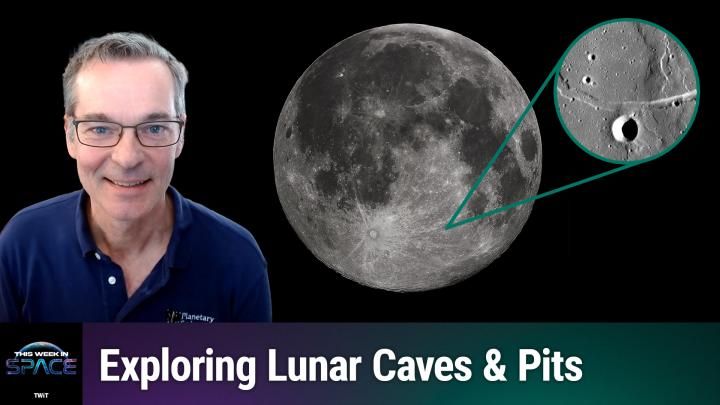
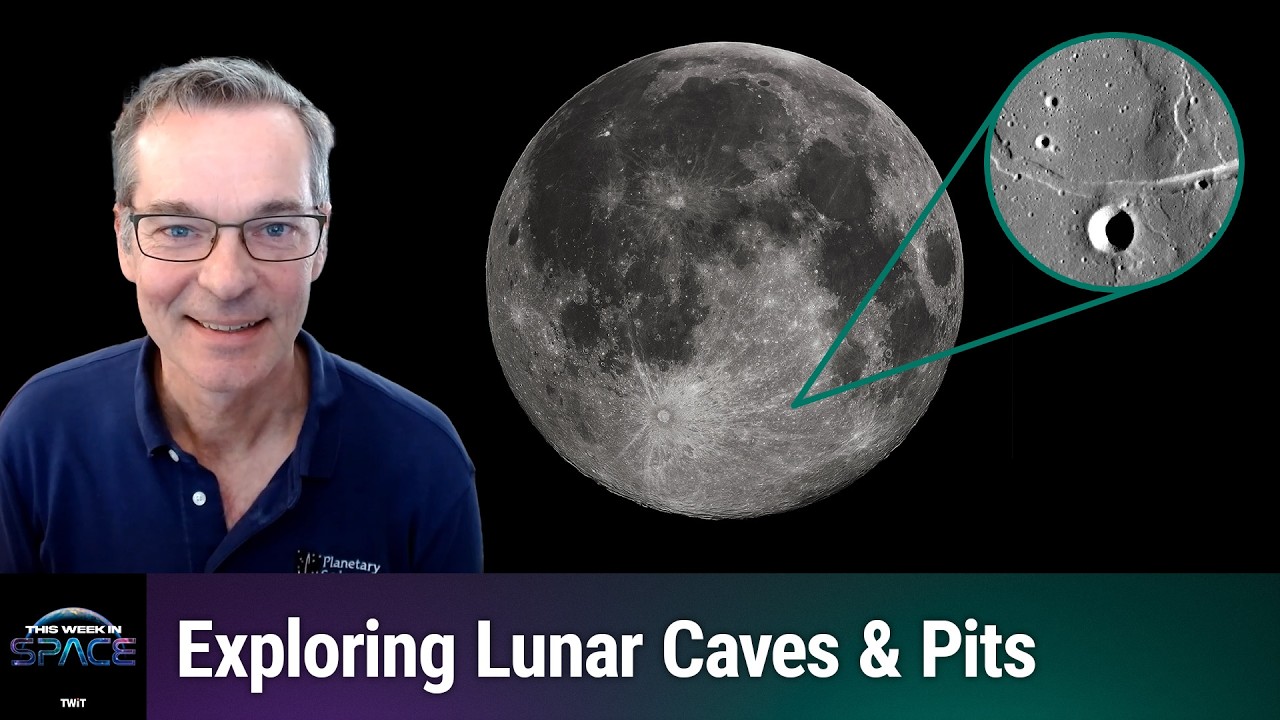
The Marius Hills region has long been a focal point for planetary scientists. In 2009, the Japanese SELENE (Kaguya) spacecraft identified a prominent hole in the region—a 50-meter-wide vertical shaft that serves as a skylight into a potential lava tube system. NASA’s Lunar Reconnaissance Orbiter (LRO) later confirmed that this pit, and others like it, likely connect to extensive horizontal tunnels that could stretch for kilometers.
On a recent episode of the "This Week In Space" podcast, Tariq Malik and Mike Wall hosted Than Putzig of the Planetary Science Institute to discuss the technological hurdles of confirming the habitability of these features. The core of the challenge lies in "seeing" what is beneath the surface without direct human access. Putzig highlighted the role of sophisticated geophysical instruments, such as ground-penetrating radar (GPR) and seismic sensors, which would be essential payloads for future lunar rovers. By deploying these instruments, scientists can map the volume, depth, and structural integrity of the lava tubes, ensuring they are safe before human entry is ever authorized.
A Chronology of Lunar Exploration and Habitation Goals
The interest in lava tubes is a logical progression in the timeline of lunar exploration:
- 1969–1972 (Apollo Era): Focused on short-duration exploration and scientific sampling. Habitats were limited to the Lunar Module, which offered minimal protection.
- 2009 (SELENE Discovery): The Kaguya orbiter provides the first clear evidence of lava tube skylights, sparking a renewed interest in lunar interior exploration.
- 2017 (Space Policy Directive 1): The United States formalizes the goal of returning humans to the Moon, eventually establishing the Artemis program to facilitate a sustainable, long-term presence.
- 2020s (Current Phase): Shift toward identifying site-specific infrastructure. NASA and its international partners are currently vetting the lunar South Pole for initial bases due to the presence of water ice, while simultaneously evaluating lower-latitude sites like the Marius Hills for potential future expansion into subsurface habitats.
- 2030 and Beyond: Long-term projections anticipate the deployment of robotic scouts to explore potential lava tube sites, followed by the integration of pressurized modules into these natural voids.
Engineering Challenges and Technical Requirements
Converting a volcanic cave into a functional habitat is a monumental engineering feat. While the natural basalt walls provide shielding, they are not airtight. Any habitat placed within a lava tube would still require a pressurized, life-support-ready structure. However, the requirement for heavy radiation shielding—which adds massive weight to traditional spacecraft designs—could be significantly reduced if the base is situated dozens of meters beneath the lunar surface.
Furthermore, communication remains a critical hurdle. Radio signals struggle to penetrate deep underground, necessitating the development of tethered robotic systems or sophisticated mesh networks that can relay data from the depths of the tube to the surface and, subsequently, to Earth. Power generation also presents a difficulty; while solar arrays are effective on the surface, a subterranean base would require either long-distance cabling to surface solar farms or the implementation of small-scale nuclear fission reactors, such as those currently being developed under NASA’s Kilopower project.
Official Perspectives and Strategic Alignment
NASA’s current strategy for the Artemis program is heavily focused on the South Pole, where permanent shadows in craters may harbor significant water ice deposits—a vital resource for fuel and life support. However, the agency acknowledges that a truly robust lunar economy will require diversifying locations. The integration of lava tube research into the broader Artemis architecture allows for a "two-pronged" approach: exploiting polar ice for resources while leveraging the geological protection of lava tubes for permanent living quarters.
Experts argue that the data gathered by researchers like Than Putzig is essential to de-risk these missions. Without a high-fidelity understanding of the structural stability of the tubes—whether they are prone to collapse or possess clear, debris-free floors—the cost of sending a crew to investigate them would be prohibitively high. Robotic precursors are therefore the prerequisite for any future "moon base" construction in these regions.
Economic and Educational Implications
The discourse surrounding space exploration is increasingly inclusive of the commercial sector. Companies like SpaceX have revolutionized the cost of launch, making it feasible to send heavier, more complex payloads to the lunar surface. The recent surge in interest, as evidenced by the proliferation of space-themed education and high-quality hobbyist equipment—such as the Estes model of the SpaceX Falcon 9 rocket—reflects a public that is increasingly engaged with the mechanics of spaceflight.
This public engagement is not merely recreational; it is vital for the continued political support of government-funded space agencies. As the cost of access to orbit drops, the barrier to entry for private entities to participate in lunar research also lowers. This creates an environment where small-scale scientific payloads, or even commercial exploration rovers, could potentially scout lava tubes as precursors to larger government-led missions.
Analysis: The Future of the Lunar Frontier
The transition from "visiting" the Moon to "living" on it requires a fundamental shift in how humanity approaches planetary colonization. If the Marius Hills Pit or similar structures can be proven stable and accessible, they will offer a distinct advantage: a "ready-made" infrastructure that avoids the need for massive, earth-launched construction materials. By utilizing in-situ resources—such as the basalt of the cave walls themselves—future settlers could potentially 3D-print or expand upon existing natural voids, significantly reducing the mass and cost of transport from Earth.
However, the cautionary note remains the unknown. We have yet to send a probe into a lunar lava tube. The harsh, abrasive nature of lunar dust, combined with the extreme vacuum conditions, poses risks to both robotic hardware and human health. The next decade will likely be defined by "precursor" missions—robotic landers and rovers equipped with LIDAR and radar, designed specifically to peer into the dark, silent depths of these volcanic remains.
As we look toward the 2030s, the potential for lunar subterranean living remains one of the most compelling frontiers in space exploration. It is a synthesis of ancient geology and cutting-edge engineering, representing the next logical step in humanity’s journey to establish a permanent, resilient, and thriving presence beyond our home planet. The question is no longer whether we can reach the Moon, but how effectively we can adapt to its unique, hidden landscape to call it home.