Introducing InnovaTED! An initiative to amplify the ideas and voices of students and educators

The Evolution of Student and Educator Platforms
For over ten years, the TED-Ed Student Talks program has functioned as a cornerstone of extracurricular and classroom-based communication training. The program was designed to move beyond traditional rote memorization or standard essay writing, encouraging K-12 students to identify, refine, and articulate their personal perspectives on global issues. According to internal TED-Ed data, hundreds of thousands of students have utilized these frameworks to prepare for stages, ranging from local school auditoriums to official TEDx events.
The introduction of InnovaTED marks a strategic pivot. While the previous iteration focused heavily on the student experience, InnovaTED formalizes a dual-track system that simultaneously elevates the professional voice of educators. This integration recognizes that the quality of student discourse is inherently tied to the communication capabilities and professional agency of their teachers.
Chronology of the Initiative
The trajectory toward InnovaTED began in the early 2010s with the initial launch of TED-Ed. Throughout the mid-2010s, the organization focused on digitizing and distributing educational animations and lesson plans. By 2018, the success of the Student Talks program necessitated a more robust infrastructure to handle the growing volume of participants.
In late 2024, the TED organization identified a critical gap: while students were being given platforms, the educators facilitating these programs often lacked the professional development necessary to refine their own storytelling and public-facing advocacy. The official launch of InnovaTED in December 2024 represents the culmination of this two-year development phase, aiming to bridge the divide between classroom instruction and public intellectualism.
The Educator Talks Program: A Structural Breakdown
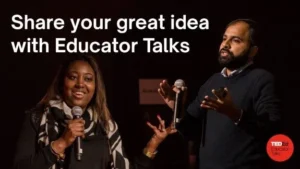
At the heart of the InnovaTED initiative is the revamped Educator Talks program. This initiative is categorized as a high-level professional development experience, focusing on three specific pillars:
1. Professional Skill Acquisition: Participants are trained in the specific methodologies developed by TED’s curation teams. This includes the science of narrative structure, the economy of language, and the psychology of stage presence. These skills are intended to be transferable, benefiting educators not only during formal presentations but also in school board negotiations, PTO meetings, and parent-teacher conferences.
2. Strategic Recognition: By formalizing the path from an "Idea Workshop" to a stage at a TEDx event, the program provides educators with a professional credential that establishes them as thought leaders. In an era where teacher morale and professional recognition are frequent topics of public discourse, this credentialing serves as a significant boost to pedagogical morale.
3. Global Network Integration: Participants gain access to a curated community of peers who are actively working to innovate within the classroom. This network allows for the cross-pollination of teaching strategies, curriculum design, and advocacy methods across geographic and cultural borders.
The Role of the Idea Workshop
Central to the program’s accessibility is the "Idea Workshop," a one-hour virtual, interactive session led by Logan Smalley, the founder and executive director of TED-Ed. The workshop functions as a gatekeeper-free entry point into the TED ecosystem.
Data provided by TED-Ed indicates that the workshop has maintained a 5-star rating among hundreds of thousands of participants. The efficacy of the workshop is measured by the ability of attendees to distill complex pedagogical theories into concise, actionable "ideas worth spreading." Following the session, participants are granted access to the official TED public speaking curriculum, a resource previously reserved for high-profile speakers and internal stakeholders.
Economic and Pedagogical Implications
The implications of this initiative extend beyond individual skill-building. For school districts and education systems, the professionalization of educator communication can have tangible downstream effects. Educators who are adept at communicating the value of their work are better positioned to secure resources, influence policy changes, and improve community engagement.
From an analytical standpoint, InnovaTED represents a shift in how professional development is conceptualized in the K-12 sector. Rather than focusing solely on administrative compliance or standardized testing metrics, this program prioritizes the "soft skills" of leadership and influence. By treating educators as potential thought leaders, the program seeks to counteract the trend of teacher burnout by re-investing in the individual’s intellectual identity.
Furthermore, the integration with TEDx—a program that prides itself on local community activation—ensures that the benefits of this initiative remain rooted in the specific contexts where the teachers work. Instead of creating a siloed, elite group of speakers, the program encourages educators to share their expertise within their own municipalities, effectively strengthening the relationship between local schools and their surrounding communities.
Global Accessibility and Equity
One of the primary challenges identified by the organizers was the digital divide and the disparity in resources between different educational systems globally. By making the initial Idea Workshop free and virtual, InnovaTED attempts to flatten the barrier to entry. Educators from rural districts or underfunded systems can access the same pedagogical training as those in affluent, metropolitan school systems.
The program’s focus on "ideas worth sharing" is intentionally agnostic to the specific subject matter, allowing for a wide range of topics—from breakthroughs in literacy instruction to new approaches to social-emotional learning. This diversity of content ensures that the program remains relevant to the evolving needs of the modern classroom.
Future Projections
Looking forward, the success of InnovaTED will likely be measured by the rate of integration of these talks into the broader public discourse. If the program achieves its goals, we can expect to see an increase in educators presenting at local, regional, and national conferences, as well as an uptick in the frequency of TEDx events featuring pedagogical, rather than purely technological or scientific, topics.
The initiative also sets the stage for a potential "alumni effect," where the initial cohort of InnovaTED participants becomes a self-sustaining network of mentors for future generations of educators. By codifying the process of "finding one’s voice," TED-Ed is essentially creating a legacy of communication that could influence the direction of educational reform for years to come.
How to Engage with the Platform
For educators interested in joining the inaugural or subsequent cycles, the process is streamlined through the official TED-Ed portal. The requirement for participation is minimal: an active role in K-12 education and a commitment to the initial Idea Workshop.
The strategy of the organization is to provide a "low-floor, high-ceiling" approach. The initial entry is simple and accessible, but the potential growth trajectory for a participant—moving from a virtual workshop to a local stage and potentially to a broader audience—is significant. The organization has explicitly encouraged the sharing of this opportunity across professional networks, signaling a grassroots approach to growth rather than a top-down administrative mandate.
As the educational landscape continues to shift in the face of artificial intelligence, changing demographics, and evolving social priorities, the need for clear, passionate, and evidence-based communication has never been higher. By providing the tools to articulate the future of education, InnovaTED is positioning itself not just as a training program, but as a catalyst for systemic change. The program stands as a testament to the belief that the most important ideas in the world are often those currently being generated inside the walls of the classroom, waiting for the right platform to be heard.