JB Perrette Unveils Strategic Executive Restructuring for Skydance Media Following Landmark Merger

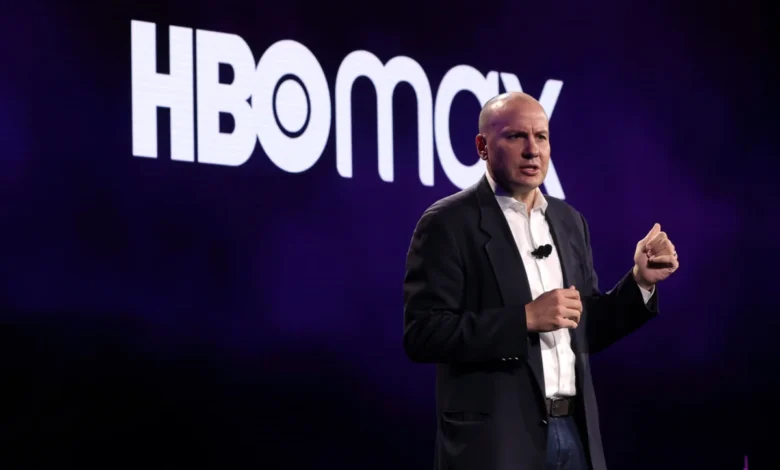
The newly formed media conglomerate Skydance—born from the high-profile merger of Warner Bros. Discovery and Paramount—has reached a critical juncture in its operational integration. JB Perrette, serving as Co-Chair and Chief Business Officer for both Skydance TV and Skydance Direct-To-Consumer (DTC), has formally announced the new executive leadership team tasked with navigating the company through its post-merger infancy. This restructuring marks a significant shift in corporate strategy, aiming to unify legacy television assets with modern streaming infrastructure to capitalize on a rapidly shifting media landscape.
A New Chapter for a $110 Billion Entity
The consolidation of Warner Bros. Discovery and Paramount represents one of the most consequential events in modern media history, valued at approximately $110 billion. The merger has necessitated an exhaustive top-to-bottom review of internal departments, redundant roles, and technological overlaps. Perrette, who previously earned acclaim for his instrumental role in the global expansion of HBO Max, has been identified as a key architect in this transition. His appointment as a bridge between the company’s traditional broadcast segments and its digital streaming ventures signals a commitment to a "one-company" philosophy.
In an internal memorandum shared with staff, Perrette emphasized the necessity of breaking down departmental silos. The reorganization is designed to optimize the synergy between linear television and streaming platforms like Paramount+ and HBO Max. By aligning these divisions, the company intends to streamline operations, reduce overhead, and accelerate decision-making processes in an era where traditional linear viewership continues to face headwinds from subscription-based digital services.
The Scope of the Organizational Shift
The announcement confirms a wave of departures as part of the company’s leaner operational strategy. Notable executives exiting the organization include Dan Barnes, Michael Bishara, Jamie Cooke, Domenic DiMeglio, Marco Nobili, Pank Patel, and Juan Sola. These transitions, while described as painful by leadership, reflect the harsh realities of large-scale corporate mergers, where the elimination of redundant roles is often a prerequisite for financial stability.
Perrette’s new leadership structure is divided into global and regional oversight, ensuring that while the company maintains global scale, it remains responsive to local market nuances.
Global Leadership Appointments:
- Jeff Cusson (EVP and Head of Communications, Skydance DTC): Tasked with steering the narrative for streaming services, reporting to Perrette, Casey, and Mel Zukerman.
- Shauna Spenley (CMO, Global DTC and International TV): Her expanded role now covers international television marketing, aiming to harmonize marketing efforts across platforms.
- Trey Turner (COO, International): Taking on additional responsibilities in international operations while maintaining his finance duties.
- Josh Walker (COO, DTC): Operating in a dual capacity as COO and CFO of DTC, focused on content strategy, acquisition, and pricing.
- Liz Wright (CFO, Skydance TV Segment): Providing financial leadership for the television segment, including the legacy CBS and global network businesses.
A notable absence in the current structure is the leadership position for Pluto, the company’s pioneering ad-supported video-on-demand (AVOD) service. Perrette noted that a search for a permanent leader is underway, reflecting the high priority placed on maintaining the service’s competitive edge in the free-to-consumer digital market.
Regional Integration and Market Strategy
A cornerstone of Perrette’s strategy is the implementation of four primary regional leads responsible for both TV and streaming. This decentralization aims to prevent the "dreaded matrix" of corporate bureaucracy, empowering local leaders to make agile decisions regarding distribution, ad sales, and business development.
The regional leadership team includes:
- Andrew Georgiou (Interim President & MD, Europe & Africa): Overseeing a massive geographic footprint while the company searches for a permanent successor to take over in the coming year.
- James Gibbons (President & MD, APAC & MENA): Managing operations across Asia-Pacific and the Middle East, with a mandate to integrate streaming and television programming.
- Kasia Kieli (President & MD, Poland): Maintaining a unique, integrated model for the Polish market, which encompasses news, entertainment, and digital assets.
- Fernando Medin (President & MD, LATAM/US Hispanic): Charged with the strategic growth of the brand across Latin America and the growing US Hispanic market.
Analytical Context: The Challenge of Convergence
Industry analysts point to this restructuring as a textbook example of the challenges inherent in modern media integration. The "cross-over and interconnections" mentioned by Perrette are not merely logistical—they are existential. As consumer behavior shifts further away from traditional cable bundles toward "cord-cutting" and platform-hopping, the ability to maintain a profitable linear business while scaling a streaming service is the primary challenge for legacy media giants.
The decision to merge the DTC and TV units is a calculated gamble. Historically, these divisions have operated as distinct entities with their own budgets, marketing strategies, and cultural identities. By forcing them into a unified reporting structure, Skydance hopes to eliminate competitive bidding for content and consolidate advertising inventory, which could theoretically boost margins in the long term.
However, the risk lies in the execution. Integrating two distinct corporate cultures—particularly ones as storied as those of Warner Bros. Discovery and Paramount—requires not just organizational charts, but a cultural shift. Perrette’s explicit mention of avoiding "individual unit agendas" underscores the friction often present in such transitions. Success will depend on the company’s ability to maintain employee morale while undergoing significant staff reductions.
Chronology of the Skydance Formation
- Initial Merger Announcement: Following intense market speculation, the agreement between Warner Bros. Discovery and Paramount was finalized, setting the stage for the formation of Skydance.
- Regulatory Approval Phase: Throughout the preceding months, the companies navigated antitrust reviews, culminating in the official close of the deal earlier this month.
- Initial Leadership Briefing: CEO David Ellison and Co-CEO Ynon Kreiz outlined the vision for the unified entity, confirming the strategic shift toward bridging linear and digital.
- Executive Restructuring Announcement: JB Perrette formalizes the new team, marking the beginning of the operational phase of the integration.
The Road Ahead
As the new leadership team settles into their roles, the focus will inevitably shift toward the upcoming fiscal quarter. Investors will be looking for signs of cost-saving efficiencies and, more importantly, a coherent content strategy that leverages the combined intellectual property of the two legacy companies.
The task facing the new leadership is significant: they must revitalize the streaming business while stabilizing the television networks that provide the cash flow necessary for content investment. Perrette’s memo to staff was clear—the "north star" is the best interest of the overall company, not individual units. As the company moves past this initial period of transition, the effectiveness of this unified model will serve as a bellwether for the future of large-scale media consolidation.
While the announcement provided clarity on roles and reporting lines, Perrette acknowledged that further refinements would be necessary. The upcoming weeks will involve sub-team alignments and the continuation of the search for a new head of Pluto, as the organization seeks to solidify its position as a dominant force in the global entertainment market. The market will be watching closely to see if this aggressive restructuring can deliver on the promised synergies, or if the complexities of such a massive merger will continue to present hurdles to growth.
Related posts: