The Power Players: Managers Edition at Billboard Latin Music Week 2026 Unveils the Strategic Architecture of Global Stardom

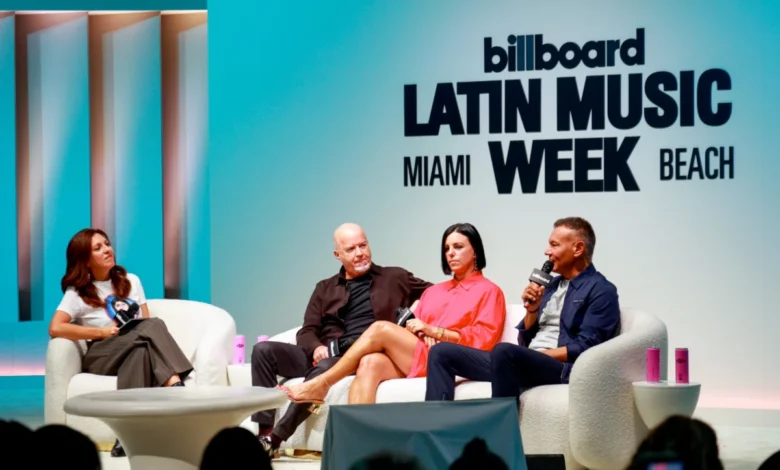
During the 2026 edition of Billboard Latin Music Week, held at the prestigious Faena Forum in Miami Beach, the industry’s most influential architects of Latin musical success gathered to demystify the high-stakes profession of artist management. The panel, titled The Power Players: Managers Edition, featured a triumvirate of industry titans: Jorge “Pepo” Ferradas, president and CEO of FPM Entertainment; Rebeca León, CEO and co-founder of Lionfish Entertainment; and Walter Kolm, founder and CEO of WK Entertainment. Moderated by Pamela Bustios, Billboard’s senior charts and data analyst, the session provided a rare, granular look into the logistical, psychological, and strategic demands required to transform regional talent into global phenomena.
The Evolution of the Latin Music Ecosystem
To understand the weight of the insights shared by Ferradas, León, and Kolm, one must contextualize the current trajectory of the Latin music industry. Over the past decade, Latin music has transitioned from a niche segment of the global market to a dominant cultural force. According to data from the IFPI and Luminate, Latin music consumption has experienced double-digit year-over-year growth, bolstered by the expansion of streaming platforms in Latin America and the United States, and the viral nature of short-form video content.
This rapid growth has fundamentally altered the role of the manager. Historically, managers were primarily tasked with booking shows and managing schedules. In 2026, however, they function as hybrid CEOs, data analysts, brand strategists, and crisis managers. The panel participants represent the gold standard of this modern evolution, each managing rosters that define the current charts: Ferradas with stars like Camilo and Rauw Alejandro; León with powerhouses such as Anitta and Rosalía; and Kolm with industry veterans and rising stars including Carlos Vives and Emilia.
Strategic Planning: Beyond the Talent
The core of the discussion centered on the distinction between the artist’s creative output and the management’s strategic implementation. Walter Kolm, who has been instrumental in the careers of some of the most enduring Latin acts, emphasized that the primary service a manager provides is honesty—often in the form of difficult truths.
“I always tell artists: ‘You pay us to tell you what we think, not what you want to hear,’” Kolm remarked during the session. This philosophy underscores the necessity of a data-driven approach to artist development. A recurring theme of the panel was the rejection of the notion that success is a result of serendipity. Instead, the panelists characterized their roles as logistical engineers, ensuring that every element of an artist’s infrastructure—from production quality to tour logistics—is optimized for international scale.

Ferradas offered a compelling metaphor for this process, describing the music itself as the “locomotive” of the train. While the music provides the momentum, the manager and their team are responsible for the tracks, the fuel, and the precision navigation that keeps the train from derailing. He noted that the public rarely sees the grueling behind-the-scenes work—the hotel negotiations, the quality control of technical production, and the intricate coordination of global release schedules—that makes an artist’s rise appear effortless.
The Psychology of Management and Career Sustainability
Rebeca León provided a profound analysis of the personal toll associated with top-tier management. She articulated that the role requires a level of self-abnegation that is often overlooked in industry portrayals. “Being a manager is being a guide, having answers to many questions, and it’s super difficult,” León explained. “You’re serving someone else’s dreams, so there’s a personal sacrifice—you have to set aside your own path to help this other person achieve their dreams.”
This sacrifice, according to León, requires a specific psychological makeup. She emphasized the necessity of maintaining "tunnel vision" and the ability to detach from emotional rejection. In an industry where "no" is a common response to pitches and proposals, the manager must remain resilient, treating setbacks as data points rather than personal affronts. She suggested that the most successful managers are those who can operate in a state of constant, future-oriented planning, noting that if a manager is focused only on the “here and now,” they are effectively behind the curve.
Quantitative Discipline and Market Expansion
A significant portion of the panel was dedicated to the metrics of success and the timing of international expansion. The consensus among the panelists was that market penetration must be earned through the refinement of the artistic product.
Kolm argued that many artists prematurely attempt to conquer new territories without first solidifying their core repertoire. He stated, “Everything starts with the music—let’s not forget that this is a business of music and songs.” The responsibility of the manager, in this view, is to curate the collaborative environment, connecting the artist with the right producers and songwriters to ensure the final product meets global standards.
Discipline was cited as the primary indicator of potential longevity. Ferradas noted that when managers demand strict adherence to schedules or rigorous work cycles, it is not an exercise in control, but a reflection of a proven methodology. “When we ask for discipline and work time, it’s because we know it works—it’s not about pressure,” he explained. This discipline is the bridge between a fleeting viral moment and a sustainable, multi-decade career.

Implications for the Future of Latin Music
The insights shared at the Faena Forum arrive at a pivotal moment for the Latin music industry. As the sector faces increasing competition and the challenges posed by artificial intelligence and shifting algorithmic discovery, the role of the human manager as a curator and strategist becomes more vital than ever.
The implications for emerging talent are clear: the barrier to entry for releasing music has never been lower, but the barrier to entry for building a sustainable, global career has never been higher. Managers like Ferradas, León, and Kolm serve as the gatekeepers of quality, ensuring that the explosion of content in the digital age does not dilute the artistic value of the Latin music genre.
Furthermore, the panel highlighted a growing movement within the industry to formally recognize the managerial profession as a core pillar of the business. By advocating for greater recognition, these leaders are setting a precedent for how future generations of music executives will operate. The professionalization of management is, in essence, a protection mechanism for the artists themselves.
Conclusion: The Unseen Engine of Success
The Billboard Latin Music Week 2026 panel served as a masterclass in professional endurance. Through their shared experiences, Ferradas, León, and Kolm illustrated that while the spotlight remains fixed on the performers, the sustained success of the Latin music revolution is being engineered in the boardrooms and offices of these dedicated managers.
As the industry continues to evolve, the lessons offered at the Faena Forum remain relevant: success is a product of long-term vision, unwavering discipline, and the ability to navigate the complexities of global markets with a steady hand. For the aspiring manager, the takeaway is clear—success is not magic, it is the result of thousands of unseen decisions made with precision, foresight, and an uncompromising commitment to the artist’s long-term legacy. The panel concluded on October 21, but the principles discussed will undoubtedly continue to influence the strategies of management teams across the global music landscape for years to come.