On October 29, 1991, NASA’s Galileo spacecraft executed a high-speed flyby of the asteroid 951 Gaspra, marking the first time in human history that a robotic probe had visited and imaged an asteroid at close range. This historic encounter served as a critical technology demonstrator for the Galileo mission, which was then in the midst of a complex, six-year trajectory toward the Jovian system. By providing the first high-resolution insights into the composition and topography of a main-belt asteroid, the mission fundamentally shifted the scientific understanding of these primitive building blocks of the solar system, transitioning asteroid research from ground-based telescopic observation to direct, in-situ planetary science.
The Long Road to the Asteroid Belt
The Galileo mission was conceived as a multi-stage, ambitious exploration of Jupiter and its moons. Launched on October 18, 1989, aboard the Space Shuttle Atlantis during the STS-34 mission, the spacecraft faced a unique navigational challenge. Due to the limited lift capacity of the shuttle compared to heavy-lift expendable rockets, Galileo could not be launched on a direct path to Jupiter. Instead, mission planners designed a complex "VEEGA" (Venus-Earth-Earth Gravity Assist) trajectory.
This gravity-assist maneuver required the spacecraft to swing by Venus once and Earth twice to gain the necessary orbital energy to reach the outer solar system. This indirect route ensured that the spacecraft would pass through the main asteroid belt, a vast region of space populated by millions of rocky remnants situated between the orbits of Mars and Jupiter. Scientists seized this opportunity to conduct flybys of two specific asteroids—Gaspra and later, Ida—turning what would have been a mundane transit into a multi-stop scientific voyage.
Anatomy of the Encounter
As the Galileo probe approached the inner edge of the asteroid belt in the autumn of 1991, NASA scientists and engineers prepared for a maneuver that required extreme precision. Travelling at a relative velocity of approximately 5 miles per second (roughly 18,000 mph or 8 kilometers per second), the spacecraft was tasked with capturing imagery while navigating the hazards of the belt.
At its closest approach, Galileo passed within 990 miles (1,593 kilometers) of the asteroid. This distance was small enough to capture unprecedented detail but large enough to avoid the potential debris fields that were, at the time, still a subject of scientific uncertainty. The spacecraft utilized its Near-Infrared Mapping Spectrometer (NIMS) and its onboard imaging system to map the surface features and determine the asteroid’s chemical properties.
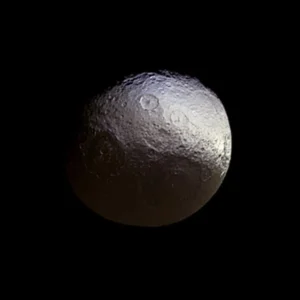
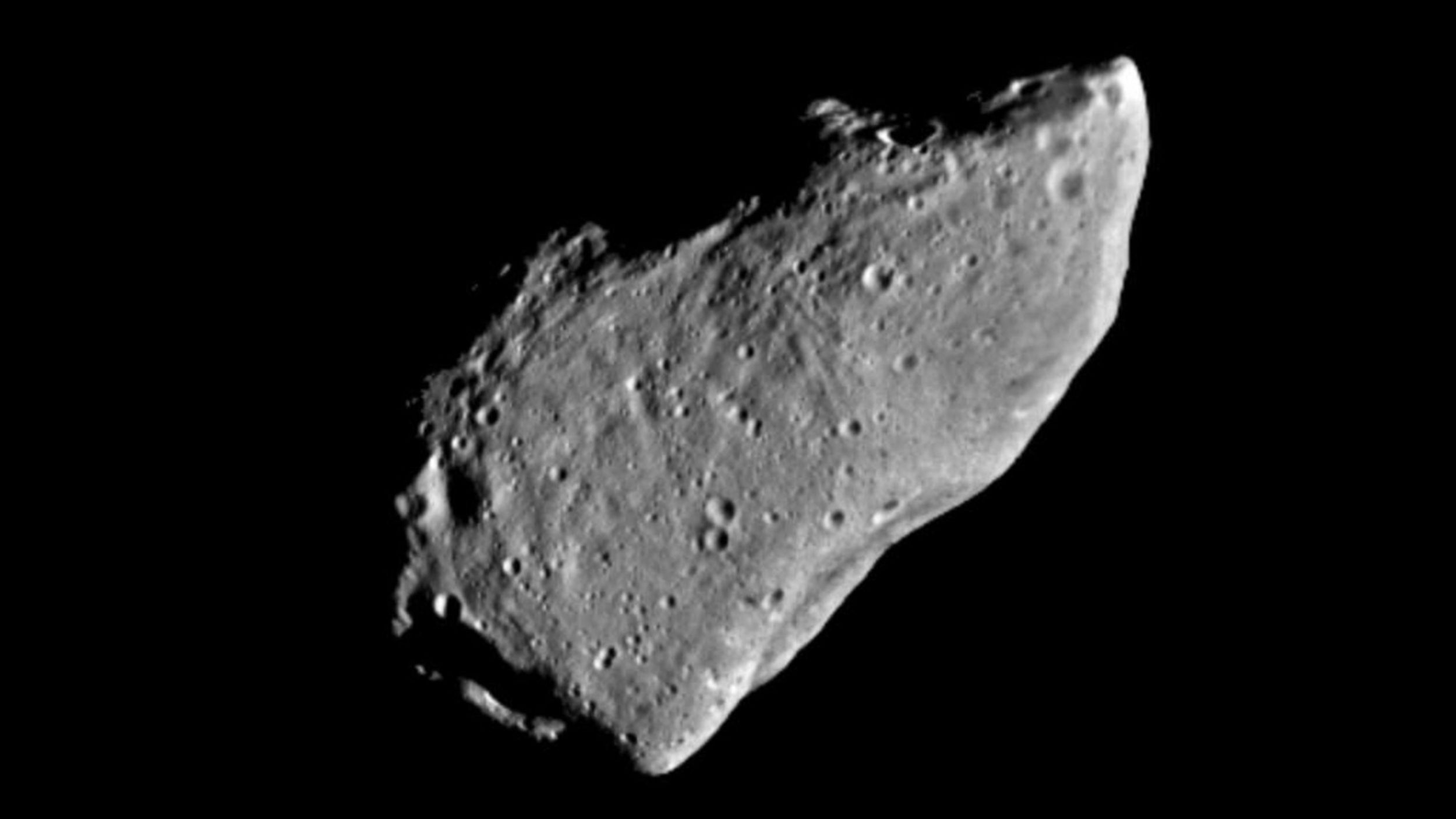
The data returned by Galileo revealed that Gaspra was far from a simple, uniform rock. Instead, it was a highly irregular, elongated body measuring roughly 12 miles by 7 miles (20 by 12 by 11 kilometers). The images showed a surface heavily scarred by impact craters, suggesting a violent history of collisions. The presence of a thin regolith—a layer of dust and loose rubble—indicated that the asteroid had been pulverized by eons of cosmic bombardment.
Scientific Implications and Legacy
The encounter with Gaspra proved that asteroids were not merely "minor planets" or static space rocks, but dynamic, geological entities. Joseph Veverka, a member of the Galileo imaging team, noted at the time that the surface of Gaspra showed clear evidence of a tumultuous past. "The picture we get of Gaspra is one of something that has suffered a lot during its history," Veverka stated following the release of the initial images. "We suspect that this is the survivor of a series of catastrophic collisions in the past."
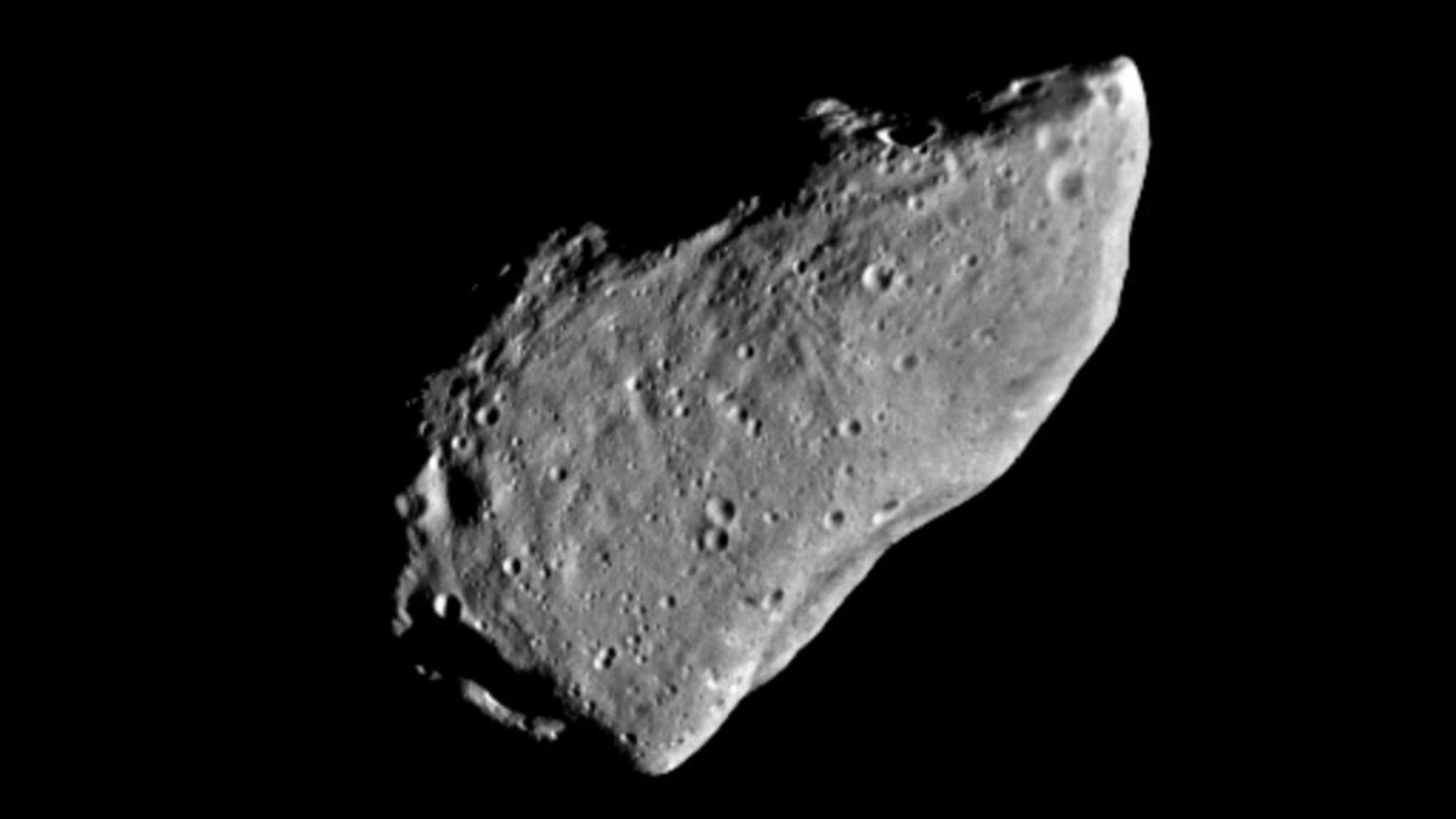
From a geological perspective, the Gaspra flyby provided the first empirical evidence that asteroids could be fragmented remnants of much larger parent bodies. The density and distribution of craters led researchers to conclude that the asteroid was likely a fragment resulting from a major collision event, which had subsequently been smoothed by further, smaller-scale impacts.
Furthermore, the spectroscopic data provided by NIMS allowed scientists to classify Gaspra as an S-type (silicaceous) asteroid, characterized by a composition rich in metallic nickel-iron and magnesium silicates. This classification was a significant leap forward in planetary science, as it allowed researchers to correlate the asteroid’s composition with specific types of meteorites found on Earth, effectively bridging the gap between space exploration and terrestrial laboratory analysis.
A Chronology of the Galileo Mission
The Gaspra encounter was the first of many milestones for the Galileo mission. To contextualize the scale of this journey, one must look at the timeline of the probe’s path through the inner and outer solar system:
- October 1989: Launch of the Galileo spacecraft via the Space Shuttle Atlantis.
- February 1990: Venus gravity assist.
- December 1990: First Earth gravity assist.
- October 29, 1991: Historic flyby of asteroid 951 Gaspra.
- December 1992: Second Earth gravity assist.
- August 1993: Flyby of asteroid 243 Ida, where the first-ever moon of an asteroid (Dactyl) was discovered.
- July 1994: Observation of the Comet Shoemaker-Levy 9 fragments impacting Jupiter.
- December 1995: Arrival at the Jovian system and the start of the primary orbital mission.
The serendipitous observation of the Shoemaker-Levy 9 impacts in 1994 served as a poignant reminder of the violent nature of the solar system—a process that the Galileo team had witnessed firsthand during their study of Gaspra.

Impact on Modern Planetary Defense
The success of the Gaspra mission set a precedent for all subsequent asteroid exploration. Before 1991, our knowledge of asteroids was almost entirely based on light curves and radar reflections from Earth. By proving that a spacecraft could safely approach, image, and study an asteroid in deep space, NASA established the operational blueprint for future missions.
This technical legacy is directly linked to modern planetary protection efforts. The experience gained from the Galileo flybys paved the way for the Near Earth Asteroid Rendezvous (NEAR) mission, which landed on the asteroid Eros in 2001, and later, the sample-return missions such as Japan’s Hayabusa and NASA’s OSIRIS-REx. These missions have evolved from mere flybys to complex contact-based operations.
Perhaps most significantly, the knowledge gathered during the era of the Gaspra and Ida flybys provided the baseline data required for the Double Asteroid Redirection Test (DART) mission. When NASA intentionally crashed a spacecraft into the moonlet Dimorphos in 2022 to alter its orbit, it was the culmination of decades of asteroid exploration that began with the pioneering flyby of 951 Gaspra. The ability to characterize an asteroid’s mass, shape, and density is a prerequisite for any mission designed to deflect a potentially hazardous near-Earth object, proving that the 1991 mission was not only a scientific success but a foundational step in ensuring long-term planetary safety.
Conclusion
The flyby of Gaspra on October 29, 1991, remains one of the most successful "bonus" missions in the history of space exploration. While the primary objective of the Galileo mission was the study of Jupiter and its moons, the decision to maximize the science return during the transit through the asteroid belt yielded results that were arguably just as important as the later data from the Jovian system. By revealing the scarred, irregular, and complex nature of an asteroid for the first time, Galileo transformed our perception of the solar system’s evolution. It proved that these objects are not merely passive spectators in space, but active participants in the violent, ongoing history of planetary formation and destruction. As humanity looks toward the future of deep space exploration and potential asteroid mining or defense, the data from the Gaspra encounter continues to stand as a vital reference point in the annals of science.