A Comprehensive Travel Guide to New Zealand: Navigating Luxury, Landscapes, and Regional Itineraries

For travelers based in Sydney, Australia, New Zealand often occupies a paradoxical space in the regional tourism psyche: it is perceived as an accessible, short-haul weekend destination yet frequently deferred for future planning. Historically recognized by international skiers for its dramatic Southern Alps terrain during the Southern Hemisphere winter, Aotearoa (the Māori name for New Zealand) offers a complex synthesis of rugged wilderness and a deeply rooted tradition of luxury hospitality across all four seasons. While the nation’s diverse topography—ranging from geothermal wonders in the North Island to glacial lakes and deep fjords in the South Island—is easily appreciated from the highway, modern travel trends emphasize immersive, slower-paced itineraries. Industry data indicates a growing shift toward extended regional stays, where travelers bypass whirlwind multi-city tours in favor of deeply localized experiences that merge indigenous culture, world-class gastronomy, and high-end boutique accommodations.
Strategic Itinerary Planning: Maximizing Time Across Two Distinct Islands
Geographically isolated and characterized by challenging mountainous terrain, New Zealand demands careful logistical planning. Travel logistics experts and regional tourism boards consistently advise against attempting to cover both the North and South Islands within a standard seven-day holiday. A one-week timeframe is best optimized by focusing entirely on a single region. On the South Island, a week-long journey can be effectively anchored around Queenstown, Arrowtown, and the alpine expanses of Fiordland, or alternatively mapped from Christchurch through the Mackenzie District and Lake Tekapo. On the North Island, a concentrated itinerary connecting the cultural hub of Rotorua with the freshwater expanse of Lake Taupō offers a dense concentration of geological and cultural attractions without excessive transit fatigue.

For first-time visitors seeking a comprehensive introduction, a balanced two-week itinerary typically commences in Queenstown for alpine exploration before transitioning to the historic gold-mining district of Arrowtown and the deep wilderness of Fiordland National Park. In the North Island, starting in Auckland allows travelers to transition smoothly toward the central plateau, taking in the geothermal valleys and Māori heritage of Rotorua. Incorporating urban culinary destinations like Wellington further elevates the trip, providing a counterpoint to the country’s remote landscapes.
Budgetary Considerations and Economic Realities in Aotearoa
New Zealand has historically maintained a reputation as a high-cost destination, a perception reinforced by the prevalence of exclusive luxury lodges, private helicopter charters, and guided backcountry expeditions. However, sector analysts note that luxury tourism represents only one segment of the market. Travelers can effectively manage expenditure by adopting a hybrid budgetary strategy: allocating financial resources toward a singular, highly anticipated accommodation or guided excursion, while balancing the remainder of the trip with self-catered apartments or boutique motels equipped with kitchen facilities.
Transportation costs also warrant strategic evaluation. While campervan travel remains a popular method for exploring New Zealand’s scenic byways, rising fuel prices, seasonal campsite fees, and vehicle hire rates often rival or exceed the combined cost of standard car rentals and traditional lodging. Furthermore, because seasonal activities—such as commercial ski passes, glacier hikes, and marine wildlife cruises—can absorb a substantial portion of a travel budget, financial planning should prioritize core experiences early in the booking process. Travelers are similarly advised to build financial flexibility into their itineraries to accommodate spontaneous dining experiences and regional wine-tasting tours, particularly in world-renowned viticultural zones like Central Otago and Marlborough.

Arrowtown and Central Otago: Gold Rush History Meets Modern Gastronomy
Located just twenty minutes from the bustling alpine resort town of Queenstown, Arrowtown serves as a preserved artifact of New Zealand’s 19th-century gold-mining era. The town’s historic precinct features an extensive collection of restored colonial cottages, settler storefronts, and the partially reconstructed Chinese miners’ settlement situated along the banks of Bush Creek. Beyond its historical significance, Arrowtown and the wider Central Otago region have evolved into a premier culinary destination, driven by a burgeoning farm-to-table movement that showcases local produce and cool-climate wines.
Gastronomic development in the region is exemplified by establishments such as Aosta, which marries northern Italian culinary techniques with Central Otago ingredients, and Ayrburn, a sprawling master-planned dining precinct occupying a 150-acre historic farm estate. Featuring multiple venues—including Billy’s, which operates within the original homestead and specializes in modern Chinese cuisine—Ayrburn highlights the region’s transition into a sophisticated culinary tourism hub. Accommodation options mirror this evolution, ranging from historic boutique properties like Arrowtown House to comprehensive luxury facilities like Millbrook Resort, which offers extensive spa amenities designed for travelers recovering from alpine sports.
The Taupō Region: Geothermal Wonders and Century-Old Lodge Traditions

Moving north to the central plateau of the North Island, Lake Taupō and the surrounding Waikato region offer a distinct landscape defined by volcanic activity, dense pine forests, and emerald-hued waterways. The region’s hospitality sector is anchored by historic landmarks such as Huka Lodge, which originally opened as a modest trout-fishing camp in 1924. Over the past century, the property has evolved into an internationally acclaimed luxury sanctuary, hosting dignitaries and travelers drawn to the striking, turquoise-tinted currents of the Waikato River as they rush toward the dramatic Huka Falls.
In addition to luxury resorts, the Taupō region provides diverse immersive experiences, including boat and kayak excursions to the Ngātoroirangi Mine Bay Māori rock carvings. Sculpted by artist Matahi Whakataka-Brightwell and his team, these monumental cliffside carvings represent a vital synthesis of contemporary indigenous art and ancient cultural storytelling. For travelers seeking seclusion, alternative high-end properties like Poronui Safari Camp offer exclusive-use wilderness luxury along the Mohaka River, demonstrating the tourism sector’s ongoing diversification toward low-impact, high-value experiential lodging.
Lake Tekapo and the Aoraki Mackenzie International Dark Sky Reserve
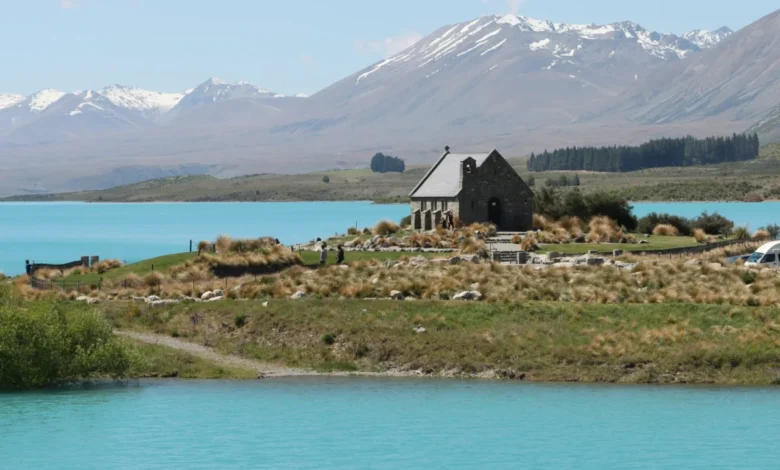
The South Island’s Mackenzie Basin is globally recognized for its exceptional atmospheric clarity, a feature that has transformed Lake Tekapo and its surrounding alpine environment into a premier destination for astronomical tourism. Centered within the 4,300-square-kilometer Aoraki Mackenzie International Dark Sky Reserve—one of the largest dark sky reserves in the world—the region has capitalized on the growing global demand for wellness-oriented, quiet-destination travel focused on natural darkness and stargazing.

The Dark Sky Project in Lake Tekapo integrates indigenous Māori astronomy with modern scientific exploration, housing a restored 19th-century telescope that serves as an educational centerpiece. For advanced stargazing, evening excursions to the Mount John Observatory provide unobstructed access to the Southern Cross and the Milky Way. Because night sky visibility is inherently dependent on meteorological conditions, travel analysts recommend scheduling astronomical excursions early in an itinerary to allow for rescheduling if cloud cover occurs. Accommodation options in the area, such as The Cairns Alpine Resort’s Alpine Lodges, draw architectural inspiration from historical musterers’ huts, offering self-contained facilities that complement the independent spirit of South Island road trips.
Wellington: Urban Culture, Culinary Innovation, and Contemporary Arts
As New Zealand’s administrative and cultural capital, Wellington offers a dense, walkable urban experience characterized by creative industries, specialty coffee culture, and a vibrant dining scene. The city’s cultural infrastructure received a significant boost with the reopening of the City Gallery, reinforcing Wellington’s status as a premier destination for contemporary visual arts. Furthermore, New Zealand’s expanding culinary reputation—highlighted by the introduction of the nation’s first Michelin-recommended establishments—is mirrored in Wellington’s dynamic neighborhood eateries and natural wine bars.
Local dining staples include Puffin, a prominent natural wine bar located in the Te Aro district, and Rita, an intimate restaurant situated within an Aro Valley cottage that rotates its set menu daily based on seasonal availability. The integration of hospitality and lodging is further demonstrated by boutique urban properties such as The Intrepid Hotel, located near Cuba Street, which places guests within immediate proximity to the city’s creative and culinary hubs. This urban density allows visitors to easily transition between gallery exhibitions, architectural tours, and fine dining without the need for extensive vehicular transit.

Fiordland National Park: Wilderness Immersion and Indigenous Craftsmanship
Occupying the southwestern corner of the South Island, Fiordland National Park represents one of the most remote and dramatically sculpted wilderness areas in the Southern Hemisphere. Encompassing iconic glacial fiords such as Milford Sound (Piopiotahi) and Doubtful Sound (Patea), the region is increasingly visited as a standalone destination rather than a day-trip excursion from Queenstown. Regional tourism authorities recommend basing exploratory trips in the lakeside town of Te Anau, which provides access to the local glowworm caves and serves as the gateway for overland and aquatic transit across Lake Manapouri and Wilmot Pass into Doubtful Sound.
The journey through Southland also highlights the growing importance of authentic, locally sourced retail and craft economies. Along the approach to Te Anau, enterprises like Davaar—a family-run sheep station operated by fifth-generation farmer Kate Macdonald—produce specialized knitwear from locally grown wool, offering travelers a direct connection to the region’s agricultural heritage. This commitment to provenance is mirrored in regional accommodations such as Cabot Lodge, a working farm overlooking Lake Manapouri, and the Milford Sound Lodge, which provides chalets integrated directly into the surrounding temperate rainforest and river ecosystems. Together, these destinations underscore New Zealand’s broader tourism evolution: a careful balance between world-class luxury hospitality and a profound respect for natural and cultural preservation.