On October 25, 1671, the Italian astronomer Giovanni Domenico Cassini forever altered our understanding of the outer solar system by identifying a previously unknown celestial body orbiting the ringed planet, Saturn. This discovery of the moon Iapetus marked a pivotal milestone in 17th-century astronomy, representing the second satellite identified at Saturn and the first of four major moons that Cassini would eventually add to the astronomical record. While the discovery occurred in an era of primitive optics and limited computational power, it set the stage for centuries of inquiry into the composition, formation, and orbital dynamics of the Saturnian system.
A Legacy of Observation: From Huygens to Cassini
The mid-17th century was a period of intense focus on the planetary bodies visible through newly developed telescopic technology. Christiaan Huygens, a Dutch polymath, had previously stunned the scientific community in 1655 by discovering Titan, the largest and most prominent of Saturn’s moons. However, the system remained largely mysterious until Cassini, working under the patronage of King Louis XIV at the Paris Observatory, turned his gaze toward the gas giant.
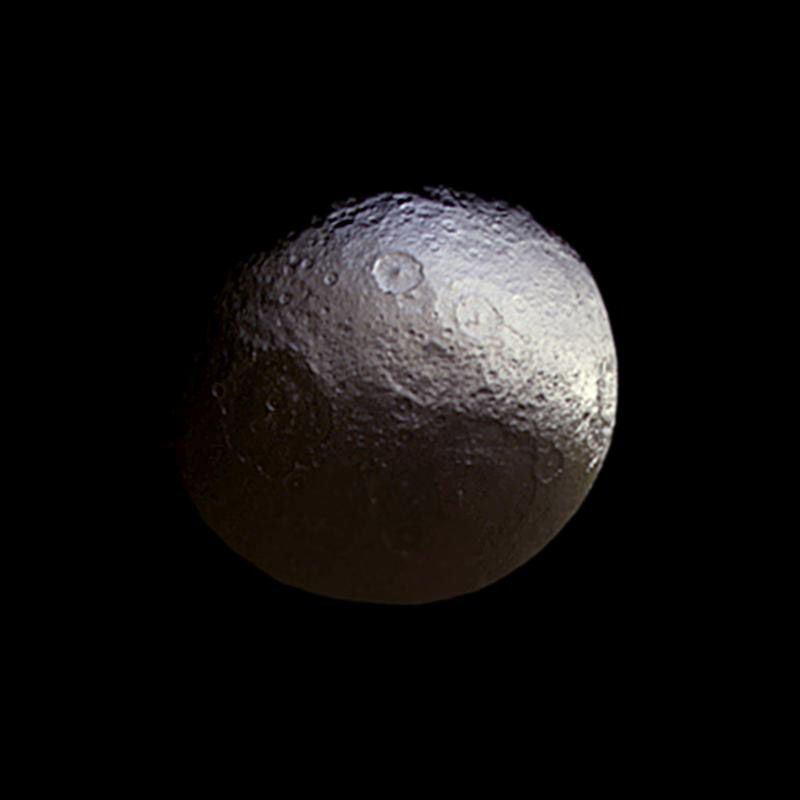
Cassini’s methodology was rigorous, relying on systematic nightly observations to track the movement of faint points of light against the backdrop of distant stars. When he first identified Iapetus, he noted its position on the western side of the planet. Through careful calculation, he attempted to predict its orbital path, expecting the moon to reappear on the eastern side of Saturn within a precise 39-day window. When the expected reappearance failed to materialize, Cassini did not immediately conclude that his observations were flawed. Instead, he maintained his vigil, and when the object eventually emerged on the western side once more, he deduced a startling physical property: Iapetus possessed a non-uniform surface albedo, being significantly darker on its leading hemisphere than on its trailing side.
The Chronology of Discovery
The exploration of Saturn’s satellite system unfolded in a deliberate, albeit slow, progression:
- 1655: Christiaan Huygens discovers Titan, the first known moon of Saturn.
- 1671: Giovanni Domenico Cassini discovers Iapetus.
- 1672: Cassini discovers Rhea, the second-largest moon of Saturn.
- 1684: Cassini identifies two additional moons, Tethys and Dione, further expanding the known Saturnian family.
- 1980–1981: The Voyager missions provide the first high-resolution imagery of these moons, confirming the dramatic surface variations of Iapetus.
- 2004–2017: The NASA-ESA Cassini-Huygens mission conducts extensive flybys, providing detailed data on the composition of the "yin-yang" moon.
Scientific Implications of the Yin-Yang Moon
For centuries, the peculiar brightness dichotomy of Iapetus remained a subject of intense scientific debate. High-resolution imagery captured by the Cassini spacecraft in the early 21st century finally revealed the mechanism behind this phenomenon. The moon, which is tidally locked to Saturn, features a "leading" hemisphere coated in a dark, reddish, carbon-rich material.
Current scientific consensus suggests that this dark material is the result of a process known as thermal segregation. Iapetus is believed to have been coated in dust originating from the outer moon Phoebe. As Iapetus orbits, its leading face sweeps up this dark, dusty debris. Because the dark surface absorbs more sunlight, the local temperature increases, causing subsurface water ice to sublimate and migrate toward the colder, brighter regions of the moon. This feedback loop serves to darken the leading hemisphere further while brightening the trailing side, creating the stark "yin-yang" contrast that distinguishes Iapetus from all other major moons in the solar system.
Structural Evolution and Orbital Dynamics
The study of Iapetus is not merely an exercise in descriptive astronomy; it provides crucial data regarding the age and formation history of the Saturnian system. Recent research, fueled by complex computer simulations, has challenged long-held assumptions about the permanence of Saturn’s rings and inner moons.
Evidence suggests that the inner moons and the iconic rings of Saturn may be far younger than previously estimated—potentially forming only within the last 100 million years, a timeframe that places their origin well after the extinction of the non-avian dinosaurs on Earth. By contrast, the more distant, larger moons such as Titan and Iapetus are considered ancient remnants of the original planetary formation process.
The hypothesis currently favored by many planetary scientists involves a "Great Instability" in the early solar system. It is theorized that Saturn’s original moon configuration was disrupted by gravitational resonances triggered by the planet’s orbital interactions with the Sun. These interactions likely forced the orbits of neighboring moons to cross, leading to high-velocity collisions. The resulting debris, trapped in orbit, eventually coalesced into the spectacular ring system we observe today, while the outer, larger moons remained in their distinct, stable orbits.

The Cassini Legacy: A Technological Bridge
The naming of the NASA spacecraft after Giovanni Cassini was a deliberate homage to the astronomer’s contributions to planetary science. During its 13-year tenure at Saturn, the Cassini probe transformed Iapetus from a blurry, elusive point of light into a geologically complex world. The mission’s instrumentation, including visual and infrared mapping spectrometers, allowed scientists to map the chemical composition of the moon’s dark material, confirming it to be a complex mixture of organic compounds and water ice.
Furthermore, the data collected from the Cassini mission has enabled planetary geologists to analyze the "equatorial ridge" of Iapetus—a massive, mountainous chain that encircles much of the moon’s equator, rising in some places to heights of 20 kilometers. This feature, which gives the moon a walnut-like appearance, remains a subject of ongoing research, with theories ranging from a collapsed ring system to tectonic upheaval caused by rapid cooling in the moon’s early history.
Broader Impact on Solar System Studies
The study of Iapetus serves as a foundational case study in comparative planetology. By understanding how orbital resonances, thermal migration, and external material deposition shape a single moon, scientists are better equipped to model the development of exoplanetary systems. The transition from the telescopic observations of the 17th century to the robotic exploration of the 21st century illustrates the relentless drive of human inquiry.
When Cassini peered through his primitive lens in 1671, he was observing a physical manifestation of laws of motion that were only just being codified by his contemporaries. Today, those same observations contribute to a global understanding of the solar system’s violent, dynamic past. The "yin-yang" moon stands not only as a curiosity of space, but as a silent witness to the cataclysmic events that shaped the architecture of our neighborhood in the galaxy.
As space agencies look toward future missions to the outer planets, the lessons learned from Iapetus continue to guide the design of sensors and the interpretation of orbital data. The commitment to understanding the Saturnian system remains a testament to the interdisciplinary nature of science, where the historical records of a 17th-century astronomer provide the essential context for the cutting-edge computer modeling of the modern era. Through this continuous thread of discovery, the distant, shadowed reaches of our solar system become increasingly illuminated, proving that even the most remote bodies have a significant role to play in the narrative of our universe.