While the Perseids rightfully capture the public’s imagination each August, the summer months offer a continuous cascade of cosmic debris, presenting a less celebrated but equally captivating series of meteor showers. From mid-July through late August, Earth navigates through multiple streams of cometary and asteroidal detritus, igniting a diverse array of meteor activity visible primarily from the Northern Hemisphere. Though these events may not boast the prodigious hourly rates of the Perseids, they provide dedicated skywatchers with opportunities to witness brilliant fireballs, delicate streaks of light, and a broader spectrum of celestial artistry.
The allure of meteor showers lies in their ephemeral nature and the sheer spectacle of celestial fireworks. These events are a direct consequence of our planet’s orbital journey through the solar system, encountering trails of dust and ice left behind by comets and asteroids. As these tiny particles, often no larger than grains of sand, enter Earth’s atmosphere at tremendous speeds, they ignite due to friction, creating the fleeting luminous trails we call meteors, or "shooting stars."
The Perseids, originating from the comet Swift-Tuttle, are renowned for their intensity, often delivering over 50 meteors per hour during their peak. However, this article delves into the quieter, yet still rewarding, celestial performances that precede and complement the Perseids, offering a more nuanced appreciation of our solar system’s dynamic environment.
A Chronology of Summer’s Lesser-Known Celestial Showers
The meteor shower season in the Northern Hemisphere is a gradual unfolding of events, with each shower having its own distinct timeline of activity. Understanding this chronology is key to maximizing viewing opportunities.
The Capricornids: A Gentle Introduction (Mid-July to Mid-August)
The first notable shower to grace the summer skies is the Capricornids. This stream, originating from the asteroid 1620 Geographos, begins its display around July 10th, reaching its peak on July 25th, and gracefully fading by August 15th. While the Capricornids are not known for their sheer numbers, typically yielding only a few bright meteors per hour under ideal conditions, they are celebrated for producing particularly vibrant fireballs. These brighter-than-average meteors often exhibit a yellowish hue, making them stand out even in a sparse display.
For observers, the challenge with the Capricornids lies in their subtle nature. Unless one meticulously plots meteor trails on a star map to identify their common point of origin, or radiant, many of the visible meteors might be mistaken for sporadic meteors—those not associated with any specific shower. The radiant for the Capricornids is located in the southern constellation Capricornus, reaching its highest point in the sky around 2:00 a.m. local daylight time. Fortunately, on the night of its peak in 2026, the waxing gibbous moon will have set by approximately 1:40 a.m., leaving the remainder of the night relatively dark and conducive to viewing.
The Delta Aquarids: July’s Prolific Contender (Mid-July to Late August)
Following closely on the heels of the Capricornids are the Delta Aquarids, often considered July’s most productive shower. This stream, believed to be debris from comet 96P/Machholz, begins its activity around July 12th and extends its reach until August 23rd, with its peak occurring on July 29th. Under optimal viewing conditions, the Delta Aquarids can deliver between two to three dozen meteors per hour, a significant increase compared to the Capricornids.
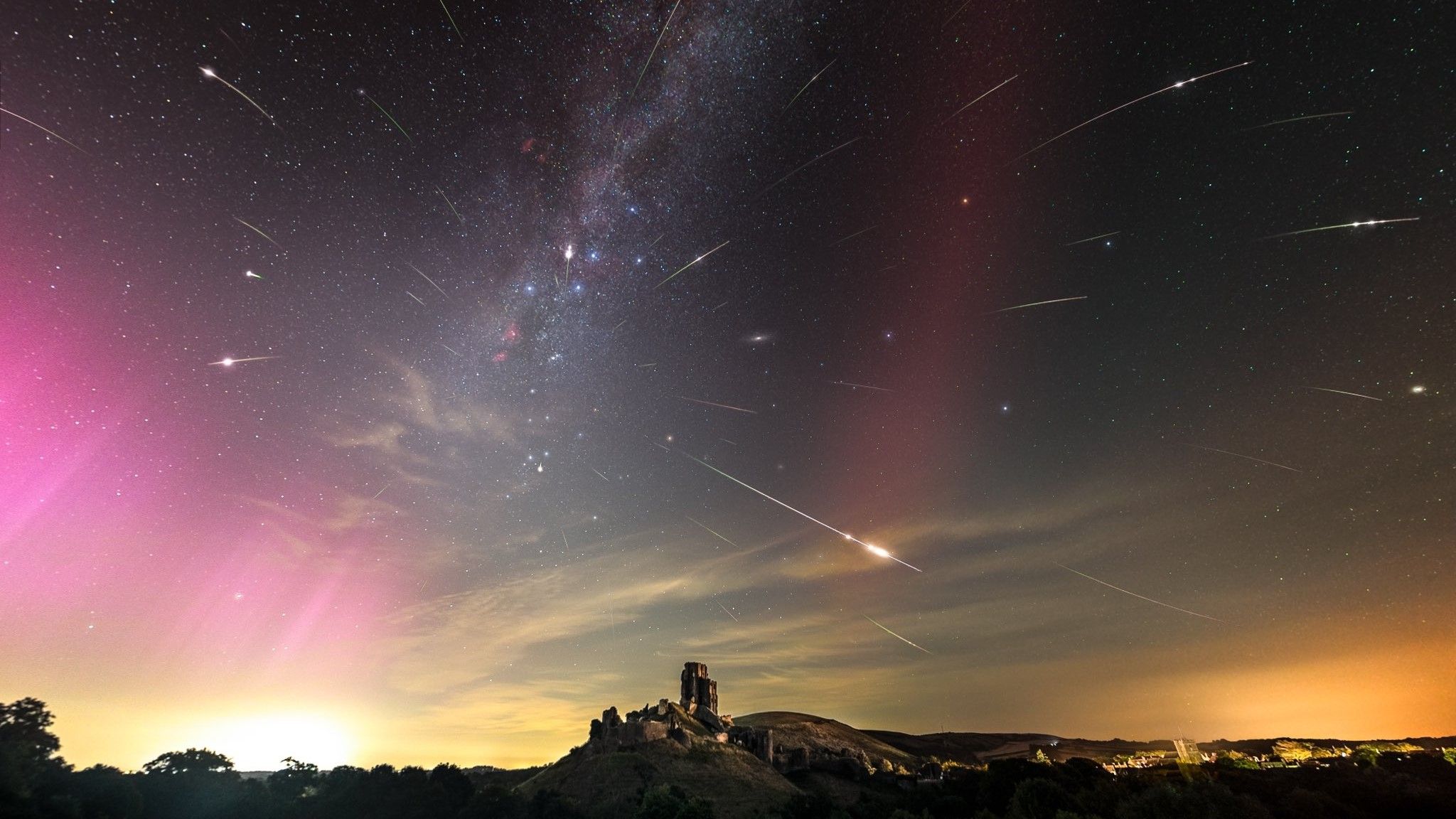
A fascinating characteristic of the Delta Aquarids is its dual radiant, suggesting the Earth is passing through two distinct streams of celestial debris. The meteors from this shower are generally fainter than those of the Perseids, though a small percentage (5-10%) are known to leave persistent trains – glowing trails that linger in the atmosphere for a few seconds after the meteor has passed. These trains are a hallmark of meteors entering the atmosphere at a shallower angle, a phenomenon attributed to the Delta Aquarids’ medium-slow speed. This slower speed is due to Earth encountering the debris stream "sideways" relative to its orbital path.
On the peak night, the double radiant of the Delta Aquarids ascends to its highest point, approximately 40 degrees above the southern horizon, around 3:30 a.m. However, a significant challenge for observers in 2026 will be the timing of the peak activity, which unfortunately coincides with a full moon. The intense moonlight is likely to wash out all but the brightest meteors, significantly diminishing the visual spectacle.
The Piscis Australids: A Southern Hemisphere Gem (Early July to Early August)
While the focus is often on the Northern Hemisphere, the Piscis Australids offer a glimpse of celestial activity relevant to observers in the Southern Hemisphere. This is another relatively weak shower, active from July 10th to August 10th, with its peak on July 30th. Under ideal conditions, only about eight meteors per hour are typically observed. The radiant for this shower is located in the constellation Pisces Austrinus, near the bright star Fomalhaut. This radiant climbs high in the southern sky, making it particularly well-positioned for Southern Hemisphere observers.
Similar to the Delta Aquarids, the Piscis Australids face a significant impediment in 2026 due to lunar interference. The moon, just one day past full on the peak night, will severely compromise any chances of observing these meteors effectively.
The Alpha Capricornids: Fireballs in the Celestial Forge (Early July to Mid-August)
The final shower to peak in July is the Alpha Capricornids. This shower, originating from comet 169P/NEAT, commences around July 7th, reaches its zenith on July 31st, and concludes its active period by August 15th. While the Alpha Capricornids are also a sparse shower, producing around five meteors per hour, they are renowned for their spectacular, bright yellow fireballs. These fireballs are a testament to the larger particles within the cometary debris stream that are responsible for the shower.
The radiant of the Alpha Capricornids lies in the constellation Capricornus, reaching its highest point in the southern sky at approximately 1:00 a.m. local daylight time. Despite the promise of dazzling fireballs, the peak of this year’s display in 2026 will be significantly impacted by the bright moon, which will be 93% illuminated and visible in eastern Capricornus.
The Iota Aquarids: A Late Summer Prelude (Mid-July to Late August)
As the calendar turns to August, the Iota Aquarids emerge as the last minor shower before the Perseids take center stage. This shower, characterized by two distinct radiants, is active from July 15th to August 25th, with its peak activity occurring on August 6th. Under good conditions, observers can expect approximately six meteors per hour. The radiants of the Iota Aquarids reach their highest point in the sky, about 40 degrees above the southern horizon, around 2:30 a.m.
Viewing conditions for the Iota Aquarids in 2026 will be moderately affected by the moon. A last quarter moon will be rising in the eastern sky around the time of peak activity, casting some light pollution that may interfere with the observation of fainter meteors.
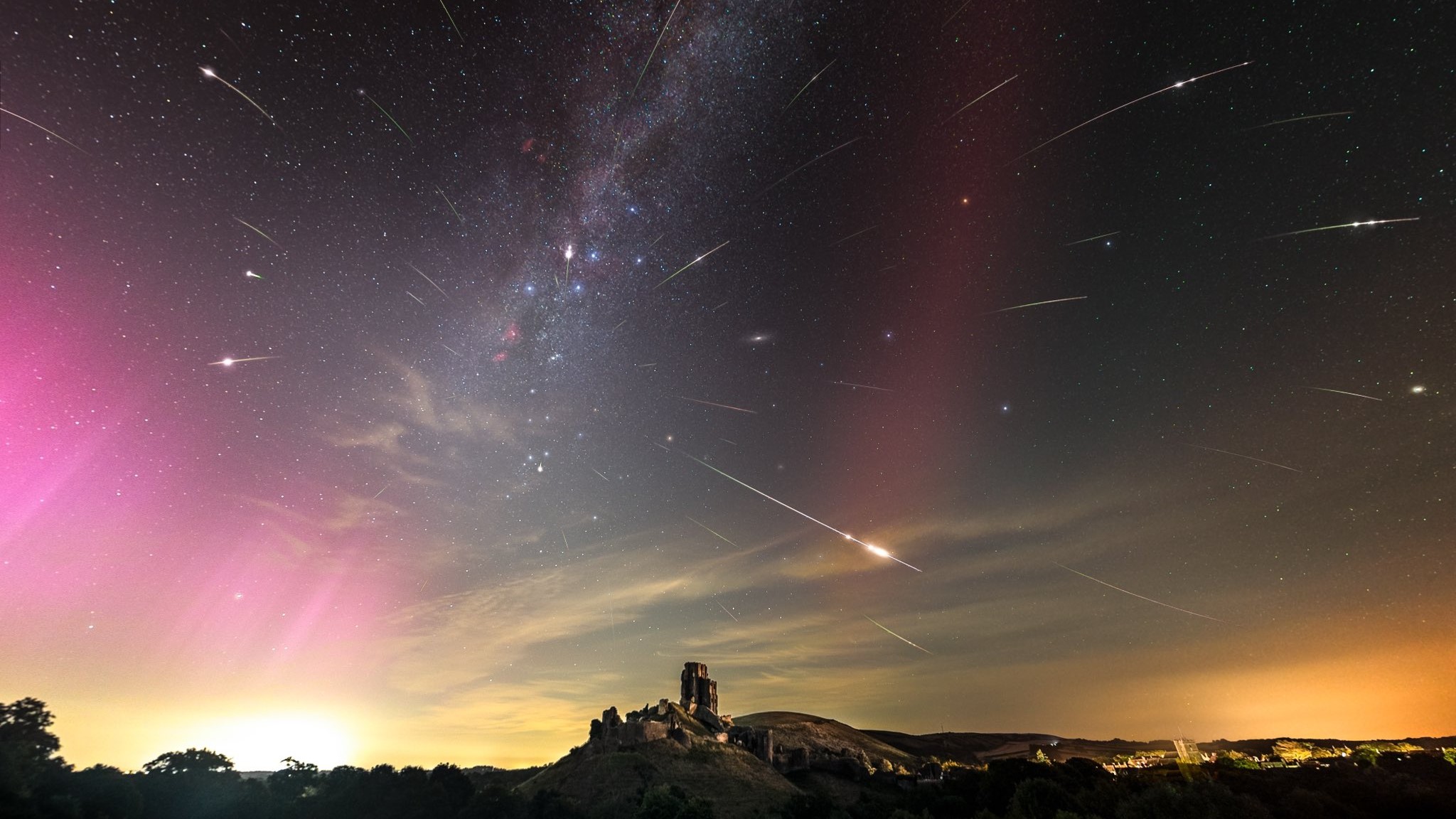
The Perseids: The Reigning Champion of August (Mid-July to Late August)
The undisputed star of the summer meteor shower season is, of course, the Perseids. This spectacular display, produced by the dust and debris shed by comet 169P/Swift-Tuttle, typically begins around July 17th and continues until August 24th, with its peak predicted for the morning of August 13th in 2026. The radiant point for the Perseids is located near the border of Perseus and Cassiopeia, close to the well-known Double Cluster.
When the Perseids peak under dark skies, as is forecast for 2026, observers can anticipate an impressive hourly rate of over 50 meteors, with occasional surges that can double this number. Many of these meteors are known for their bright, flaring trails, adding to the visual drama. The Perseids rise at dusk and reach their highest point in the sky, nearly overhead, around 5:40 a.m. The favorable lunar conditions in 2026, with the new moon occurring on August 12th, will make this year’s Perseid display exceptionally promising, allowing for the observation of even the faintest celestial streaks.
The Kappa Cygnids: A Slow Burn into Autumn (Early August to Late August)
As the Perseids begin to wane, the Kappa Cygnids offer a final celestial flourish to the summer season. This shower, active from August 3rd to August 25th, with its peak on August 17th, is characterized by a low hourly rate of about four meteors. However, the Kappa Cygnids are notable for producing slow-moving, flaring fireballs, which can be a rewarding sight for patient observers.
The radiant of the Kappa Cygnids is situated just north of the star Kappa Cygni in the constellation Cygnus. It reaches its zenith, approximately 80 degrees high in the sky, around 10:00 p.m. local time. Fortunately, the moon will be a waxing crescent and low in the southwest at this time, setting soon after and thus posing minimal interference for viewing the Kappa Cygnids.
Understanding the Radiant and Optimal Viewing Strategies
A common misconception among amateur astronomers is that meteor showers are best viewed directly at their radiant – the point in the sky from which the meteors appear to originate. While tracing meteors back to their radiant can help identify them as belonging to a specific shower, this is not the optimal viewing location. Stationary meteors, those that appear to be coming almost directly towards the observer, are the only ones visible at the radiant.
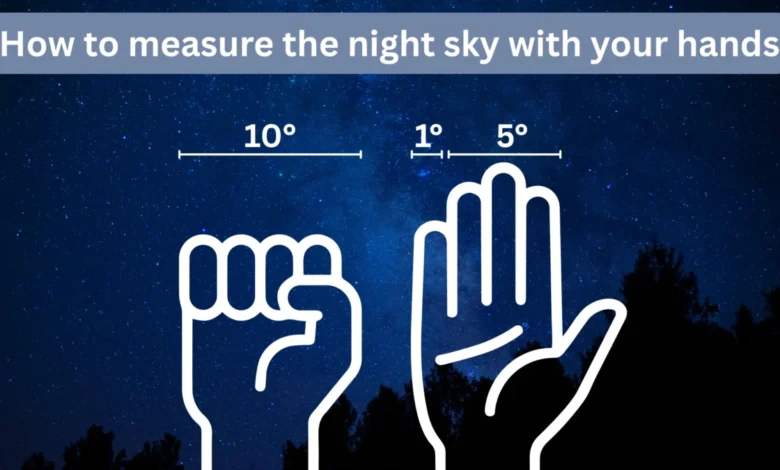
The greatest number of meteors from a shower are typically seen approximately 30 degrees away from the radiant, in the general direction of the zenith (the point directly overhead). It is advisable to look for meteors across the widest possible expanse of the sky. To gauge distances in the night sky, a useful rule of thumb is to hold up a clenched fist at arm’s length; this typically spans about 10 degrees of the celestial sphere.
Beyond the organized showers, sporadic meteors are always present, occurring at an average rate of about seven per hour. These meteors are not associated with any specific cometary debris trail and appear randomly throughout the sky. It is important to distinguish between these sporadic meteors and those belonging to a recognized shower.
Essential Skywatching Tips for an Enhanced Experience
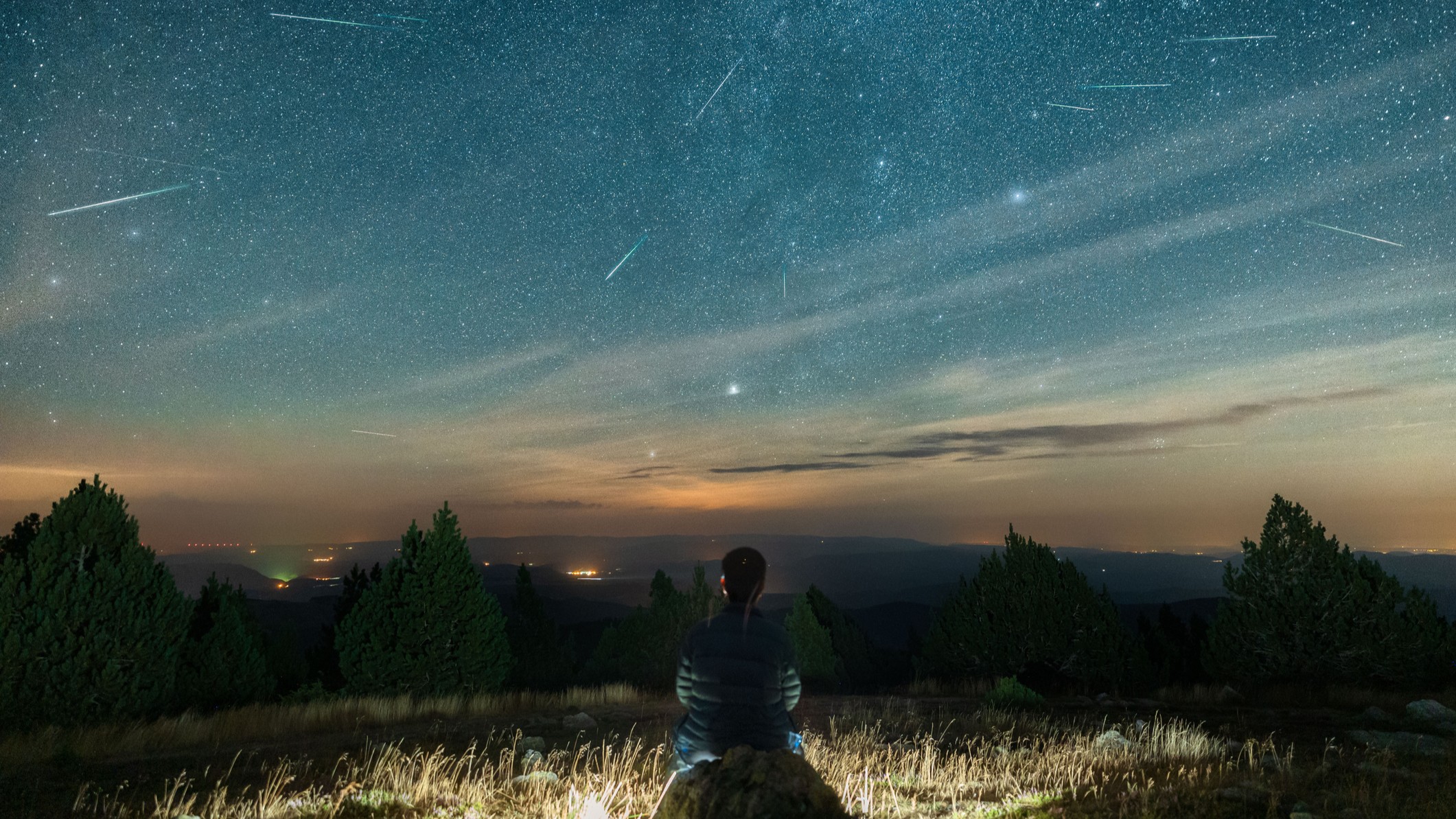
Successfully observing meteor showers requires more than just looking up; it demands preparation and patience. The quoted hourly rates for meteor showers are based on ideal conditions: an exceptionally dark sky (limiting magnitude of +6.5), an experienced observer, and the radiant positioned directly overhead.
Several factors can significantly reduce the number of visible meteors:
- Radiant Altitude: As the radiant’s altitude decreases, so does the observed meteor rate. At an altitude of 30 degrees, the hourly rate is halved, and at 15 degrees, it drops to one-third.
- Light Pollution: Urban and suburban areas with significant artificial lighting will drastically reduce the number of visible meteors. Escaping to dark, rural locations is crucial for optimal viewing.
- Lunar Illumination: As detailed for many of the summer showers, the phase of the moon is a critical factor. A bright moon, especially during the week surrounding its full phase, can render fainter meteors invisible.
To enhance comfort and endurance during extended viewing sessions, especially on cooler summer nights:
- Dress Warmly: Even summer nights can become surprisingly chilly, particularly when sitting still for long periods. Layers of clothing, a warm jacket, blankets, sleeping bags, a ground cloth, an automobile cushion, and a pillow are highly recommended.
- Stay Hydrated and Nourished: Bringing along food and non-alcoholic beverages can help maintain comfort and energy levels.
- Allow for Acclimatization: Give your eyes at least 20-30 minutes to adjust to the darkness. Avoid looking at bright lights, including phone screens, during this period. Red-filtered flashlights are a better option if illumination is necessary.
The Lunar Factor: A Constant Companion
The phase of the moon is a recurring theme when discussing the visibility of meteor showers. In 2026, the full moon occurs on July 29th, coinciding with the peak of the Delta Aquarids. The new moon, on the other hand, will occur on August 12th, making it an exceptionally favorable year for viewing the Perseids. For showers peaking around the full moon, it is often beneficial to observe in the pre-dawn hours after the moon has set, or to focus on the days before and after the peak when lunar interference is less severe.
Are These Lesser-Known Showers Worth the Effort?
The question of whether to dedicate time to the less prolific summer meteor showers depends on an individual’s skywatching preferences. For those who relish patient observation, a quiet connection with the cosmos, and the anticipation of a fleeting celestial event, these showers are undoubtedly rewarding. They offer an extended viewing season, require no specialized equipment, and can produce a diverse array of meteors with varying colors, speeds, and trajectories. Furthermore, they provide more opportunities to witness meteors under clear skies and with minimal moonlight interference.
However, for observers seeking a dramatic, high-rate display, these minor showers may fall short. Their low hourly rates, the prevalence of fainter meteors, and the potential for interference from moonlight, low radiant positions, and overlapping showers necessitate a higher degree of patience and an appreciation for subtle celestial phenomena. Dark skies are paramount, and a willingness to embrace the quiet moments between meteors is essential for a truly satisfying experience.
As Joe Rao, a seasoned skywatcher and author, aptly puts it, "In short, minor summer meteor showers are worth watching if you enjoy patient, low-key skywatching, but they are not ideal if you expect a dramatic display." The true value lies in the extended opportunity they provide to connect with the natural rhythms of our solar system and to appreciate the subtle beauty of the cosmos.