The battlefield now extends all the way to the moon, U.S. military’s highest-ranking officer says

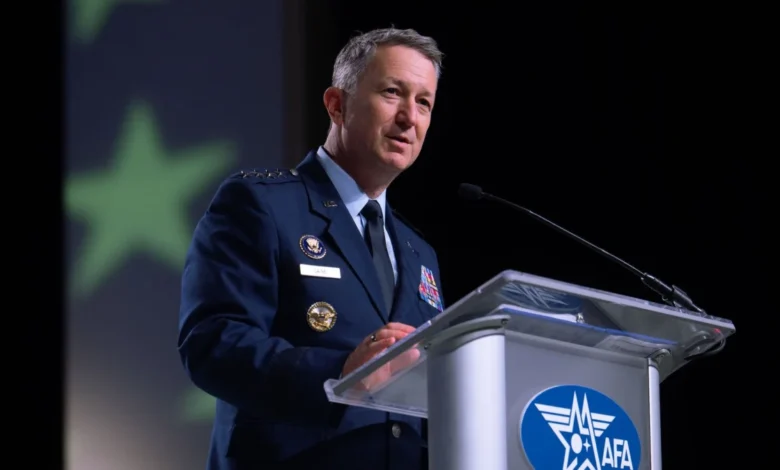
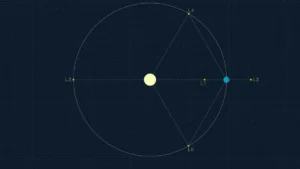
During a keynote address at the Air & Space Forces Association’s Air, Space & Cyber Conference held on September 16, 2026, in National Harbor, Maryland, Gen. Dan Caine, the Chairman of the Joint Chiefs of Staff, articulated a significant shift in U.S. defense doctrine. He emphasized that the modern battlefield is no longer tethered to terrestrial boundaries, extending deep into cislunar space—the vast region encompassing the Earth-Moon system, including the lunar surface and the points of gravitational equilibrium known as Lagrange points.
A New Strategic Frontier
For years, the Pentagon has moved beyond viewing space as a sanctuary, instead treating it as a contested domain. Gen. Caine’s remarks represent a formalization of this transition. "Today’s modern battlefield operates from the seabed to cislunar space," Caine stated. His comments reflect an increasing urgency among military planners to secure the "high ground" of the 21st century.
This strategic pivot is driven by the rapid acceleration of international lunar exploration. With both the United States and China pursuing permanent outposts near the moon’s south pole—a region identified as rich in water ice and other vital resources—the race to establish a lunar presence has become a matter of national security. Officials argue that whoever secures these strategic locations will effectively set the "norms of behavior" for lunar operations, potentially dictating the terms for future commerce, scientific research, and military presence.
The Chronology of Escalation
The push toward lunar militarization did not occur in a vacuum. It follows a decade of rapid technological strides by major global powers. The timeline of this competition highlights the growing capabilities of adversaries:
- 2019: China’s Chang’e 4 mission marks the first-ever soft landing on the far side of the moon, demonstrating a level of navigational precision that previously belonged only to the United States and Russia.
- 2022-2023: The U.S. Space Force and various international partners begin formalizing "Artemis Accords," establishing a framework for space governance, though skeptics note the absence of major rivals like China.
- 2024: China successfully completes the Chang’e 6 mission, returning lunar samples from the far side to Earth for the first time in history, proving a sustainable round-trip capability.
- 2025-2026: Increased reports of "inspector" satellite activity and the deployment of non-kinetic counterspace capabilities by both Western and Eastern powers.
- September 2026: Gen. Caine and Space Force leadership publicly acknowledge the operational status of on-orbit defensive weaponry.
The Shift to Electromagnetic Deterrence
The most striking disclosure during the conference came from Gen. Douglas Schiess, head of the U.S. Space Force, who confirmed that "Guardians" (the official designation for Space Force personnel) are currently operating on-orbit weapons.

"Let me be crystal clear: Today, Guardians operate on-orbit weapons that can defend the joint force against space-enabled attacks," Schiess stated on September 15. While the General provided limited technical details, analysts suggest these systems are primarily electromagnetic. Unlike kinetic anti-satellite (ASAT) missiles, which create thousands of pieces of space debris that can endanger all orbiting assets—including commercial GPS and communication satellites—electromagnetic weapons are designed to jam, spoof, or temporarily disable adversary sensors and communication links.
This approach reflects a calculated effort to maintain deterrence without triggering a "Kessler Syndrome" scenario, wherein a chain reaction of collisions renders near-Earth orbits unusable. By focusing on non-destructive methods, the U.S. aims to preserve the utility of the space environment while maintaining a credible threat against aggression.
Implications of a Contested Cislunar Battlefield
The expansion of the battlefield to the moon poses unique logistical and tactical challenges. Unlike the immediate vicinity of Earth, where satellite orbits are well-mapped and predictable, cislunar space involves complex, multi-body gravitational mechanics. Patrols, surveillance, and potential defensive operations in this region require a level of automated, AI-driven coordination that is only now entering development.
Gen. Caine’s emphasis on "uncontested access" acknowledges that the era of American space hegemony is being challenged. "Future conflicts will demand that we operate without the assumptions of uncontested access, secure rare areas or uninterrupted or uncontested sustainment," he warned.
Military analysts suggest that the primary goal of the Pentagon is to prevent a "fait accompli"—a situation where an adversary establishes an entrenched position on the lunar surface or in a strategic orbit that is too costly to dislodge. By integrating the Space Force’s domain awareness with the joint force’s global strike capabilities, the U.S. intends to maintain a posture of "integrated deterrence."
Global Reactions and the Ethics of Space
While U.S. officials maintain that their actions are defensive and intended to preserve the "rules-based order," the public admission of operating space weapons has sparked international debate. Critics argue that the open acknowledgement of orbital weaponry risks accelerating a space arms race. Russia and China, both of which have been accused of testing ASAT technologies—including kinetic missile strikes and "inspector" satellites that shadow other craft—are likely to interpret the U.S. statements as a justification for their own military space expansions.

The diplomatic challenge lies in the lack of an existing "Treaty of Versailles" for space. While the 1967 Outer Space Treaty prohibits the stationing of weapons of mass destruction in orbit, it is silent on the deployment of conventional, non-nuclear, or electromagnetic weapons. This legal ambiguity has created a "gray zone" where nations can project power without technically violating international law.
Moving Forward: The Role of the Space Force
The U.S. Space Force now finds itself at the forefront of this new era. Beyond the deployment of defensive systems, the branch is tasked with maintaining "domain awareness"—the ability to track, categorize, and predict the movement of every object in cislunar space. As the number of commercial missions, private-sector lunar landers, and national government spacecraft increases, distinguishing between a peaceful research vessel and a concealed military threat becomes exponentially more difficult.
Gen. Caine’s message to the conference was clear: the military must treat the void between Earth and the moon with the same seriousness it applies to the maritime lanes of the Pacific or the airspace over Europe. The integration of space-based assets into the broader military architecture is no longer a peripheral task; it is the cornerstone of future global security.
As the U.S. prepares for the next decade of exploration, the focus remains on ensuring that space remains a domain where the U.S. and its allies can operate freely. Whether this path leads to a stable balance of power or an intensified period of orbital friction remains to be seen. What is certain is that the "final frontier" has officially become a theater of war, and the military apparatus of the world’s leading nations is adapting to that reality with increasing speed and openness.
Related posts: