Peggy King, the quintessential 1950s television icon and vocal powerhouse known to millions as Pretty Perky Peggy King, has died at the age of 96.

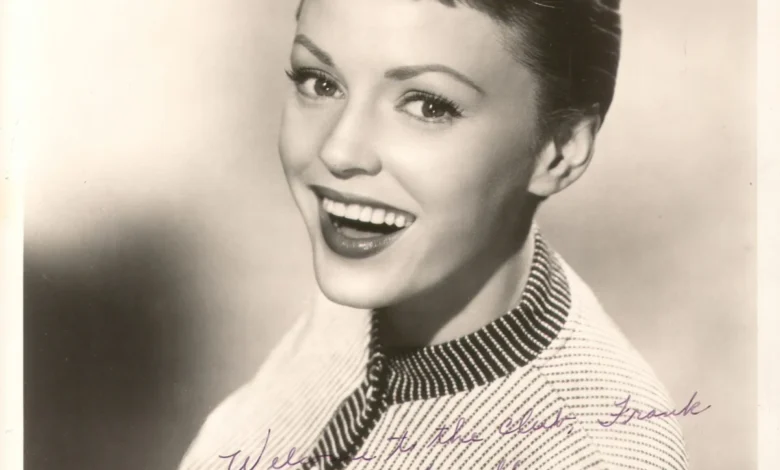
The celebrated singer and actress passed away this past Sunday while residing at the Saunders House Assisted Living facility in Wynnewood, Pennsylvania. Her death follows a long and courageous battle with Alzheimer’s disease. The confirmation of her passing was provided by her longtime publicist, Alan Eicher, marking the end of a storied career that spanned the Golden Age of Television and reached into the modern era of music recording.
A Career Defined by Mid-Century Television
Born on February 16, 1930, in Greensburg, Pennsylvania, to Floyd Henry King and Margaret Finan, Peggy King’s journey to stardom began with early aspirations that quickly moved beyond her local roots. After graduating from Ravenna High School, her vocal talent caught the attention of regional radio executives in Cleveland, where she began honing the precise, jazz-inflected phrasing that would eventually define her signature sound.
Her rise to national prominence was meteoric, fueled largely by her ubiquitous presence on the most popular variety programs of the 1950s. Between 1954 and 1957, King became a household name as a regular on The George Gobel Show. It was the host himself, George Gobel, who bestowed upon her the moniker "Pretty Perky Peggy King." The name was more than a marketing gimmick; it captured the infectious energy and polished charm that made her an essential fixture of post-war American entertainment.
Her television résumé reads like a comprehensive history of the medium’s formative years. Beyond the Gobel program, King commanded the screen on The Steve Allen Show, The Perry Como Show, The Garry Moore Show, and the legendary The Tonight Show Starring Johnny Carson. She was also a staple on American Bandstand and appeared on high-profile broadcasts such as Bob Hope’s Chevy Show and The Kraft Music Hall with Milton Berle. Her versatility extended to the quiz show circuit, where she was a frequent guest on What’s My Line?, and to dramatic acting, with notable guest roles on gritty series such as Maverick and Dragnet.
Chronology of a Stellar Rise
King’s career followed a distinct upward trajectory, mirroring the rapid expansion of the entertainment industry during the mid-20th century:
- Early 1950s: King begins her professional career on radio in Cleveland and as a regular on The Mel Torme Show.
- 1952: She signs a significant contract with MGM, leading to a cameo in the Vincente Minnelli-directed film The Bad and the Beautiful.
- 1954–1957: Her tenure on The George Gobel Show cements her status as a national star.
- 1955: King is nominated for an Emmy Award for Best Female Singer and performs "Count Your Blessings" at the Academy Awards ceremony.
- 1957: She appears in the thriller Zero Hour!, which would later become famous as the basis for the comedy classic Airplane!.
- 1958: King co-hosts the Emmy Awards, further solidifying her status as a top-tier industry personality.
- 2010: She is formally inducted into the Broadcast Pioneers Hall of Fame.
- 2016: King releases her final studio album, Songs a la King, demonstrating her enduring commitment to music well into her eighties.
The Columbia Records Era and the "Cry Me a River" Connection
While television provided her greatest visibility, King’s recording career was equally significant. Signed to a long-term contract by the legendary A&R man Mitch Miller at Columbia Records, King produced two best-selling albums and a series of hit singles that showcased her range as a vocalist.
Music historians often cite a particular "what if" moment in her career involving the iconic standard "Cry Me a River." Composer Arthur Hamilton wrote the song specifically with King in mind, envisioning her vocal style as the perfect vehicle for the track. However, in a move that illustrates the intense control record label executives exercised over artists at the time, Mitch Miller refused to allow King to record it. The song eventually became a signature hit for Julie London, highlighting the precarious nature of song selection in the mid-1950s music industry.
Despite this missed opportunity, King’s output remained prolific. She balanced her musical work with cinematic endeavors, including roles in Abbott and Costello Meet the Mummy and the television musical version of Jack and the Beanstalk, where she performed alongside icons such as Joel Grey, Celeste Holm, and Cyril Ritchard.
Cultural Impact and Legacy
Peggy King’s influence was not merely defined by the length of her career but by the breadth of her contributions to the American cultural fabric. She was among the inaugural group of performers honored with a star on the Hollywood Walk of Fame, a testament to her foundational role in the development of celebrity culture in the 20th century.
Beyond her work on camera, King was a skilled commercial performer. Her success in a jingle for Hunt’s Tomato Sauce is often cited by media historians as a prime example of the era’s "jingle culture," where top-tier talent successfully bridged the gap between artistry and consumer marketing.
Her commitment to live performance never waned. Even in her later years, King maintained an active schedule, performing regularly in Philadelphia, New York, and Los Angeles through 2014. Her ability to command an audience, even decades after her peak popularity, spoke to the timeless nature of her craft and the enduring loyalty of her fanbase.
Analysis: A Bridge Between Eras
The passing of Peggy King serves as a poignant reminder of the transition between the radio era and the television age. Her ability to thrive in both mediums speaks to the technical discipline required of artists during the 1950s. Unlike the fragmented entertainment landscape of the modern era, stars like King were required to be "triple threats"—capable of singing live, acting in dramatic roles, and navigating the unpredictable nature of live television broadcasts.
Her career trajectory also highlights the shifting power dynamics of the music industry. The control exerted by figures like Mitch Miller, while common for the era, stands in stark contrast to the artist-led model of today. King’s career was a masterclass in professional adaptability; she moved seamlessly from being a radio darling in Cleveland to a Hollywood starlet, and finally to a respected veteran of the live performance circuit.
Official Responses and Remembrance
The announcement of her passing has prompted an outpouring of remembrance from those who worked with her and those who followed her long career. While no formal public memorial service has been announced at this time, representatives for the family have expressed gratitude for the outpouring of support from fans across the globe.
"Peggy was a consummate professional who brought joy to millions," said a source close to the family. "Her legacy is not just in the records she left behind or the television shows she graced, but in the warmth and professionalism she displayed throughout her long, storied life."
Peggy King is survived by her daughter, Suzy Rudofker, and her son-in-law, Dwain Goforth. Her family has requested privacy as they mourn the loss of a woman who defined an era of American entertainment. As the final notes of her career fade, her legacy remains secured in the archives of the Broadcast Pioneers Hall of Fame and the hearts of the generations who tuned in to see "Pretty Perky Peggy King" light up the small screen.