Navigating the Cultural Fault Lines: Peter Rosenberg on Hip-Hop, Identity, and the Middle East

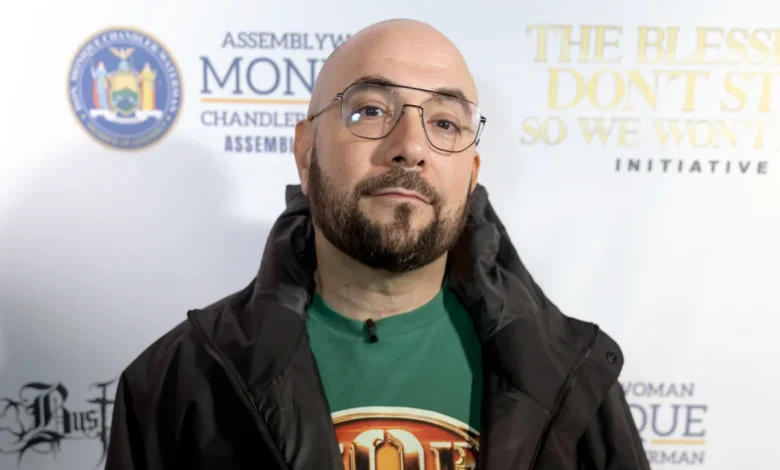
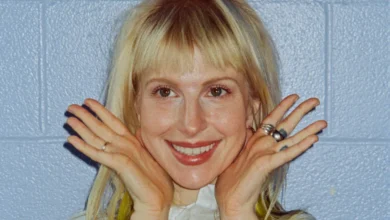
The intersection of entertainment, politics, and ethnic identity has long been a volatile space, but recent geopolitical events have intensified cultural fault lines across the global music industry. Within the ecosystem of American hip-hop, few figures occupy a position as culturally distinct as Peter Rosenberg. Known for his tenure on Hot 97 and his current role co-hosting the Ebro Laura Rosenberg Show, Rosenberg carries a credible voice forged in a historically insular and unforgiving industry. His trajectory—parallel to figures like Paul Rosenberg, the longtime manager of Eminem—reflects a broader narrative of Jewish professionals navigating a genre deeply intertwined with social justice movements, marginalized voices, and, increasingly, polarized geopolitical discourse.
This tension reached a boiling point following a series of high-profile incidents involving major recording artists, venue executives, and international politics. As public discourse grows increasingly fragmented, industry insiders, media personalities, and cultural commentators find themselves forced to reconcile personal heritage with polarizing global events, revealing deep fissures within the entertainment community.
The Genesis of the Current Cultural Flashpoint
The modern convergence of hip-hop culture and Middle Eastern geopolitics accelerated sharply following the events of October 7, 2023, when Hamas launched an unprecedented attack on southern Israel, resulting in the mass casualties and abductions of civilians, predominantly at the Nova music festival. The subsequent military campaign launched by the Israeli government in Gaza triggered a global wave of protests, debates, and cultural reckonings.
Within the music industry, these tensions manifested directly on tour itineraries and festival stages. Pop superstar Ed Sheeran found his North American Loop Tour mired in controversy after his opening act, Macklemore, utilized concert stages to voice support for the "Free Palestine" movement. The situation escalated when New England Patriots owner Robert Kraft, proprietor of Gillette Stadium, publicly categorized Macklemore’s on-stage remarks as hate speech, prompting the artist’s sudden removal from subsequent tour dates. The fallout widened as members of Sheeran’s backing band and fellow supporting acts withdrew from the tour in solidarity with Macklemore, throwing the remainder of the North American leg into financial and logistical uncertainty.
The incident ignited broader industry debates regarding freedom of speech, corporate responsibility, and the weaponization of political discourse within commercial spaces. Critics and supporters alike sparred over whether an artist’s platform should be restricted based on geopolitical commentary, or if venue owners possess the unilateral right to curate performances free from controversial political statements.

Shifting Perspectives in Hip-Hop and Media
Peter Rosenberg’s entry into the hip-hop landscape began decades ago in Chevy Chase, Maryland, immersed in foundational urban radio stations like 98.7 Kiss and WBLS. Over time, his career transitioned from local commercial radio to prominent New York platforms, where his Jewish identity was frequently utilized as a branding tool. Early promotional campaigns for Hot 97 famously featured billboards explicitly highlighting a multi-ethnic lineup, positioning Rosenberg alongside Black and Puerto Rican co-hosts under his literal surname.
Reflecting on his decades in the industry, Rosenberg notes a distinct shift in how antisemitism and cultural identity operate within public discourse. While low-level, casual antisemitism—often rooted in stereotypical tropes about money and power—was a persistent background noise throughout his career, the climate transformed dramatically following public controversies involving high-profile artists like Kanye West. West’s widely publicized antisemitic remarks and public praise for Adolf Hitler in late 2022 marked a critical inflection point, normalizing vitriolic rhetoric across social media platforms and laying the groundwork for heightened polarization post-October 7.
Rosenberg argues that public discourse has since deteriorated into absolute extremes, effectively silencing rational, moderate voices from all sides. He highlights the difficulty of maintaining nuance in an online ecosystem that rejects dual truths: namely, that the October 7 attacks on Israeli civilians were an unprovoked atrocity, and that the subsequent scale of civilian casualties and military actions by the Israeli government in Gaza are indefensible.
The Crisis of Public Relations and Institutional Missteps
The handling of the Sheeran-Macklemore tour controversy by venue management and corporate stakeholders has been widely analyzed as a public relations failure. Industry observers have pointed out the inherent contradiction in attempting to suppress pro-Palestinian messaging while simultaneously accommodating artists with documented histories of hate speech or controversial public statements.
Rosenberg has been particularly vocal regarding the strategic missteps made by tour organizers and venue proprietors like Robert Kraft. Rather than canceling performances or issuing reactionary statements that inadvertently amplify the controversy, Rosenberg suggests that transparent legal discussions and adherence to existing contractual agreements would have yielded a more defensible outcome. Instead, the heavy-handed intervention reinforced pre-existing narratives regarding industry censorship and inextricably linked American Jewish communities with the actions of the Israeli state—a dynamic that cultural critics argue harms both groups.

Furthermore, the public debate has consistently struggled to separate mainstream political slogans, such as "Free Palestine," from genuine antisemitism. While organizations and community leaders frequently argue that certain phrases inherently threaten Jewish safety, artists and activists maintain that human rights advocacy for Palestinians should not be conflated with hatred of Jewish people.
Historical Context and the Evolution of Zionism
The discourse surrounding Israel and Palestine within the American Jewish diaspora is historically complex, shaped by generational divides, political shifts, and evolving definitions of Zionism. Rosenberg’s own background reflects this internal evolution; his father, MJ Rosenberg, worked for organizations such as AIPAC before becoming a prominent critic of Israeli government policies following the assassination of Prime Minister Yitzhak Rabin in 1995.
This lineage highlights a growing demographic of Jewish individuals who maintain a deep cultural connection to Israel and its people while offering rigorous, unsparing critiques of its current political leadership and military strategies. The terminology itself has undergone a profound transformation. Once viewed primarily as a baseline affirmation of Jewish self-determination, the term "Zionism" is now frequently deployed across political extremes either as an indiscriminate slur or as an absolute ideological shield, obscuring the nuanced realities on the ground.
Broader Implications for the Entertainment Industry
As the music industry continues to grapple with these cultural fault lines, the long-term implications for touring artists, promoters, and media personalities remain uncertain. The modern digital landscape ensures that local statements instantly transform into global flashpoints, leaving little room for diplomatic ambiguity or measured discourse.
The core challenge facing cultural figures in the current climate is the demand for ideological purity enforced by algorithmically driven social media platforms. As Rosenberg and other industry veterans observe, the silencing of the rational middle leaves public discourse dominated by polarizing extremes. Whether the music business can foster environments capable of holding complex, contradictory truths remains one of the defining cultural questions of the decade.