Werner Herzog Receives Donostia Award as San Sebastian Film Festival Opens with Politically Charged Ceremony

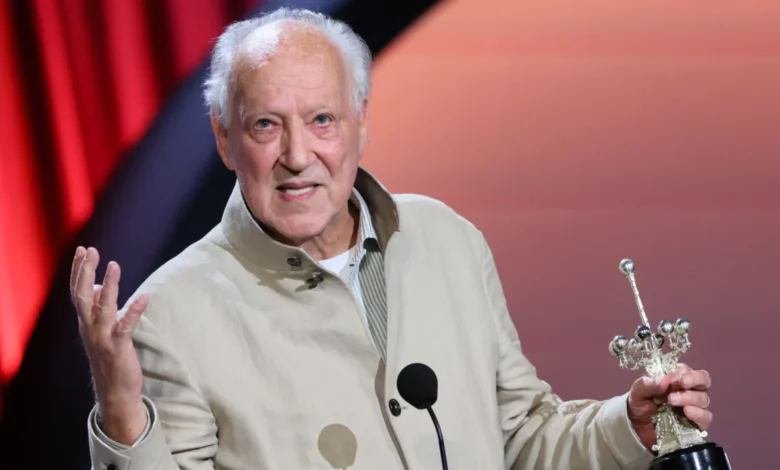
The 74th annual San Sebastian International Film Festival commenced on Friday night with a striking blend of cinematic celebration and fervent political discourse at the Kursaal Theatre in northern Spain. Legendary German director, screenwriter, and producer Werner Herzog was honored with the festival’s highest accolade, the prestigious Donostia Award, receiving a raucous standing ovation from an assembly of international filmmakers, actors, and industry professionals. However, the glittering opening night was equally defined by outspoken calls for international human rights, sharp criticisms of foreign governments, and a strong declaration of solidarity with filmmakers facing state-sponsored intimidation.
The evening set a tone of political urgency that has increasingly characterized major European film festivals in recent years, demonstrating that the cinematic community remains deeply intertwined with global geopolitics. From Herzog’s reflective, poetic acceptance speech to the unvarnished declarations made by the evening’s hosts regarding Gaza and international law, the event underscored the festival’s ongoing commitment to using its global platform to address humanitarian crises.
Herzog Honored and Reflects on Basque Roots
The highlight of the celebratory portion of the ceremony was the presentation of the Donostia Award to Werner Herzog. The prolific auteur behind cinematic masterpieces such as Aguirre, the Wrath of God (1972), Fitzcarraldo (1982), Grizzly Man (2005), and Cave of Forgotten Dreams (2010) was introduced by actor Orlando Bloom, who stars in Herzog’s latest directorial feature, Bucking Fastards. The film, which also features an ensemble cast including Kate Mara, Rooney Mara, and Domhnall Gleeson, is making its screening rounds at the festival.
Upon taking the stage, Herzog expressed profound gratitude for the honor, reserving special praise for the presenter. “What an honor to receive it from the very hands of Orlando Bloom,” Herzog told the applauding audience. “He’s a living legend at his young age already. He is a treasure of cinema.”
Transitioning into a more reflective register, the 83-year-old director forged an emotional connection with the local audience, rejecting the label of an outsider. “I’m here standing in front of you, not as a foreigner,” Herzog said. “I’ve had a connection to you, the Basque people, through an early film of mine—Aguirre, the Wrath of God.”
Recalling a grueling journey undertaken decades prior, Herzog recounted how he traveled on foot from the Cannes Film Festival up into the Pyrenees mountain range, covering a distance of more than 1,000 kilometers. “But I must confess, I ended up in Biarritz,” he joked, drawing warm laughter from the crowd, “not San Sebastian.”
Despite missing his intended destination, Herzog emphasized that his interactions with the Basque people left an indelible impression on him. Noting that he closely follows Spain’s national poetry competitions, the director concluded with a poetic tribute to his hosts: “I feel like as if I belong here. It is a country of poetry. It’s a country of poets, and I receive this here from the poets. Thank you very much.”
A Politically Charged Opening Ceremony
While the celebration of Herzog’s lifetime achievement anchored the cultural significance of the night, the political realities of the modern world dominated the evening’s rhetoric. Ceremony hosts Fariba Sheikhan and Mariona Terés delivered pointed remarks that directly addressed ongoing global conflicts, drawing thunderous applause from the packed auditorium.
“We join the myriad of voices calling for an end to genocide, like the one happening in Gaza,” Sheikhan told the audience, setting a solemn tone. Expanding their focus to threats against freedom of expression and artistic liberty, the hosts continued, “And we stand in solidarity with the directors of the film NAZA, Yuval Abraham and Rachel Szor, who have been threatened by the Israeli government.”
The hosts’ statements reflect a growing institutional stance within the San Sebastian Film Festival. Last year, festival organizers made international headlines by calling for an “immediate ceasefire” in the Middle East as the government of Israeli Prime Minister Benjamin Netanyahu subjected Palestinian populations to what the festival explicitly characterized as “unimaginable massacres.”
The invocation of international law and human rights extended beyond the Middle East during Friday’s ceremony. The presenters issued a broader rallying cry, emphasizing the urgent global necessity to put an end to the “unilateral breaking of international law, to colonialist looting, to sexual violence and to the cruel wars that systematically violate human rights.”
The Controversy Surrounding NAZA and Artistic Freedom
The inclusion of Yuval Abraham and Rachel Szor in the festival’s political discourse stems from the massive international breakout and subsequent political fallout of their documentary feature, NAZA. The film, which features harrowing testimony from 24 Israeli military officers detailing the systemic protocols and operational mechanics alleged to be used by the military to target and kill civilians in Gaza, has become one of the most talked-about works of the current cinematic calendar.
NAZA previously made history at the Venice Film Festival, setting a new record for the longest standing ovation during its premiere on the Lido. The film’s critical acclaim culminated in Abraham and Szor winning the prestigious Special Jury Prize at the Venice awards ceremony.
However, the film’s success has been severely overshadowed by political retribution. Following its festival run, the co-directors have faced intense scrutiny and direct intimidation from state officials. Notably, Israel’s Culture Minister Miki Zohar publicly threatened to revoke the Israeli citizenship of Abraham and Szor in retaliation for the film’s unflinching critique of military operations.
The threats against the filmmakers have galvanized the European film community, transforming NAZA into a vital flashpoint in the ongoing debate over artistic censorship, state retaliation, and the moral responsibilities of documentary filmmakers covering active conflict zones. By publicly throwing their support behind Abraham and Szor, the San Sebastian Film Festival has cemented its role as a defender of endangered artists.
Festival Lineup and the Opening Feature
Running from September 18 through September 26, the 2026 San Sebastian International Film Festival features a robust slate of international cinema, balancing high-profile commercial projects with politically daring independent works.
The festival officially kicked off on Friday night with the screening of Fatih Akin’s haunting feature, Ghost Song. Heavily influenced by the celebrated director’s lifelong fascination with Japanese anime and manga aesthetics, the film follows two students whose profound, love-at-first-sight connection is abruptly shattered when tragedy strikes and one of them dies. Akin’s stylistic departure and deeply emotional narrative framework have already positioned Ghost Song as an early contender for the festival’s top prizes.
Broader Impact and Industry Implications
The convergence of high-profile cinematic honors and explicit political activism at the opening night of the San Sebastian Film Festival highlights a broader trend reshaping the global film festival circuit. In an era marked by geopolitical polarization, cultural institutions are increasingly shedding their traditional neutrality to take proactive stances on human rights, freedom of speech, and international law.
For veterans like Werner Herzog, whose career spans more than six decades of exploring the extreme fringes of human experience and nature, the juxtaposition of timeless artistic achievement and urgent political reality feels entirely appropriate. As the film industry grapples with external pressures—ranging from state censorship of controversial documentaries like NAZA to shifting economic landscapes—events like San Sebastian serve as critical town squares where filmmakers can advocate not only for the craft of cinema, but for the fundamental human rights of their peers across the globe.
As the festival continues through the coming week, industry watchers will be closely monitoring how these political undercurrents influence competition juries, panel discussions, and subsequent film premieres. For now, San Sebastian has made its position unequivocally clear: cinema cannot, and should not, exist in a vacuum separate from the world it seeks to reflect.