The Definitive Guide to Tipping in Paris: Navigating French Etiquette, Service Charges, and Hospitality Culture

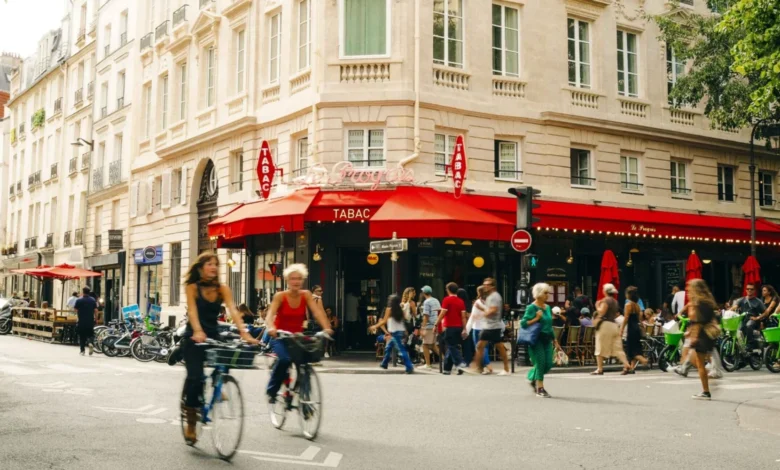
For travelers accustomed to the rigorous, highly structured tipping protocols of North America, Paris offers both a refreshing relief and a subtle cultural puzzle. The fundamental rule of thumb when traveling through the French capital is straightforward: mandatory tipping does not exist. Unlike in the United States, Canada, South Africa, Egypt, and Morocco, where gratuities often form a critical percentage of a service worker’s take-home pay, French labor laws and cultural standards construct an entirely different economic framework for hospitality employees.
Understanding how and when to reward service in France requires examining the intersection of national labor policy, historical labor movements, and modern tourism trends. Because service charges are legally mandated to be built directly into the final posted prices of all food, beverages, and hospitality services, tips in Parisian hotels, restaurants, and cafes are interpreted strictly as supplementary gestures of appreciation rather than expected supplementary income.
To demystify these customs for international visitors, industry experts offer precise insights into the shifting landscape of French service culture. Mark Bonte of the France-based tour operator French Side Travel, alongside Camilla Davidson, head of destination management for France, the UK, and Ireland at Red Savannah, shed light on how global tourism and local traditions intersect in the City of Light.
Historical Context and Economic Framework of French Labor
The absence of a mandatory tipping culture in France is deeply rooted in the nation’s labor history and socio-political philosophies regarding fair wages and workers’ rights. For decades, the French government has prioritized robust labor protections that guarantee service workers a stable, predictable income independent of customer generosity.
In the United States, federal and state labor laws permit a "tip credit," allowing employers to pay hospitality workers a severely reduced base wage—often well below the standard minimum wage—under the legal assumption that tips will bridge the gap to a living wage. By contrast, France operates under a strictly enforced system where hospitality staff are classified as salaried or hourly employees guaranteed by national labor laws to receive standard minimum wages, known as the Salaire Minimum Interprofessionnel de Croissance (SMIC), alongside comprehensive healthcare and retirement benefits. Furthermore, many professional waiters and hospitality workers in France are certified professionals belonging to official governing bodies and trade unions, making it illegal for their standard compensation to be substituted by gratuities.
Camilla Davidson of Red Savannah highlights the cultural pride embedded in this pricing model. "In many instances, there is a sense of pride that pricing is ‘all-inclusive’ and that service is not expected beyond the cost you are charged," Davidson explains. This philosophy ensures that the sticker price on a menu or a hotel bill represents the total and true cost of the labor, food, and overhead required to deliver the product, eliminating the mental math and post-meal anxiety frequently experienced by tourists abroad.
Mark Bonte of French Side Travel echoes this sentiment, noting that hospitality staff in France view gratuities through a different lens. "Tips are considered an extra gesture of appreciation rather than part of their expected compensation," Bonte notes. However, as international tourism has surged and global dining trends have cross-pollinated, experts point out that tipping at restaurants has slowly become more common—particularly during leisurely, multi-course lunches or dinners defined by exceptionally attentive service. Nonetheless, the French approach remains centered not on calculating a rigid percentage, but on acknowledging a genuinely memorable dining experience.
Navigating Restaurant, Cafe, and Bistro Etiquette
When dining out in Paris, visitors will frequently encounter the phrase service compris printed on their receipts or menus. This legally mandated designation indicates that a 15% service charge has already been factored into the cost of the food and drinks.
Because of this built-in fee, diners are never expected to add the standard 15% to 20% tips common in North America. Doing so is not only unnecessary but can occasionally cause mild confusion among staff who are unaccustomed to such large, unexpected windfalls. Instead, the local custom involves leaving modest, discretionary tokens of gratitude.
For a casual coffee, pastry, or quick drink at a traditional Parisian cafe, the prevailing custom is to simply round up the bill to the next convenient whole euro. For instance, if an espresso and a croissant total 4.80 euros, leaving a 5-euro coin and allowing the server to keep the small change is standard practice. If enjoying a slightly more substantial sit-down café lunch totaling 18 euros, leaving a crisp 20-euro note is a polite, unfussy way to acknowledge the service. This casual rounding-up also serves as a practical method for international travelers to rid their pockets of heavy, low-denomination euro coins—a staple of European currency management that travelers often pack slim wallets to accommodate.

At upscale restaurants and traditional brasseries, where meals are drawn out over several hours and service is tailored and meticulous, tipping behavior shifts slightly upward. While still entirely optional, leaving a few extra euros per diner or rounding up a substantial bill by 5 to 10 euros is increasingly common for exceptional service. The overarching principle remains qualitative rather than quantitative: it is a personalized thank-you note left in cash, rather than a mathematical obligation tied to the subtotal.
Hotel Tipping Practices: From Concierges to Housekeeping
Navigating accommodations in Paris follows a similar philosophy of discretion and appreciation. Tipping is never mandatory upon checking out or during a standard stay, but rewarding personalized, high-touch hotel service is widely practiced by seasoned travelers and appreciated by hospitality professionals.
According to Mark Bonte, standard gratuity benchmarks for hotel staff include:
- Porters and Bellhops: Leaving two to five euros for assistance with luggage upon arrival or departure is considered a thoughtful and appropriate gesture.
- Housekeeping: Leaving a few euros per day—typically placed in a labeled envelope or clearly designated on the bedside table—is customary for guests who wish to acknowledge the daily upkeep of their rooms.
- Concierge Services: Guests who rely heavily on a concierge to secure hard-to-get restaurant reservations, book theater tickets, or organize complex itineraries frequently offer a more substantial tip at the conclusion of their stay, reflecting the time and expertise invested by the staff.
Camilla Davidson notes that while some high-end properties occasionally add a voluntary service charge to the final room folio, these charges are entirely at the discretion of the guest. She advises travelers to proactively inquire with the front desk regarding how such service charges are distributed to ensure that the gratuity reaches the intended staff members, such as back-of-house administrative teams, spa therapists, or specific attendants.
For specialized hotel amenities, such as a bespoke cocktail crafted by an exceptional bartender or a relaxing treatment at a luxury hotel spa, offering a direct tip is met with immense gratitude. However, Davidson reiterates that these gestures carry no social pressure or obligation.
Transport and Wellness: Taxis, Private Chauffeurs, and Spas
Transportation networks and wellness establishments throughout Paris present distinct tipping micro-cultures that travelers should understand before embarking on their journeys.
For standard Parisian taxis hailed on the street or booked via official municipal apps, tipping is neither essential nor expected. Passengers frequently practice the familiar habit of rounding up the fare to the nearest euro or leaving the small coin change as a courtesy. A taxi driver will not express disappointment or frustration if a passenger pays the exact electronic fare, underscoring the non-punitive nature of French transit etiquette.
Conversely, the protocol shifts significantly when hiring private transportation. For private drivers, personal chauffeurs, or dedicated tour guides providing full-day services, tipping is customary and expected. Bonte recommends offering between 20 and 30 euros per day for a standard private driving service, scaling upward based on the complexity and length of the day. If a private chauffeur goes above and beyond to act as an informal guide or manages intricate logistical challenges, extending a generous tip of up to 50 euros per day is viewed as a highly appropriate and appreciated acknowledgment of their labor. Camilla Davidson echoes this assessment, noting that private guides and dedicated drivers value these gratuities deeply when the service provided exceeds standard transit expectations.
In the realm of wellness and self-care, visiting a Parisian spa or salon warrants its own etiquette. Following a massage, facial, or wellness treatment, it is customary and widely appreciated to leave a direct tip for the service provider. Bonte suggests that a gratuity ranging between 10 and 20 euros represents a gracious and appropriate gesture for exceptional care. Patrons should briefly review their final invoice to verify whether a service charge was pre-included; however, if the therapist has delivered an exceptional experience, offering an additional cash tip directly to them remains a welcome and culturally acceptable practice.
Broader Implications and Summary for International Visitors
As global tourism continues to rebound and evolve, the friction between American tipping expectations and European labor models remains a frequent topic of discussion among travel experts and hospitality workers alike. The underlying fear among many international travelers—that failing to tip generously will result in poor future service or social alienation—is largely unfounded in Paris.
The fundamental takeaway for visitors navigating the French capital is to reframe the concept of the tip. In Paris, a gratuity is stripped of its economic function as a wage subsidy and restored to its purest definition: a voluntary, spontaneous expression of gratitude for a service that exceeded expectations. By respecting local labor structures, acknowledging the all-inclusive nature of French pricing, and offering modest, thoughtful cash tips only when service genuinely warrants it, travelers can navigate Paris with cultural fluency, confidence, and grace.