Senate blocks No Fakes Act as concerns over First Amendment protections and digital satire stall landmark artificial intelligence legislation.

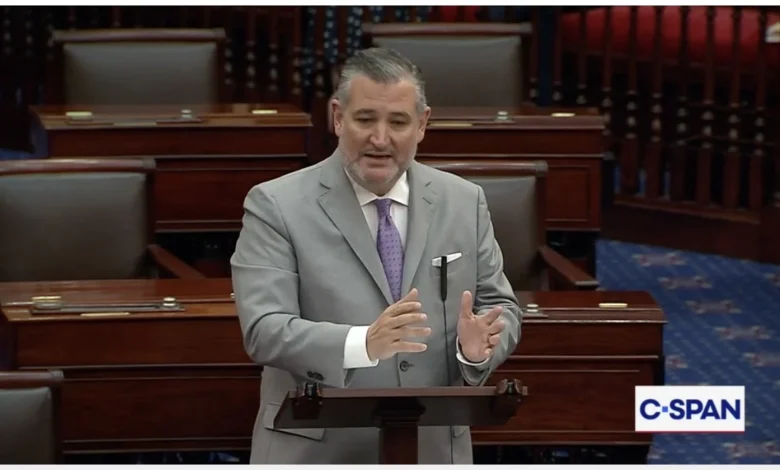
The push to establish federal safeguards against the unauthorized creation and distribution of artificial intelligence-generated deepfakes hit a significant legislative roadblock on Wednesday. Senator Ted Cruz (R-TX) invoked an objection to the No Fakes Act, effectively halting its path toward a full Senate vote. While the bill boasts a rare bipartisan coalition of support and backing from major industry stakeholders, the procedural move by the Texas senator underscores the deepening tension between protecting individual property rights and safeguarding constitutionally protected political speech in the age of generative AI.
The Scope and Intent of the No Fakes Act
The No Fakes Act is designed to create a federal property right in one’s voice and likeness, effectively granting individuals the legal standing to authorize or prohibit the use of their digital identity. As generative AI models become increasingly capable of producing hyper-realistic avatars and vocal clones, the legislation aims to curb the rampant unauthorized use of these tools, which have already caused widespread concern among actors, musicians, and public figures.
The bill, which successfully cleared the Senate Judiciary Committee in June, includes specific carve-outs intended to protect essential creative and journalistic practices. Under the current draft, exclusions are provided for news reporting, documentary filmmaking, sports broadcasts, and biographical works. Furthermore, the bill explicitly states that the use of a likeness for comment, criticism, or parody should remain exempt from liability. However, these protections have become the epicenter of a heated debate regarding how these legal standards will be enforced in practice.
The Conflict: Satire, Politics, and Big Tech Enforcement
Senator Cruz’s objection stems from a concern that the language of the bill is insufficiently precise, potentially creating a "chilling effect" on political discourse. During the floor proceedings, Cruz expressed apprehension that the legislation could be weaponized against satirical outlets such as The Onion or the Babylon Bee.
"One of my concerns about how this bill is drafted right now is it will apply to websites like the Babylon Bee or The Onion, and it leaves the decision as to whether someone’s use of a likeness falls within the exception," Cruz stated. He emphasized that by relying on "Big Tech" platforms to adjudicate whether a specific piece of content constitutes "bonafide parody," the bill essentially delegates judicial authority to private corporations.
The senator highlighted the complexities of modern political campaigning, citing examples such as the use of AI-generated imagery in local and national races. He pointed to a recent instance where a mayoral candidate in Los Angeles utilized a deepfake of incumbent Karen Bass, and noted the increasing frequency with which high-profile political figures, including Donald Trump, utilize AI-generated visuals for messaging. Cruz argued that without ironclad protections, these tools—and the political commentary they enable—could be suppressed by platforms fearing litigation or regulatory scrutiny under the new law.
Legislative Chronology and Committee Progress
The journey of the No Fakes Act has been marked by rapid development followed by a sudden deceleration. The bill was initially introduced to address the escalating crisis of digital impersonation, which has plagued the entertainment industry since the emergence of sophisticated AI models.
- June 2024: The Senate Judiciary Committee reviews and approves the legislation with broad support. During this stage, Senator Cruz voted in favor of the bill but signaled that he held reservations regarding the intersection of the legislation and political speech. He requested that these concerns be addressed before the bill advanced to the Senate floor.
- Late Summer 2024: Proponents and sponsors of the bill attempted to negotiate with Cruz’s staff to refine the language and alleviate his concerns regarding the breadth of the First Amendment exceptions.
- October 2024: As the Senate approached its mid-term recess, sponsors pushed for a floor vote to ensure the bill’s passage before the legislative session concluded.
- October 23, 2024: Senator Cruz formally objects to the bill’s advancement, effectively sidelining the legislation for the remainder of the session.
The Debate Over First Amendment Compliance
Senator Marsha Blackburn (R-TN), a leading architect of the bill, has remained steadfast in her defense of the current draft. She contends that the legislation already contains the necessary safeguards to satisfy constitutional requirements. According to Blackburn, the bill has undergone rigorous review by First Amendment experts to ensure it does not infringe upon protected speech.
Addressing the concern that platforms would be forced into the role of speech arbiters, Blackburn noted that the bill includes a clear mechanism for redress. "If someone believes their content that was removed from this bill was protected speech, they can submit a counter-notice triggering judicial review within 14 days if the victim wants the material to stay down," she explained. "Otherwise, the content can go right back up."
Senator Chris Coons (D-DE), another principal co-sponsor, echoed the urgency of the moment, suggesting that while the bill might not be perfect in the eyes of all stakeholders, the risks of inaction are far greater. "We should not let the perfect be the enemy of the good," Coons remarked, emphasizing that the legislative process often requires finding a balance that satisfies the majority without waiting for a unanimous consensus that may never arrive.
Industry Support and Economic Stakes
The No Fakes Act represents a rare convergence of interests between creative guilds and major technology firms. The Motion Picture Association (MPA), the Recording Industry Association of America (RIAA), and various labor unions—including SAG-AFTRA—have lobbied heavily for the bill, citing the existential threat posed by AI-generated clones to human performance and labor markets.
Simultaneously, major technology companies, including OpenAI and Google/YouTube, have signaled support for the framework. For these companies, a clear federal standard provides a necessary level of legal certainty. Without a uniform federal law, tech platforms face a fragmented landscape of state-level statutes, which increases the complexity and cost of content moderation.
Fact-Based Analysis of Broader Implications
The impasse reflects a fundamental challenge in contemporary digital policy: how to regulate content in a way that respects both individual rights and the open nature of the internet. The "No Fakes Act" is, in many ways, a trial balloon for future AI regulation.
If the bill were to pass in its current form, it would create a federal cause of action for unauthorized digital impersonation. The economic implications are vast; the ability to monetize one’s likeness is a primary revenue stream for celebrities, athletes, and influencers. However, the legal definition of "likeness" in the age of AI remains fluid. As generative models can now synthesize images that are not exact copies but are "highly evocative" of an individual, the courts will eventually be required to define the boundaries of digital persona protection.
Furthermore, the involvement of tech platforms in the enforcement process—as raised by Senator Cruz—is a point of significant contention. Currently, platforms rely on the Digital Millennium Copyright Act (DMCA) for content takedowns. Incorporating AI-likeness protections into this framework requires a complex integration of existing copyright principles with new personality-rights statutes.
The Path Forward
The future of the No Fakes Act remains uncertain. With the legislative session winding down, the possibility of a vote before the end of the year appears slim. However, the sponsors have expressed a willingness to continue working with Senator Cruz’s staff in the coming weeks.
The primary hurdle is moving from the "theoretical" protection of speech to "procedural" certainty. Whether that can be achieved through additional legislative language or if it requires a broader judicial consensus remains to be seen. As the technology continues to evolve at a breakneck pace, the pressure on Congress to establish a federal baseline for AI impersonation is unlikely to dissipate. For now, the debate rests on whether lawmakers can refine the language to ensure that while deepfakes are kept in check, the digital satire and political commentary that are hallmarks of American public life remain vibrant and unburdened.