India is uniquely positioned to become a global leader in voice-first travel, a burgeoning sector poised to redefine how millions navigate their journeys. This potential is not merely theoretical; it’s being actively built by homegrown innovators leveraging a potent combination of factors: a vast population with evolving literacy levels, deep linguistic diversity, a deeply ingrained voice-first consumer behavior, and critically, the emergence of a sovereign AI stack. No other major travel market on Earth simultaneously possesses these elements at such a significant scale, creating a fertile ground for groundbreaking advancements in travel technology.
The implications of this confluence are profound, particularly as global travel giants like Google, Booking.com, and Expedia continue to refine their offerings. While these established players are making strides, particularly with the integration of AI into their platforms, they often operate within existing paradigms. India, however, is not just adapting; it is actively creating a new one, driven by its specific socio-linguistic landscape and a burgeoning domestic technological ecosystem.
Ixigo’s Bold Leap: Tara and the Dawn of Ixigo Next
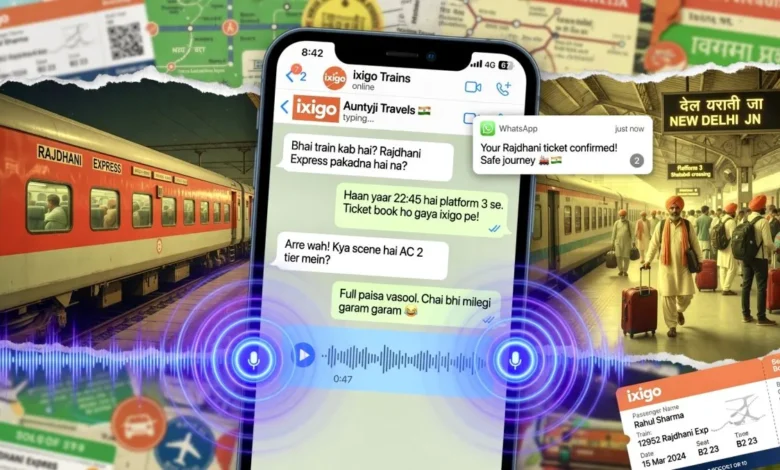
A pivotal development underscoring this shift occurred earlier this month with the relaunch of Ixigo, India’s leading Online Travel Agency (OTA) catering to the mass-market traveler, particularly the significant train and bus demographic. The company unveiled "Ixigo Next," an entirely reimagined app experience with a voice-native AI assistant named Tara at its core. Tara is designed to seamlessly handle travel queries not just in English and Hindi, but also in Hinglish, the pervasive code-mixed vernacular that accurately reflects how a vast majority of Indians naturally interact with their digital devices.
This strategic pivot is not a superficial rebranding; it represents a fundamental architectural shift. Ixigo’s Co-CEO, Rajnish Kumar, described the undertaking as a "NewCo inside OldCo," indicating that a dedicated, independent team was tasked with rebuilding the platform from the AI layer upwards. This approach allowed for a clean slate, free from the legacy constraints of existing infrastructure and enabling a focus on developing a truly AI-centric user experience.
The ambition behind Ixigo Next was articulated with considerable enthusiasm by Co-founder Aloke Bajpai in a LinkedIn post, where he heralded the relaunch as a "global first" and a "Peace of Mind App for travellers." Bajpai’s assertion that the accompanying demo video showcased "doesn’t even demonstrate 1% of what we can do for you" hints at a deeper, more sophisticated technological foundation than might be immediately apparent. While such pronouncements can sometimes be viewed as marketing hyperbole, in this instance, they point towards a potentially more impactful product bet than many of the incremental updates seen from major global OTAs this year.
A Glimpse into the AI Landscape: Google’s Ask Maps
The broader trend of conversational AI integration in travel was further emphasized just two months prior, in March, when Google launched "Ask Maps." This feature, powered by Google’s advanced Gemini AI, introduced a conversational interface for its Maps application. While Ask Maps represents a significant step forward for Google in making its mapping services more intuitive and accessible, it operates within the existing framework of a global tech giant. Ixigo’s approach, conversely, is intrinsically tied to the unique Indian context, aiming to solve local problems with locally relevant solutions.
The "Sovereign AI Stack" Explained
The concept of a "sovereign AI stack" is crucial to understanding India’s emerging leadership in this domain. It refers to the development and deployment of AI technologies that are built, controlled, and utilized within a nation’s own borders, often with a focus on data privacy, national security, and fostering domestic innovation. For India, this means building AI models and infrastructure that understand and cater to its diverse linguistic nuances, cultural contexts, and specific consumer behaviors, rather than relying solely on AI developed for Western markets.
This is particularly relevant for voice-first technologies. The effectiveness of a voice assistant is directly correlated with its ability to understand the nuances of local dialects, accents, and linguistic patterns. India, with its hundreds of spoken languages and myriad dialects, presents a far more complex challenge than many other markets. A sovereign AI stack allows for the training of AI models on vast datasets that accurately reflect this linguistic tapestry, leading to more accurate and natural interactions.
Supporting Data: India’s Digital and Linguistic Landscape
The foundation for India’s voice-first travel revolution is built upon several key demographic and behavioral trends:
- Literacy Gaps and Digital Inclusion: While India has made significant strides in literacy, a substantial portion of its population, particularly in rural areas and among older demographics, may have lower literacy levels. Voice-based interfaces offer a powerful solution to bridge this digital divide, enabling access to information and services for those who may struggle with traditional text-based interfaces. According to the National Statistical Office (NSO) report on Household Social Consumption: Education in India (2017-18), while overall literacy rates are increasing, functional literacy can still be a barrier for some segments of the population accessing digital services.
- Linguistic Diversity: India is renowned for its linguistic richness, with 22 scheduled languages and hundreds of other dialects spoken across the country. This diversity necessitates AI solutions that can comprehend and respond in multiple languages and their regional variations. The ability to handle Hinglish, as demonstrated by Ixigo’s Tara, is a testament to understanding this reality. Ethnologue estimates over 450 languages spoken in India.
- Voice-First Consumer Behavior: The prevalence of affordable smartphones and data plans has accelerated the adoption of voice-based interactions. Many Indians, especially younger generations and those in semi-urban and rural areas, are increasingly comfortable using voice commands for everything from searching for information to controlling smart devices. A study by Statista in 2023 indicated a significant rise in voice search queries originating from India.
- Mass-Market Travel Demand: India is one of the world’s largest and fastest-growing travel markets. The sheer volume of domestic travel, particularly by train and bus for the mass-market segment, creates an enormous opportunity for voice-first solutions that can simplify booking, planning, and in-trip assistance. The Indian Railways alone carries millions of passengers daily, and the bus transport sector is equally vast.
Chronology of Innovation: A Growing Momentum
The journey towards a voice-first travel ecosystem in India has been a gradual but accelerating process:
- Early 2010s: The widespread adoption of smartphones and affordable mobile data began to lay the groundwork for digital services.
- Mid-2010s: Voice search capabilities started appearing in major search engines, with limited but growing accuracy for Indian accents.
- Late 2010s – Early 2020s: Companies began experimenting with voice-enabled customer service and rudimentary voice assistants for specific tasks. The rise of digital payment systems also saw some voice integration for transaction confirmation.
- 2022-2023: Major global tech players like Google and Amazon intensified their focus on voice AI, releasing more sophisticated assistants and integrating them into various platforms. This spurred domestic innovation and highlighted the need for localized solutions.
- March 2024: Google launched Ask Maps, signaling a more integrated conversational AI experience within a widely used application.
- May 2024: Ixigo relaunched its app as Ixigo Next, placing a sophisticated, multi-lingual voice assistant at the forefront, specifically targeting the unique needs of the Indian mass-market traveler.
Background Context: The Evolving Travel Landscape
The global travel industry has been in a constant state of evolution, driven by technological advancements and changing consumer expectations. For decades, online travel agencies (OTAs) have dominated the booking landscape, offering convenience and choice. However, the advent of sophisticated AI has presented an opportunity to move beyond transactional interfaces towards more personalized and predictive travel experiences.
Booking.com and Expedia, for instance, have been investing heavily in AI to personalize recommendations, optimize pricing, and streamline the booking process. Their strategies often involve leveraging large language models (LLMs) to understand user queries and provide relevant results. However, these platforms are largely designed with a global audience in mind, and their AI models may not always capture the intricate nuances of specific regional markets like India.
The "NewCo inside OldCo" approach by Ixigo suggests a recognition of this limitation. By building from the AI layer up, they are not simply adding a voice feature to an existing product; they are creating a product around the voice experience. This is a crucial distinction that could give them a significant edge in capturing the Indian market.
Official Responses and Industry Reactions (Inferred)
While direct quotes from competitors are not available, the industry’s reaction to Ixigo’s move is likely to be a mixture of observation and strategic reassessment.
- Global OTAs (Booking.com, Expedia): These companies will undoubtedly be monitoring Ixigo’s progress closely. The success of Tara and Ixigo Next could prompt them to accelerate their own efforts in developing more localized and voice-centric AI solutions for the Indian market, or potentially explore partnerships with Indian AI firms. They may also see this as a validation of the potential of voice-first interfaces and invest more heavily in this area globally.
- Google: As a provider of core AI technologies and a competitor in the travel space (through Google Travel and Google Maps), Google will be interested in how Ixigo leverages its sovereign AI stack. The success of Tara could influence Google’s own strategies for providing AI tools and platforms to Indian businesses, and its approach to integrating voice AI into its own travel offerings within India.
- Indian Government and Regulatory Bodies: The development of a sovereign AI stack aligns with national initiatives promoting digital self-reliance and technological innovation. The government is likely to view Ixigo’s success as a positive indicator of India’s growing AI capabilities and may offer further support or frameworks to foster such developments.
Analysis of Implications: A Paradigm Shift for Indian Travel
The strategic positioning of Ixigo with its voice-native AI assistant, Tara, and its commitment to a sovereign AI stack, carries significant implications for the Indian travel market and potentially for the global travel industry:
- Enhanced Accessibility and Inclusivity: Voice-first interfaces have the potential to democratize access to travel booking and information for a much broader segment of the Indian population. This is particularly impactful for individuals with lower literacy levels, those in remote areas, or the elderly, who may find traditional app interfaces daunting.
- Personalized and Intuitive User Experiences: By understanding Hinglish and local vernacular, Tara can offer a far more natural and less frustrating user experience than generic AI assistants. This level of personalization can lead to higher engagement, increased bookings, and greater customer loyalty.
- Competitive Advantage for Indian Companies: The development of a robust sovereign AI stack allows Indian companies to build unique solutions tailored to their domestic market, giving them a competitive edge over global players who may struggle to replicate this level of localization.
- Data Localization and Privacy: A sovereign AI stack can offer greater control over data, addressing growing concerns about data privacy and security. This can build trust among Indian consumers and align with evolving data protection regulations.
- Innovation Hub Potential: India’s success in developing and deploying voice-first AI for a complex market like travel could position it as a global hub for AI innovation, attracting investment and talent in the field.
- Future of Travel: The Ixigo Next model, with its emphasis on voice and AI as the primary interface, could set a new standard for travel apps, pushing other players to adopt similar strategies. This could lead to a future where booking travel is as simple as having a conversation.
Challenges and Future Outlook
Despite the immense potential, challenges remain. The continuous need for training and refining AI models to keep pace with evolving language and user behavior is paramount. Ensuring the scalability and reliability of these AI systems to handle the massive volume of Indian travel is another critical factor. Furthermore, while Ixigo has made a bold move, sustained investment and innovation will be necessary to maintain its leadership position.
However, the convergence of India’s unique demographic, linguistic, and technological landscape, coupled with the strategic vision of companies like Ixigo, paints a compelling picture of a future where voice-first AI revolutionizes travel not just in India, but potentially sets a global precedent. The journey has just begun, but the foundational elements for a transformative shift are firmly in place.