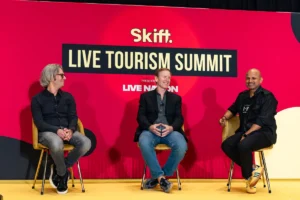
The Ultimate Convergence: Industry Leaders Gather in New York for the Skift Live Tourism Summit Presented by Live Nation

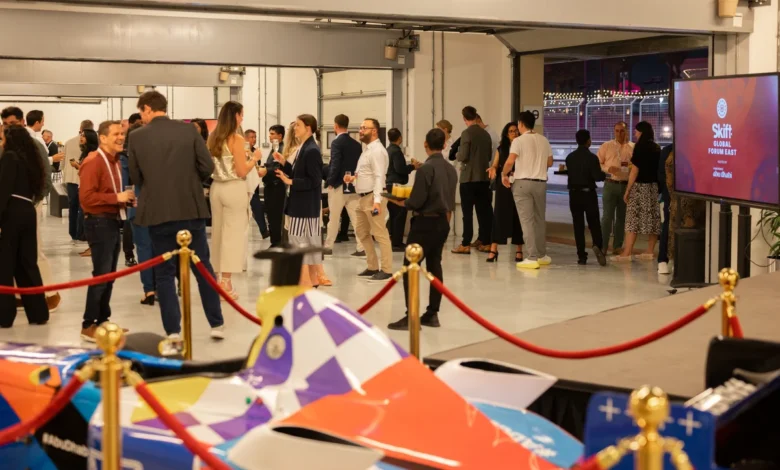
The global architecture of live tourism is undergoing a seismic transformation, driven by surging consumer demand for experiential travel, live music tours, major sporting events, and destination-defining cultural festivals. On September 22, the architects of this multi-billion-dollar economy will congregate behind closed doors in New York City for the highly anticipated Skift Live Tourism Summit, presented in partnership with Live Nation. This exclusive gathering brings together the definitive decision-makers who dictate where live demand lands, how mass audiences are captured, and how the entire ecosystem is monetized.
As the boundaries between entertainment, hospitality, aviation, and destination marketing continue to blur, the summit serves as a critical pressure test for an industry struggling with fragmentation. From the visionary tourism authorities that successfully transformed transient foot traffic into permanent economic infrastructure—such as the masterminds behind Las Vegas’s tourism boom—to global entertainment giants orchestrating the routing of tomorrow’s biggest live moments, the roster represents the apex of the modern experience economy. With attendance strictly capped and a rigorously curated guest list, the event underscores a growing urgency among senior leaders to align disparate sectors into a cohesive, highly profitable global value chain.
The Fragmentation of the Live Tourism Ecosystem
To understand the significance of the September 22 summit, one must first examine the inherent structural complexities of the live tourism sector. Unlike traditional hospitality or commercial aviation, live tourism has no single owner, centralized governing body, or standardized operational playbook. Instead, it operates as a complex, multi-tiered relay race.
A major concert booked by an international promoter instantly triggers a complex chain reaction. It becomes a routing decision that affects global tour logistics, a destination readiness problem for local municipal governments and hotel inventories, and a digital booking puzzle for third-party platforms and ticketing agencies. Historically, these disparate stakeholders operated in professional silos. Venue operators rarely communicated directly with municipal tourism boards; airline capacity planners rarely synchronized their schedules with regional music festival lineups; and global promoters often navigated local regulatory hurdles without adequate insight into destination infrastructure limits.
The Skift Live Tourism Summit has been explicitly designed to dismantle these operational silos. By placing representatives from the entire value chain onto a single stage, the event aims to close industry gaps that have historically led to bottlenecked infrastructure, inflated pricing, and missed economic opportunities. Each session on the agenda represents an ongoing, unresolved challenge facing modern travel and entertainment executives, forcing participants to confront issues of scalability, sustainability, and cross-sector collaboration head-on.
Background Context and the Evolution of the Summit
The launch of the Skift Live Tourism Summit comes at a pivotal moment in the post-pandemic recovery of global mobility. Over the past three years, consumer behavior has shifted dramatically away from passive consumption and material goods toward active, memory-driven experiences. According to recent data from the World Travel & Tourism Council (WTTC) and international aviation bodies, spending on live events—including music tours, major league sports, and cultural festivals—has outpaced traditional leisure travel growth by nearly 14% year-over-year.
Major global tours, such as high-profile stadium runs by generational artists, have demonstrated an unprecedented ability to redirect international flight paths, fill urban hotel rooms to 100% capacity, and generate hundreds of millions of dollars in localized economic impact within a single weekend. Destinations that once relied on seasonal beach tourism or corporate convention calendars are now aggressively competing to anchor major entertainment residencies and international sporting spectacles.
Recognizing this macroeconomic shift, Skift—a leading intelligence platform for the travel industry—conceived the Live Tourism Summit to address the intersection of tourism and live entertainment. Partnering with Live Nation, the world’s leading live entertainment company, added unmatched operational weight to the event. Live Nation’s involvement ensures that the perspective of global artist routing and venue management is directly integrated with destination management and hospitality strategies.
A Curated Room of Senior Decision-Makers
One of the defining characteristics of the September 22 summit is its exclusivity. The organizing committee intentionally capped attendance, transforming the venue into a high-level forum where candid, unvarnished dialogue can take place away from the public eye.
The guest list is strictly curated for senior executives who actively shape how live moments influence travel patterns, destination development, and long-term economic growth. Attendees represent a broad cross-section of the global economy, including top-tier executives from:
- Destination marketing organizations (DMOs) and municipal tourism authorities
- Global hospitality chains and independent luxury hoteliers
- International airlines, regional aviation hubs, and transport networks
- Professional sports leagues, franchises, and stadium operators
- Entertainment conglomerates, talent agencies, and independent promoters
- Public sector officials responsible for urban planning, infrastructure, and cultural funding
This elite assembly ensures that the discussions are not merely theoretical, but actionable. The leaders in the room are the exact individuals who sign off on capital expenditures, approve municipal funding for entertainment districts, negotiate multi-year artist contracts, and dictate aviation capacity allocations.
Unveiling New Skift Research on the Experience Economy
A cornerstone of the September 22 summit will be the unveiling of proprietary Skift Research data. This exclusive study focuses on tracing the economic lifecycle of a live event, mapping precisely where financial value is generated, where it leaks out of local economies, and how destinations can capture a larger share of consumer spending.
Historically, destinations have struggled to accurately measure the true return on investment (ROI) of hosting major events. While hotels and restaurants record spikes in revenue during a concert weekend, the secondary and tertiary economic impacts—such as repeat visitation, brand equity enhancement, and long-term talent attraction—are notoriously difficult to quantify. The new Skift Research aims to establish a standardized framework for evaluating the financial health of the live tourism ecosystem, offering executives empirical data to guide future infrastructure investments.
In addition to keynote presentations and data reveals, the agenda features a series of closed-door roundtables. These intimate sessions are structured to foster robust debate and strategic alignment among leaders who are otherwise fierce competitors in the marketplace. Topics under discussion include managing destination over-tourism during mega-events, integrating carbon-reduction strategies into large-scale tour logistics, leveraging artificial intelligence in predictive ticketing and crowd management, and securing public-private financing for next-generation multi-purpose venues.
Broader Industry Implications and the Road Ahead
The implications of the conversations taking place in New York on September 22 extend far beyond the confines of the summit room. As live tourism solidifies its position as the primary engine of modern mobility, the decisions made by these industry leaders will reverberate across global markets for years to come.
First, destination management is undergoing a permanent philosophical shift. Tourism boards are evolving from traditional marketing agencies into sophisticated infrastructure managers. Inspired by the economic transformations seen in markets like Las Vegas—where world-class entertainment venues, sports franchises, and hospitality networks operate in seamless synergy—secondary and tertiary cities worldwide are attempting to replicate this integrated economic model. The summit provides a vital blueprint for how destinations can transition from passive hosts to active co-producers of live entertainment.
Second, the relationship between aviation and entertainment is tightening. Airlines are increasingly relying on event-driven travel spikes to offset corporate travel plateaus. By coordinating flight schedules more closely with major tour announcements, carriers can optimize yields on routes that might otherwise experience low seasonal demand. Conversely, destination readiness depends heavily on aviation infrastructure; a city cannot successfully host a global mega-event if its local airport lacks the gate capacity or customs processing speed to handle surges in international arrivals.
Finally, the summit highlights the growing imperative for sustainability within the live tourism sector. Moving millions of fans across continents for weekend events carries a heavy environmental footprint. Leaders at the summit are expected to address the mounting regulatory and consumer pressure to decarbonize tour routing, venue operations, and traveler transit. The integration of sustainable practices is no longer viewed merely as a corporate social responsibility checkbox, but as a fundamental prerequisite for long-term operational viability.
Conclusion: Inside the Room Versus Reading About It
As the doors close in New York for the Skift Live Tourism Summit, the broader travel and entertainment industry finds itself at a critical crossroads. The convergence of live events and global mobility has created unprecedented economic opportunities, but it has also exposed deep structural fractures in how destinations, promoters, and transport providers operate.
The core premise of the summit remains stark and uncompromising: live demand is already actively reshaping markets across the globe. For senior executives, hospitality leaders, and public officials, the fundamental question is no longer whether this transformation is happening, but whether they had a seat at the table when the industry’s future was mapped out—or if they will be left reading about the consequences after the fact.