Former Federal Prosecutors and Law Enforcement Officials Challenge Trump Media Truth API Subscription Model as Potential Security and Ethics Violation

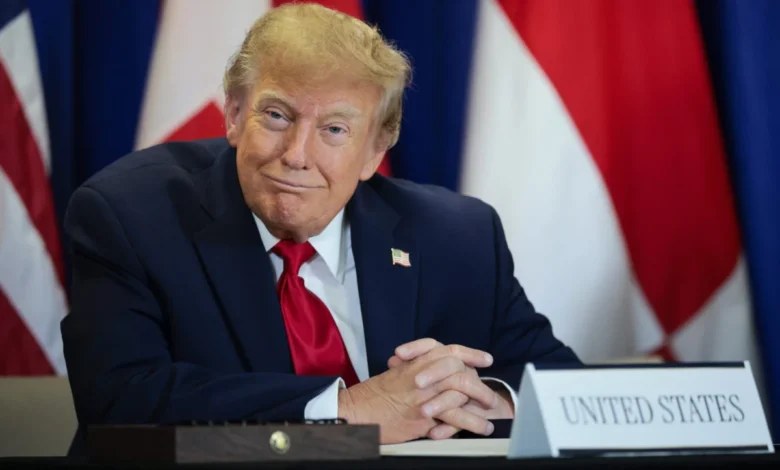
The landscape of presidential communications and market regulation has collided in a high-stakes legal confrontation as more than 50 former federal prosecutors and law enforcement officials have formally petitioned a federal judge to block a controversial data-licensing initiative launched by Trump Media & Technology Group (TMTG). The service, known as Truth API, allows institutional investors and trading firms to pay up to $100,000 per month for near-instantaneous, early access to official posts made by Donald Trump on his social media platform, Truth Social. Critics argue that by monetizing the speed at which the public receives government information, the administration and the company are effectively creating a private, paid pipeline for insider trading, thereby undermining the integrity of financial markets and the impartiality of the executive branch.
The legal challenge comes in the form of an amicus brief filed Monday in the Southern District of New York. The signatories, a bipartisan group representing over 880 years of cumulative government experience, include former high-ranking officials from the Department of Justice, the FBI, and various U.S. Attorneys’ offices. They are supporting a motion for a preliminary injunction originally filed by The Intercept and the Freedom of the Press Foundation, which seeks to halt the service while the court evaluates its legality.
A Chronology of the Truth API Controversy
The rollout of Truth API marks a significant shift in how presidential statements are disseminated. Historically, government announcements regarding policy, trade, or national security have been released through established channels such as the White House Press Office, press briefings, or public social media feeds accessible to all citizens simultaneously. The implementation of the Truth API disrupts this democratic norm by creating a tiered system of access based on capital.
- July 2026: TMTG releases disclosures indicating the development of an application programming interface (API) designed to provide financial institutions with premium access to Truth Social data streams.
- August 2026: Market analysts and academic experts begin sounding alarms, noting that the speed of the API could provide subscribers with a distinct, unfair advantage in reaction to market-moving news.
- August 2026: Reports emerge that approximately one dozen major financial firms have already secured subscriptions to the $100,000-per-month service.
- September 2026: The City of San Francisco files a separate lawsuit against TMTG, alleging violations of California’s unfair competition laws and federal insider trading statutes.
- September 2026: The coalition of 53 former law enforcement officials files their amicus brief, elevating the scrutiny from a corporate dispute to a matter of potential federal criminal liability.
The Legal and Ethical Arguments Against Monetization
The central contention of the amicus brief is that the Truth API creates a conflict of interest that violates both the spirit and the letter of federal anti-corruption laws. Renata O’Donnell, senior legal counsel at the Campaign Legal Center, notes that the arrangement is fundamentally corrosive to democratic governance. By selling access to the president’s own thoughts and policy announcements, the platform incentivizes the leader to prioritize the financial interests of his subscribers over the general public.
From a regulatory standpoint, the primary concern is the violation of the Securities Exchange Act. Insider trading is defined by the use of material, non-public information to gain an unfair advantage in the stock market. Because the president’s posts often influence sectors ranging from defense and energy to international trade, those who possess these posts seconds before the general public could execute trades that yield significant, illicit profits.
“There is no legitimate, let alone significant, government interest in allowing public officials to profit personally by selling early access to official government announcements,” the brief states. The document further outlines that the scheme could be interpreted as a violation of the Trade Secrets Act, as well as statutes governing illegal gratuities and illicit compensation for federal employment.
Institutional Implications and Market Integrity
The economic implications of this service are profound. Gian Luca Clementi, an economics professor at the NYU Stern School of Business, has been among the most vocal critics of the model, stating plainly that the service constitutes insider trading by definition. If the market becomes segmented between those who pay for speed and those who rely on public dissemination, the fundamental tenet of fair and efficient markets—equal access to information—is compromised.
Moreover, the financial entanglement between the president and TMTG complicates the situation. Because Donald Trump remains a major beneficiary of TMTG’s financial performance, every subscription fee paid by a trading firm directly increases the president’s personal net worth. This circular relationship—where a public official’s communications increase the value of his own private company—is exactly what critics claim the founders sought to avoid by establishing institutional guardrails.
The potential for criminal liability does not stop at the company; it extends to the subscribers. As O’Donnell points out, there is potential for legal repercussions for the firms that have already paid the $100,000 fee, as they are knowingly purchasing access to non-public, market-moving information. By filing this brief, the former prosecutors hope to deter further participation, arguing that the court must act before the practice becomes an entrenched norm in American finance.
TMTG’s Broader Corporate Strategy
The Truth API is not an isolated experiment but part of a larger, aggressive business expansion by Trump Media & Technology Group. Following its public listing, the company has sought to diversify its revenue streams through multiple channels. This includes "Truth+," a proprietary streaming service, and "Truth.Fi," a financial services brand that explicitly markets itself toward users interested in digital assets and alternative investment strategies.
According to SEC filings, Truth.Fi is heavily focused on the cryptocurrency sector, including the development of a bitcoin treasury and various financial products. Furthermore, TMTG has expanded into the exchange-traded fund (ETF) market, launching products tied to American defense, energy security, and other sectors where government policy directly impacts valuation.
Parallel to TMTG, the Trump family has engaged in high-volume cryptocurrency ventures. The 2025 financial disclosures revealed that the former president reported over $1.4 billion in income from various crypto-related activities, including roughly $800 million linked to the "World Liberty Financial" project and $635 million generated through the sale of Trump-branded memecoins.
The Path Forward: Judicial Review
As the legal battle intensifies, the Southern District of New York is now tasked with weighing the constitutional rights of a private company to operate its business against the public’s right to equal access to governmental information. While TMTG has not yet provided a substantive public rebuttal to the specific claims in the amicus brief, the case is likely to reach the Supreme Court or a federal appellate court given the gravity of the constitutional questions at stake.
The City of San Francisco’s independent lawsuit adds another layer of pressure, as it forces the company to defend its business model in a state with some of the most stringent consumer protection and anti-competition laws in the country. For the 53 former officials, the goal is not merely to win a legal point but to prevent a permanent degradation of the standards governing executive conduct.
In summary, the challenge to Truth API represents a critical juncture in the relationship between digital media, financial markets, and public service. If the court permits the service to continue, it could set a precedent where governmental communications are treated as private commodities. Conversely, an injunction would affirm that even in the era of digital platforms, the president’s official speech must remain a public good, untethered from the influence of those who can afford to pay for an advantage. As the legal filings continue to mount, the case remains one of the most significant tests of public integrity and market regulation in recent history.