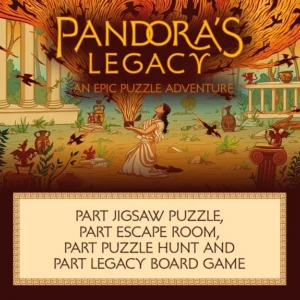
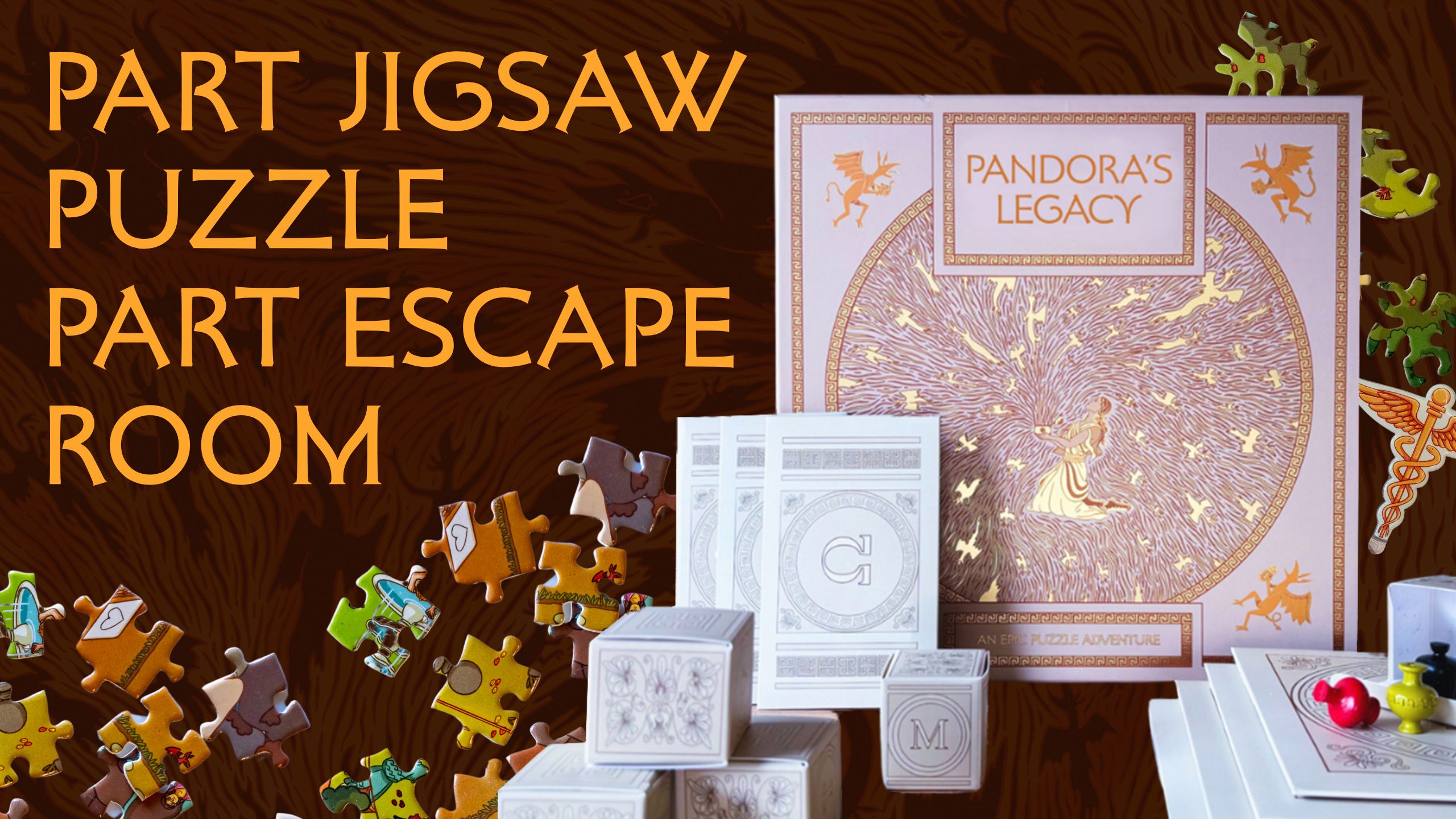
TED-Ed, the educational initiative renowned for its visually captivating animations and complex digital riddles, has officially announced its transition into the physical tabletop gaming market with the launch of "Pandora’s Legacy." This debut title represents a significant expansion for the organization, moving from short-form educational content into a multi-hour, immersive cooperative experience. Designed for one to four players, the game integrates the tactile satisfaction of jigsaw puzzles with the narrative depth of legacy board games and the logic-based challenges of escape rooms.
The project, currently featured on the crowdfunding platform Kickstarter, promises between 12 and 15 hours of gameplay. This duration places it in the category of "campaign games," which are designed to be played over several sessions as a continuous story. By blending physical artifacts, digital interaction, and evolving puzzle mechanics, TED-Ed aims to redefine the traditional puzzle experience for a modern, tech-savvy audience.
A Narrative Reimagining of Greek Mythology
At the heart of Pandora’s Legacy is a thematic subversion of one of antiquity’s most famous cautionary tales. In traditional Greek mythology, Pandora is often depicted as the instrument of humanity’s downfall—the first woman, created by the gods and endowed with gifts that ultimately led to the release of all the world’s evils. TED-Ed’s interpretation begins where the original myth concludes.
The game’s prologue establishes the classical framework: Pandora received a pearl necklace from Poseidon for underwater breathing, the gift of song from Apollo, and a forbidden, sealed box from Zeus. However, it was Hera’s gift of insatiable curiosity that led Pandora to open the vessel, unleashing chaos. In this interactive version, Pandora is cast as a proactive protagonist. Rather than remaining a figure of tragedy, she embarks on a quest to "corral the chaos" and set the world right.
Players step into the role of Pandora, navigating a world where Olympian gods serve as both allies and obstacles. This narrative-driven approach is intended to provide a sense of agency and progression rarely found in standard jigsaw puzzles, which typically lack a cohesive storyline or character arc.

The Mechanics of Progressive Discovery
Pandora’s Legacy utilizes a multi-layered gameplay loop that requires players to interact with various physical and digital components. The structure of the game is divided into several phases of discovery:
Phase One: The Jigsaw Foundation
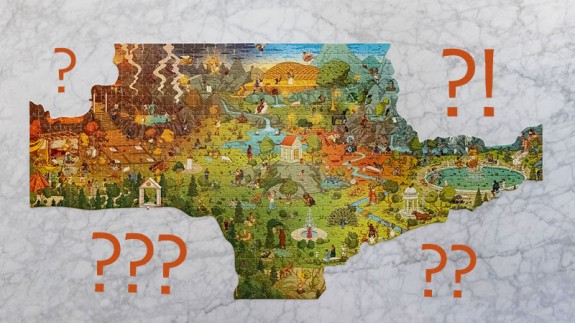
The experience begins with the assembly of a primary jigsaw puzzle. Unlike standard puzzles where the final image is known from the box art, Pandora’s Legacy employs a "mystery" format. The initial assembly reveals only a portion of the world, leaving significant gaps in the narrative and the physical layout.
Phase Two: The Digital Integration
Once the initial section is complete, players encounter "puzzles-within-the-puzzle." Solving these requires a combination of visual observation and logic. The solutions are then entered into a dedicated digital companion app. This companion acts as the game’s narrator and gatekeeper, validating answers and unlocking subsequent narrative beats. The use of a digital interface allows for dynamic storytelling, including soundscapes and animated sequences that react to player progress.

Phase Three: The Legacy Element
One of the most distinct features of the game is its "legacy" mechanics. In the context of board gaming, a legacy game is one that changes permanently as it is played. In Pandora’s Legacy, players unlock physical boxes containing new jigsaw pieces and "artifacts." These artifacts are tangible objects—such as ancient-style tools, maps, or cryptic devices—that serve as physical keys to later puzzles. As players progress, they fill in the missing sections of the jigsaw, effectively building the map of their adventure in real-time.
Phase Four: Numbered Piece Logic
To streamline the puzzle-solving process and reduce frustration, every jigsaw piece is numbered on the reverse side. This system allows the game to direct players to specific pieces when a clue is found. For example, solving a riddle in the digital companion might provide a coordinate or a number, leading the player to find a specific piece that reveals a hidden detail or provides the next clue in the chain.
Strategic Shift: From Digital Content to Physical Products
The move into physical gaming represents a strategic evolution for TED-Ed. Since its inception, TED-Ed has built a massive global audience through its YouTube channel, which boasts over 19 million subscribers. Its "Riddles" series, featuring logic puzzles like "The Bridge Riddle" and "The Prisoner Hat Riddle," has garnered hundreds of millions of views.

Industry analysts suggest that Pandora’s Legacy is an attempt to capitalize on the "analog revival" seen in the toy and game industry over the last decade. According to market research data, the global jigsaw puzzle market was valued at approximately $700 million in 2022 and is projected to grow at a compound annual growth rate (CAGR) of over 5% through 2030. Furthermore, the "Escape Room in a Box" category has seen explosive growth as consumers seek social, screen-free entertainment options that offer high levels of cognitive engagement.
By entering this space, TED-Ed is diversifying its revenue streams beyond advertising and educational grants. The use of Kickstarter as a launch platform serves a dual purpose: it mitigates the financial risk of a first-time manufacturing run and functions as a high-visibility marketing tool to gauge interest among its existing community of educators and puzzle enthusiasts.
Chronology of Development and Launch
The development of Pandora’s Legacy has involved a multidisciplinary team of educators, puzzle designers, and artists. Key contributors credited in the project’s documentation include Xixi Wang, Senne Trip, and Alexandra Panzer.
- Conceptualization (2023-2024): The team focused on creating a game that mirrored the educational rigor of TED-Ed’s animated riddles while ensuring the mechanics were accessible to non-gamers.
- Prototyping and Testing: Extensive playtesting was conducted to ensure the 12-to-15-hour playtime remained engaging and that the difficulty curve was appropriately balanced.
- Kickstarter Launch (May 2025): The project was introduced to the public, offering various backing tiers that include the base game and potential "stretch goal" enhancements.
- Production Phase: Following successful funding, the game is slated for a manufacturing phase involving the production of custom-cut jigsaw pieces and specialized physical artifacts.
- Distribution: Early backers are expected to receive their copies within the standard 6-to-12-month window typical of high-quality tabletop Kickstarter projects.
Educational and Cognitive Implications
Beyond its value as entertainment, Pandora’s Legacy is positioned as an educational tool. The game’s design encourages the development of several "soft skills" and cognitive abilities:
- Spatial Reasoning: The assembly of complex jigsaw patterns requires players to recognize shapes, colors, and textures in a spatial context.
- Collaborative Problem Solving: As a cooperative game, it necessitates communication and teamwork. Players must share information and brainstorm solutions together, mirroring real-world collaborative environments.
- Deductive Reasoning: The puzzle-hunt elements require players to synthesize information from multiple sources—the physical puzzle, the artifacts, and the digital companion—to reach a logical conclusion.
- Literacy and Narrative Comprehension: By embedding the puzzles within a rich retelling of Greek mythology, the game reinforces cultural literacy and encourages players to engage with classical themes in a modern context.
Broader Impact on the Tabletop Industry
The entry of a major educational brand like TED into the tabletop industry may signal a trend of "educational entertainment" (edutainment) becoming more sophisticated. While traditional educational games often prioritize learning outcomes at the expense of fun, Pandora’s Legacy appears to follow the "game-first" philosophy. This approach suggests that deep engagement with complex mechanics is, in itself, an educational experience.
Furthermore, the integration of a digital companion highlights the ongoing trend of "app-driven" board games. While some purists prefer entirely analog experiences, the use of an app allows for a lower barrier to entry, as the software can handle complex rules and state-tracking, leaving the players free to focus on the narrative and the puzzles.

As of the current announcement, the tabletop community has responded with significant interest. The success of this venture could lead to a series of "TED-Ed Games," potentially exploring other historical periods, scientific concepts, or mathematical theories through the same hybrid puzzle-adventure format.
For now, Pandora’s Legacy stands as a testament to TED-Ed’s commitment to "lessons worth sharing," translated into a medium where the audience doesn’t just watch the lesson unfold but actively participates in its resolution. The game is currently available for pre-order through its Kickstarter campaign, representing a new chapter for both the organization and the puzzle-loving public.