Trump’s Five Thousand Dollar Midterm Dividend Pledge Faces Widespread Candidate Apathy and Economic Scrutiny

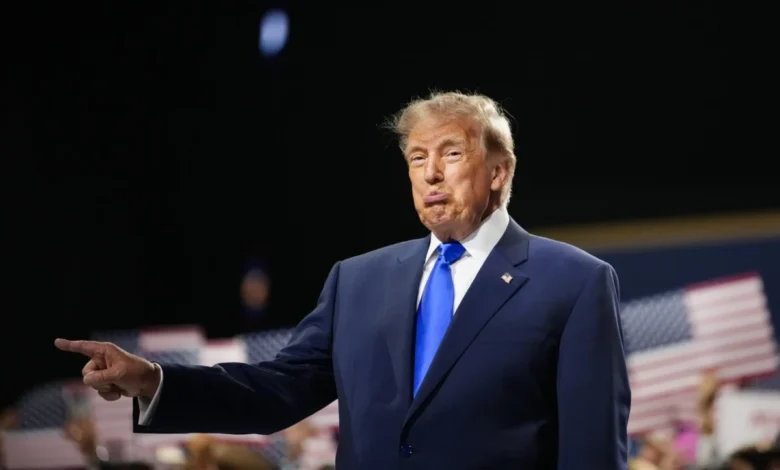
During a high-stakes campaign stop in the battleground state of North Carolina, President Donald Trump doubled down on a provocative and economically contentious campaign promise: a direct $5,000 payment to American citizens, which he has dubbed the "Trump dividend." Standing before a cheering crowd, the former president framed the proposal as a straightforward economic stimulus, asserting, "If we win, we’re going to get you $5,000. So that’s it. Very simple." Yet, despite the populist appeal of the offer, the reception from the very Republican candidates relying on his base has been marked by a profound and strategic silence.
The disconnect between the president’s rhetoric and his party’s ground-level strategy highlights a significant rift within the GOP regarding economic messaging ahead of the midterms. While the Republican National Committee (RNC) continues to advocate for the proposal as a pillar of the party’s broader platform, candidates locked in tight races across the country have largely treated the $5,000 pledge as a political liability, opting instead to focus on established tax-cut initiatives and localized economic grievances.
The Origins of the Dividend Proposal
The pledge first gained public attention during the party’s unusual midterm convention in Dallas, where it was presented as a signature policy goal to combat the prevailing economic headwinds of rising interest rates, stubborn inflation, and volatile fuel costs. Trump has suggested that the funds for this massive payout—which independent budget analysts estimate would cost upward of $1 trillion—would be derived from a combination of savings generated by the Department of Government Efficiency and revenue generated through aggressive new tariffs on foreign imports.
However, the proposal has been met with skepticism from fiscal conservatives and legislative leaders alike. House Speaker Mike Johnson has publicly noted that such a large-scale disbursement would require formal congressional approval, a reality that complicates Trump’s claim that he could implement the payment unilaterally. This legislative hurdle, combined with the lack of a clear revenue stream, has left many Republican strategists questioning the viability of the promise.
A Chronology of Economic Promises
This is not the first time the prospect of a direct government payment has been linked to the Trump campaign. In previous cycles, the president floated similar ideas, including suggestions of $2,000 payouts to the American public. None of those proposals reached the stage of implementation. Critics, particularly within the Democratic Party, argue that the current $5,000 pledge is a recycled tactic intended to generate headlines rather than provide concrete policy relief.
"This idea is nothing more than a recycled broken promise that voters know Republicans will never deliver," said Viet Shelton, a spokesperson for the House Democratic campaign arm. The timeline of these proposals suggests a recurring pattern where the promise is used to energize the base during rally events but is quickly sidelined when candidates transition to the more disciplined messaging required for general election campaigns.
The Strategy of Silence: Why Candidates Are Avoiding the Issue
For Republican candidates in competitive districts, the primary concern is the potential impact on voter perception of their fiscal responsibility. While the RNC maintains that the dividend is part of a "broader economic vision" and encourages all candidates to align with the agenda, the reality on the campaign trail is markedly different.
Doug Heye, a seasoned Republican strategist and former RNC communications director, offers a blunt assessment of why the policy has failed to gain traction among those running for office. "It’s a dumb idea," Heye stated. "There’s no way to pay for it, and it would spike inflation." His comments reflect the concerns of many moderates who fear that promising a $5,000 handout in the midst of an inflationary period creates a contradiction in economic messaging. If a campaign is running on the need to reduce government spending and curb inflation, proposing a trillion-dollar stimulus package risks alienating fiscal hawks and independent voters who are sensitive to the national debt.
Alternative GOP Economic Priorities
Instead of focusing on the dividend, most Republican campaigns have coalesced around the "One Big Beautiful Bill Act." This legislative package focuses on more traditional, albeit temporary, economic relief measures, such as eliminating federal taxes on tips and overtime pay. These policies are widely viewed by party strategists as more politically palatable and easier to defend in a televised debate or advertisement.
Candidates have also found more success focusing on hyper-local issues, such as school board policies, infrastructure projects, or specific critiques of their Democratic opponents’ voting records. By keeping the conversation grounded in local concerns, candidates can effectively bypass the nationalized controversies stirred by the president’s more ambitious—and often polarizing—economic proposals.
Economic Implications and Fiscal Reality
The scale of the $5,000 dividend is unprecedented in modern American politics. To distribute $5,000 to every American citizen would require a budget outlay exceeding $1 trillion, a figure that would dwarf the stimulus packages enacted during the COVID-19 pandemic. Economists point out that an infusion of cash of this magnitude would likely exacerbate existing inflationary pressures, as the sudden increase in consumer liquidity would outpace the supply of goods and services.
Furthermore, the reliance on tariffs to fund such a program remains a point of contention. Tariffs are taxes paid by importers, and the costs are almost invariably passed on to the consumer. Therefore, the implementation of such a dividend could lead to a scenario where the government provides a $5,000 payment while simultaneously increasing the cost of everyday goods through higher import duties.
The Role of the Republican National Committee
Despite the candidate hesitation, the RNC continues to stand by the president’s messaging. Spokesperson Natalie Baldassarre noted, "Of course we encourage all Republican candidates to run on his agenda, and that includes efforts to put more money in the pockets of the American people." The RNC views the pledge as a way to contrast Republican policies with those of the current administration, which they characterize as overly burdensome and disconnected from the needs of the working class.
There are, however, rare exceptions to the general silence. Republican Representative Derrick Van Orden, who is fighting to retain his seat in a competitive Wisconsin district, has been one of the few to openly praise the proposal. For candidates like Van Orden, the pledge may serve as a useful tool for maintaining enthusiasm among the core base of voters, even if it does not form the backbone of their broader television advertising strategy.
The Political Risk of the "Trump Dividend"
As the midterm elections draw closer, the "Trump dividend" remains a litmus test for the party’s internal discipline. On one hand, the promise keeps the issue of the economy at the forefront of the news cycle, forcing voters to associate Trump with the idea of "putting money in their pockets." On the other hand, it creates a target for Democratic opposition research, which seeks to paint the party as being out of touch with the reality of deficit spending.
The fact that the pledge is rarely mentioned in official campaign television advertisements is perhaps the most telling indicator of its status. In a high-stakes environment where every dollar spent on media must be optimized for voter persuasion, Republican campaigns have calculated that the risks of defending the $5,000 payout outweigh the potential benefits.
Looking Ahead
As the political landscape shifts toward the final stretch of the election cycle, the question remains whether the president will continue to push the dividend as a central campaign promise or if it will gradually fade into the background. For now, the "Trump dividend" serves as a reminder of the unique dynamic between the former president and the Republican Party. While Trump maintains the ability to set the agenda and capture the national conversation with bold, unconventional ideas, the party’s candidates remain focused on the pragmatic, traditional levers of power.
The silence from the candidates is not necessarily a sign of rebellion, but rather a strategic calculation. In the world of modern campaigning, where a single gaffe or an indefensible policy position can shift a race by several points, candidates are choosing to keep their distance from a promise that, while "very simple" to state, remains remarkably complex and controversial to execute. Whether this strategy of avoidance will succeed in preserving the GOP’s majorities in the House and Senate will be the ultimate test of the party’s ability to manage its most prominent voice while navigating the economic anxieties of the electorate.