Market Sentiment Sours as Federal Reserve Initiates Rate Hike Cycle Amid Economic Uncertainty

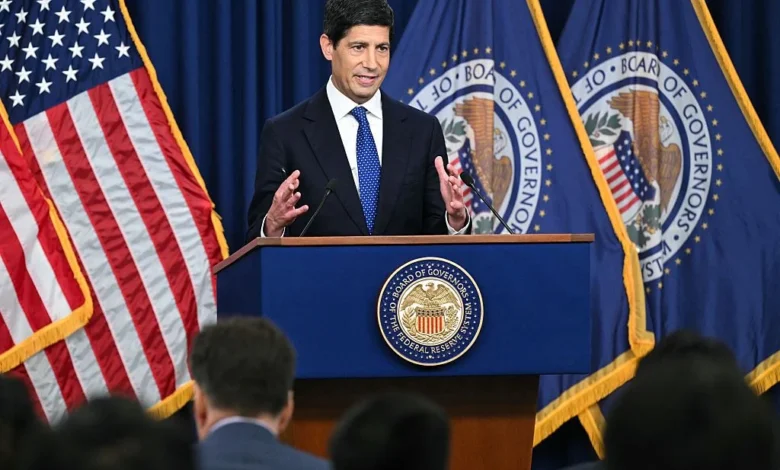
The Federal Reserve’s Federal Open Market Committee (FOMC) concluded its highly anticipated policy meeting on Wednesday by announcing a 25-basis-point increase in the federal funds rate, marking the central bank’s first tightening action in three years and pushing the target range to 3.75% to 4.00%. The decision, which arrived following a period of sustained economic caution, triggered an immediate retreat in major equity benchmarks as investors grappled with the implications of higher borrowing costs. By the closing bell, the Dow Jones Industrial Average had shed 1.2% to finish at 51,461, the S&P 500 declined 0.5% to 7,551, and the Nasdaq Composite ended marginally lower at 25,978.
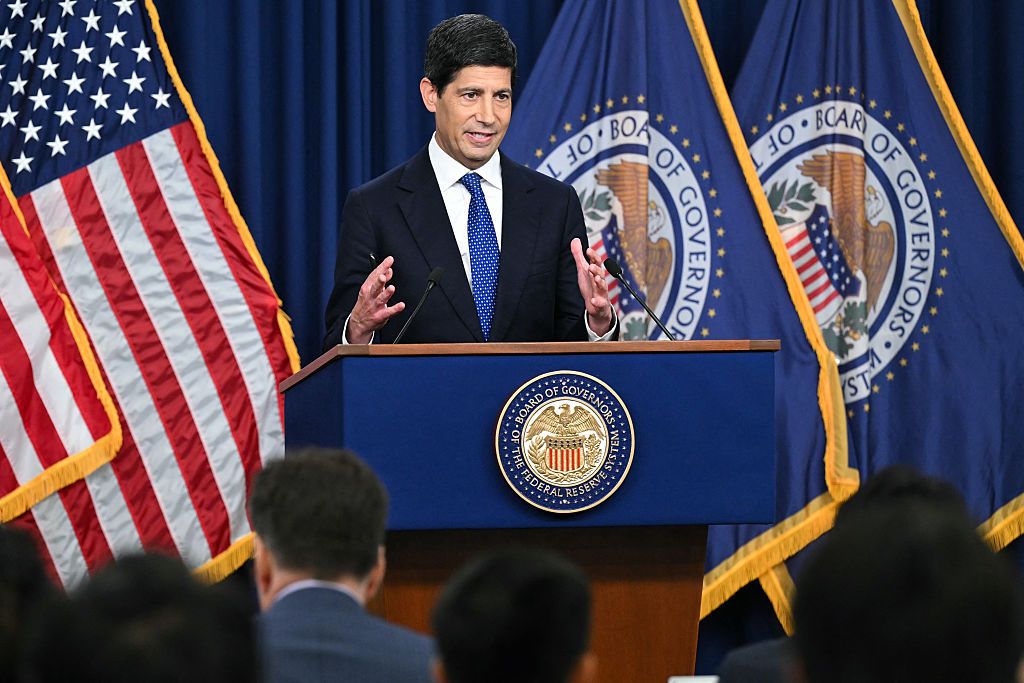
The shift in monetary policy represents a significant pivot for the Fed. For the past several years, the central bank had maintained an accommodative stance to support recovery efforts. However, with inflation remaining persistently elevated, the FOMC opted for a unified approach to regain control over price stability. Fed Chair Kevin Warsh, addressing the press following the announcement, emphasized that the decision was unanimous, reflecting a firm consensus among committee members that the current inflationary environment necessitates a more aggressive posture.
A Chronology of the Policy Pivot
The path to Wednesday’s decision was paved by months of mixed economic indicators. Throughout 2026, the FOMC maintained a "wait-and-see" approach, holding rates steady while monitoring the cooling effects of previous supply-chain disruptions and labor market volatility. However, the September meeting served as the definitive turning point.
The timeline of the Fed’s recent shift reveals a mounting pressure to act:
- Early 2026: Economic indicators suggested a solid expansion, but global geopolitical tensions began to introduce significant supply-side uncertainty.
- Mid-2026: While domestic spending remained resilient, persistent core inflation readings exceeded the Fed’s 2% target, prompting officials to signal that a "prolonged pause" was nearing its end.
- September 16, 2026: The FOMC formally raises the federal funds rate by 25 basis points, citing the need for price stability as the primary driver.
According to the committee’s updated Summary of Economic Projections released alongside the policy statement, members anticipate at least one additional rate hike before the end of the calendar year. This guidance suggests that the Fed is not yet prepared to signal the end of this tightening cycle, leaving markets to prepare for further volatility in the coming months.
Economic Resilience vs. Inflationary Pressure
The FOMC’s assessment of the U.S. economy remains cautiously optimistic. The committee noted that economic expansion remains solid, supported by robust capital expenditure and strong productivity gains. Furthermore, the labor market continues to exhibit signs of full employment, which Chair Warsh noted provides the Fed with the necessary "breathing room" to prioritize the fight against inflation without fear of triggering an immediate recession.
However, this resilience presents a double-edged sword. Strong consumer demand, evidenced by the latest Census Bureau report showing a 1.2% increase in retail sales for August, suggests that the economy is running hot. While growth is generally viewed as a positive, analysts warn that such strength complicates the Fed’s task. Eugenio J. Alemán, Ph.D., chief economist at Raymond James, noted that while the retail data confirms growth, it also raises concerns for policymakers. "The strength in consumption could put further pressure on inflation going forward," Alemán observed, highlighting the delicate balance the Fed must maintain to avoid over-tightening.
Historical Precedent and Market Reactions
While the immediate market reaction was negative, historical data provides a more nuanced perspective on how equities typically perform during the onset of a tightening cycle. Adam Turnquist, chief technical strategist at LPL Financial, pointed to a recurring pattern in the markets.
"Historically, following a rate hike that ended a pause of six months or longer, the S&P 500 gained an average of 5.5% over the subsequent 12 months," Turnquist stated. This observation is based on 12 distinct instances since 1972. While these periods are often characterized by initial volatility—with an average maximum drawdown of 9.4%—the long-term trend suggests that a transition to renewed tightening is not necessarily a precursor to a bear market. Investors, therefore, appear to be in a transition phase, weighing the immediate pain of higher rates against the long-term historical stability of the equity markets.
Corporate Sector Shifts: AI Ambitions and Fuel Costs
Beyond the macroeconomic headlines, corporate developments underscored the divergent pressures facing American industry. In the technology sector, OpenAI—the creator of the widely used ChatGPT platform—is reportedly seeking a new round of funding that would catapult its valuation past the $1.2 trillion mark. This massive capital ambition highlights the continued investor appetite for artificial intelligence, even as the broader market experiences a correction. OpenAI’s decision to delay its initial public offering (IPO) in favor of private funding, citing safety and market uncertainty, reflects a cautious strategic pivot by management. CEO Sam Altman noted that the current climate is "an ill-advised moment to go public," suggesting that even tech giants are feeling the weight of the current economic environment.
Conversely, the industrial sector faced harsh realities as fuel prices spiked. J.B. Hunt, a bellwether for the logistics and transportation industry, saw its stock tumble 13.3% after management warned of a sharp sequential decline in third-quarter earnings. CFO Brad Delco cited the "radical and abnormal" rise in diesel prices, which reached a record national average of $6.31 per gallon according to AAA. This 70.5% increase from year-ago levels has created a pricing mismatch for the company, forcing it to provide rare, downward-revised guidance to shareholders. The struggle at J.B. Hunt serves as a practical example of how inflationary pressures—specifically in energy—are cascading through the supply chain and hitting corporate margins.
Broader Implications and Future Outlook
The volatility in the Treasury market further underscores the uncertainty surrounding the Fed’s trajectory. The 2-year Treasury yield surged 7.1 basis points to 4.734%, reaching a new 52-week high, while the 10-year yield also trended upward to 5.016%. These movements indicate that bond markets are pricing in a "higher-for-longer" interest rate environment, which traditionally exerts pressure on growth-oriented stocks and interest-rate-sensitive sectors.
As the central bank moves forward, the primary challenge remains the "uncertainty" mentioned in the FOMC’s statement. Geopolitical developments, which were explicitly cited as a factor in the decision, remain a wildcard. Should international stability deteriorate further, the resulting impact on energy prices and supply chains could force the Fed to adjust its policy path more rapidly than currently projected.
For now, the financial community remains focused on the upcoming quarterly meetings and the subsequent releases of economic data. The prevailing sentiment is one of cautious navigation. While the Fed has signaled its commitment to price stability, the market’s response demonstrates that the path to achieving that goal will likely involve significant adjustments in asset valuations and corporate strategy. As investors look toward the final quarter of 2026, the ability of companies to manage input costs, such as fuel and capital, will likely be the defining factor in determining which sectors thrive and which struggle in this new, higher-rate environment. The September meeting, therefore, stands as a critical junction in the current economic cycle, marking the end of a period of monetary dormancy and the beginning of a new, more demanding era for global financial markets.