Man sentenced in $35 million Ponzi scheme that defrauded Travis Kelce: ‘He did this out of greed’ | Fortune


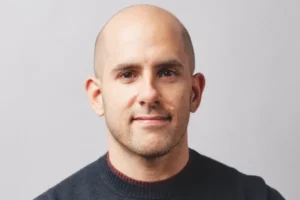
The federal judicial system in St. Louis brought a definitive end to a nearly decade-long campaign of financial deception this week, sentencing 38-year-old Siddharth Jawahar to 11 years in federal prison. Jawahar, the architect behind the investment firm Swiftarc Capital LLC, orchestrated a sophisticated Ponzi scheme that defrauded investors of more than $35 million. The sentencing, handed down in the U.S. District Court for the Eastern District of Missouri, follows a guilty plea entered in January to three counts of wire fraud.
The case, which underscores the persistent vulnerability of high-net-worth individuals to affinity fraud and opaque investment vehicles, took a sensational turn during the sentencing proceedings when it was revealed that Kansas City Chiefs tight end Travis Kelce was among the victims. While federal prosecutors have maintained a strict policy of non-disclosure regarding individual victim identities, the revelation has brought renewed scrutiny to the methods used by investment managers to solicit capital from public figures.
A Chronology of Deception
The timeline of the fraud dates back to 2010, when Jawahar first registered Swiftarc Capital in Texas. For years, the firm operated under the guise of a diversified investment powerhouse. Jawahar purportedly pitched potential clients on a strategy involving a broad range of domestic and international companies. However, investigators discovered that the reality of the firm’s operations was starkly different from the marketing materials presented to prospective backers.
According to court filings, the scheme began to unravel as early as 2018. The indictment details a specific instance in May of that year, in which Jawahar sent correspondence to two investors claiming that Swiftarc was finalizing a $525,000 investment in a third-party company. Forensic accounting later revealed that no such investment was ever made.
By the time federal authorities intervened, the total amount siphoned from investors reached $35,607,984.16. Crucially, the government’s investigation found that only approximately $10 million of that total was ever actually deployed into any assets. Instead, the vast majority of the capital was funneled into a single, high-risk overseas entity: Philip Morris Pakistan. When the value of that holding collapsed, Jawahar opted to conceal the losses from his clients, continuing to report robust returns to maintain the facade of a profitable enterprise.
The Anatomy of the Ponzi Scheme
The core of Jawahar’s operation followed the classic Ponzi blueprint: using capital from new investors to pay off "returns" to existing ones. This circular movement of funds creates an illusion of legitimacy, allowing the fraudster to continue soliciting larger sums.
The government’s sentencing memorandum provided a transparent look at the defendant’s motivations. In a candid—if contradictory—confession during an FBI interview, Jawahar admitted his primary driver was "greed," noting that any other adjective would be an inaccuracy. Yet, in a subsequent attempt to mitigate his sentencing, Jawahar argued in his own paperwork that his actions were not motivated by greed, a contradiction that did not escape the notice of the prosecution or the presiding judge.
The scale of the misappropriation was staggering. Documents provided to the court outline a lifestyle fueled by investor capital, characterized by excessive personal consumption. Jawahar reportedly utilized the stolen funds to finance private jet travel, luxury stays at five-star hotels, and exclusive memberships at high-end venues such as Zero Bond, Soho House, and Casa Cipriani in New York. Further expenditures included a $164,000 apartment in New York City and a $363,280 property in Austin, Texas.
Obstruction and Attempts to Manipulate the Process
The case against Jawahar was further complicated by his attempts to obstruct the investigation even after his arrest. Prosecutors documented a series of jailhouse communications, including a recorded call in which Jawahar pressured a victim who was scheduled to speak with the FBI. By telling the victim to "be dedicated," Jawahar attempted to intimidate a witness into withholding pertinent information.
His efforts to control the narrative extended to the professional sphere. According to court records, Jawahar entered into an agreement with the political consulting firm Axiom Strategies. The intent, as revealed in transcripts of jail calls between Jawahar and the firm’s Jeff Roe, was to craft media coverage that would portray the defendant in a more sympathetic light. The discussion included the controversial strategy of "geofencing" the sentencing judge’s residence with targeted digital advertisements. When Roe expressed concern that the plan could be perceived as "overly calculated," Jawahar reportedly replied, "which of course it is."
Furthermore, Jawahar’s attempts to secure his future in the United States have been equally fraught. He petitioned the court for permission to marry his fiancée, Caroline Tredway, while in custody. The government vehemently opposed this request, arguing that the marriage was a pretextual effort to secure immigration status. Prosecutors cited a recorded conversation in which Tredway inquired about the possibility of deportation, to which Jawahar replied, "if you don’t marry me, I guess that might happen."
Implications for Restitution and Regulatory Oversight
As of the sentencing, Jawahar has not paid any of the $31.35 million in restitution ordered by the court. His attitude toward the victims’ financial recovery remains a point of contention; in one recorded jail call, he allegedly told Tredway that "restitution never gets paid" and expressed a belief that his obligations would eventually be commuted.
The case serves as a sobering reminder of the systemic risks inherent in private capital management that lacks transparent oversight. While the involvement of celebrities like Travis Kelce draws significant public attention, the case of Swiftarc Capital reflects a broader trend of sophisticated financial crimes that target high-net-worth individuals who may rely on the recommendations of personal associates rather than independent financial due diligence.
The precedent set by this case—specifically the rejection of the defendant’s attempts to manipulate the legal process through political consulting and strategic media placement—highlights a growing intolerance within the federal judiciary for defendants who use their remaining assets to undermine the administration of justice.
Broader Market Context
Investment fraud, particularly the Ponzi scheme model, continues to plague the financial sector despite heightened regulatory efforts. The psychological component of these crimes, as documented in studies of historic figures like Bernie Madoff, remains consistent: the promise of outsized returns, often shielded by the complexity of overseas assets, serves as an effective lure even for experienced investors.
The Swiftarc Capital collapse illustrates the critical necessity for professional third-party audits of investment firms, regardless of their size or the profile of their client list. The reliance on internal reporting, as seen in Jawahar’s false claims of portfolio growth, allowed the scheme to persist for nearly a decade.
For the victims, the road to financial recovery remains uncertain. While the 11-year prison sentence provides a measure of justice, the lack of immediate restitution underscores the difficulty of clawing back assets that have been dissipated through luxury spending and poor investment choices. As the case closes, it remains a case study for financial institutions and investors alike, highlighting the dangers of implicit trust in the absence of verified, independent financial data.