Beyond the Binary: Why the AI Disclosure Debate Needs a New Framework for Modern Journalism


The modern landscape of digital publishing is currently gripped by a singular, increasingly loaded inquiry: Did you use artificial intelligence? While this question has become a touchstone for editorial integrity, it is fundamentally flawed, failing to capture the complex, multifaceted reality of contemporary writing workflows. As generative AI tools become ubiquitous in professional settings, the industry finds itself at a crossroads. The binary "yes or no" framework is no longer sufficient to describe a spectrum of labor that ranges from simple grammatical assistance to the full-scale automation of thought. Instead of fostering transparency, this simplistic approach risks fueling a culture of suspicion, misrepresenting the nuanced collaboration between human intuition and machine efficiency.
The Druckenmiller Precedent and the Threshold of Public Scrutiny
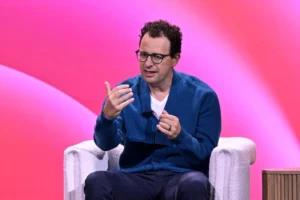
The debate reached a fever pitch last month when billionaire investor Stanley Druckenmiller published an op-ed in The Wall Street Journal critiquing Treasury Secretary Scott Bessent’s bond-market interventions. The piece drew immediate attention, not merely for its economic arguments, but for its syntax and tone. Readers and analysts quickly identified structural hallmarks commonly associated with large language models. The software tool Pangram, designed to detect synthetic content, assigned the piece a 100 percent AI probability score.
When queried regarding the authorship of the text, Druckenmiller offered a candid admission. He defended his use of AI by drawing an analogy to the calculator, suggesting that generative tools are merely productivity aids designed to streamline the translation of complex thoughts into coherent prose. This public disclosure triggered a broader industry debate regarding the ethics of disclosure. While critics viewed the move as an erosion of editorial accountability, the editorial leadership at The Wall Street Journal remained largely unperturbed. Paul Gigot, the editorial page editor, framed the backlash as a reaction by "media pharisees," asserting that the integration of AI is a baseline reality of the modern information economy.
A Chronology of the AI Integration Crisis
The trajectory of AI adoption in professional writing can be mapped across several distinct phases of escalation:
- 2022–2023: The Novelty Phase: Generative AI tools like ChatGPT transition from research novelties to accessible consumer products, sparking initial industry concerns regarding copyright and academic integrity.
- Early 2024: The Proliferation Phase: Professional writers begin experimenting with AI for brainstorming and structural outlining, often without formal disclosure policies in place.
- Mid-2024: The Detection Arms Race: The emergence of specialized AI-detection software creates a climate of anxiety, with publishers and institutions struggling to distinguish between human-authored and AI-assisted content.
- Late 2024: The Disclosure Conflict: High-profile op-eds and journalistic pieces begin to explicitly acknowledge AI involvement, forcing newsrooms to confront the lack of standardized terminology or reporting requirements.
Analyzing the Mechanics of Assistance
The central issue is the conflation of different levels of AI usage. A writer using a chatbot to verify a citation is engaging in a fundamentally different process than a user prompting a model to generate an entire argument from a single seed idea.
In the case of the Druckenmiller piece, the discrepancy between the author’s claim—that he rejected many of the chatbot’s suggestions—and the detection software’s 100 percent score highlights a critical failure in current auditing tools. AI detectors often rely on probability distributions of word sequences, which can be triggered by standard, professional-grade prose, even when a human is the primary architect of the content. This technical limitation often results in false positives that damage reputations and stifle the legitimate adoption of assistive technology.
Proposed Frameworks for Transparency
The industry is currently exploring the implementation of a standardized disclosure scale to replace the binary "yes or no" question. One such proposal is the "Who Wrote This?" scale, designed to offer readers transparency without stigmatizing the use of digital tools.
The Proposed AI Usage Spectrum
- H0 (Human-Only): The text was authored entirely by a human without the use of generative AI for drafting or structural editing.
- H1 (AI-Assisted Research): AI was used for fact-checking, background research, or gathering data, but the writing itself is entirely human-led.
- H2 (AI-Brainstorming): AI was used to generate ideas, outlines, or potential headlines, but the draft was composed by a human.
- H3 (AI-Polished): The author wrote the full draft, and AI was used to refine syntax, condense paragraphs, or improve flow.
- H4 (AI-Generated): AI generated the bulk of the content based on human prompts and oversight, with human editors conducting the final review.
Several organizations, including the open-source AI Usage Scale initiative, have proposed similar models. The Datatech Times has already begun implementing an editorial policy that prints an AI-usage level next to every byline, providing a blueprint for broader adoption.
Historical Context: The Long Shadow of Collaboration
The discomfort regarding AI-assisted writing is not a modern phenomenon but rather a continuation of historical anxieties regarding authorship. In 1845, the literary world was rocked by allegations that Alexandre Dumas, the celebrated author of The Three Musketeers, utilized a "novel factory" of hidden collaborators. While the methods have shifted from human ghostwriters to algorithmic processors, the core question remains: Does the value of a text lie in the hands that held the pen, or in the intellectual oversight that curated the final result?
Just as society eventually accepted the role of speechwriters in political discourse—recognizing that an orator’s message remains their own regardless of the initial draft—the publishing industry must now reconcile its expectations with the tools of the digital age.
Broader Implications for Journalism
The refusal to adopt standardized disclosure protocols poses a significant risk to the credibility of the Fourth Estate. If news organizations continue to ignore the nuances of AI integration, they leave themselves vulnerable to accusations of deception. Conversely, a rigorous, self-reported system of disclosure could effectively neutralize the "witch hunt" mentality currently prevalent in some editorial offices.
Furthermore, the integration of AI tools presents a massive opportunity for efficiency. By offloading mechanical tasks—such as formatting, data visualization, and structural cleanup—to AI, journalists can theoretically redirect their focus toward high-value investigative work and deep-form analysis. The ultimate goal should not be the elimination of AI, but the establishment of a transparent relationship with the reader.
As the industry moves forward, it must prioritize the "Who Wrote This?" imperative. When a reader consumes a piece of journalism, they are entering into a social contract with the publisher. That contract is predicated on the assumption that the writer is taking responsibility for the ideas presented. By disclosing the extent of AI involvement, writers can uphold this contract, ensuring that the machine remains a servant to human intellect rather than a substitute for it.
The path forward requires a shift in focus: from questioning if a tool was used to describing how it was employed. In the pursuit of truth and clarity, honesty about the process is the most effective way to preserve the integrity of the product. This article serves as an example of such disclosure: it is categorized as H3 Polished, utilizing AI for structural refinement and synthesis while maintaining human editorial control over the core reporting and analysis.
Related posts: