The Rise of Live Tourism: How Concerts, Sports, and Festivals Are Rewriting the Global Travel Calendar

For decades, the global travel and tourism industry has relied on a predictable, centuries-old rhythm. Airlines, hotel chains, tour operators, and destination marketing organizations have historically built their business models around weather patterns, statutory school holidays, and historical demand metrics. Summer vacations, winter ski getaways, and spring break surges formed the holy trinity of travel forecasting. Hoteliers and carriers would look backward at previous years’ occupancy and passenger loads to project future revenue, adjusting yields and inventory based on seasonal norms.
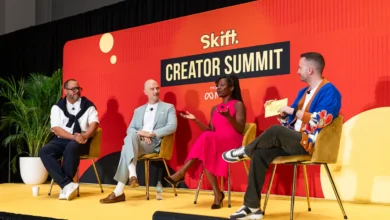
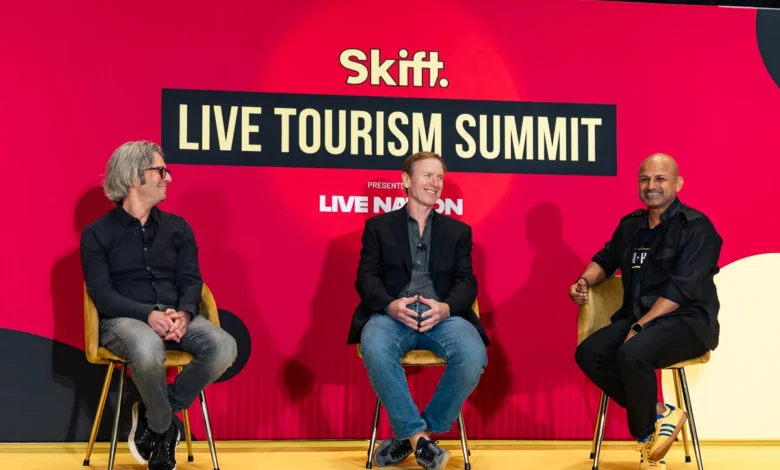
However, live entertainment operates on an entirely different temporal and operational calendar. Concert tours featuring global superstars, multi-stage music festivals, international soccer tournaments, and high-stakes championship games are scheduled months, and sometimes years, in advance. This fundamental divergence in planning horizons was a central theme of discussion at the recent Live Tourism Summit, where industry leaders convened to examine how the travel sector can better align itself with the accelerating phenomenon of event-driven mobility.
As Skift founder and CEO Rafat Ali noted during the summit, so much of the live tourism demand is already baked in for months and years to come. Promoters, booking agents, and stadium managers lock in dates and venues long before traditional travel providers begin thinking about seasonal capacity adjustments. Consequently, companies producing concerts, sports leagues, and massive cultural festivals often possess visibility into consumer movement and economic intent long before the airlines that provide the flights, the hotels that secure the rooms, or the local ground transportation networks that move the masses.
This asymmetry of foresight presents both a massive economic opportunity and a systemic coordination challenge for the modern travel ecosystem.
The Paradigm Shift in Consumer Intent
Historically, leisure travel was destination-first. A consumer would decide they wanted to visit a specific city, region, or country—say, Paris in the spring or the beaches of Thailand in the winter—and would subsequently look for local events happening during their stay. Today, for a rapidly growing segment of the global population, that decision-making funnel has inverted.
Event-first travel has emerged as the dominant behavior for millions of consumers, particularly among Millennials and Gen Z demographics. A fan in London will purchase tickets to see Beyoncé or Taylor Swift in Stockholm, Edinburg, or Melbourne before they even open a browser tab to look at flights or accommodations. They are willing to absorb premium airfares, inflated hotel rates, and complex multi-leg itineraries solely to secure admission to a finite live experience.
This shift transforms live entertainment from a localized leisure activity into a powerful macroeconomic engine for international travel. When a major tour announcement drops, it triggers an immediate, localized surge in cross-border search queries and booking velocity. Yet, because traditional travel companies remain tethered to historical seasonal patterns, they often react to these micro-surges reactively rather than proactively, leading to missed revenue opportunities for local economies and friction for consumers.
Chronology of the Live Entertainment and Travel Convergence
To understand how live tourism evolved into a distinct asset class within the broader travel economy, it is necessary to examine the timeline of its acceleration over the past two decades.
The Early 2000s: The Rise of Destination Festivals
At the turn of the millennium, destination music festivals began to carve out a niche in European and North American markets. Events like Coachella (founded in 1999) and Tomorrowland (launched in 2005) started as localized gatherings but quickly realized that their attendees were traveling significant distances. Organizers began partnering with local travel providers to offer bundled hotel-and-ticket packages, planting the early seeds of integrated live tourism.
The 2010s: The Globalization of Touring and Mega-Events
As digital streaming flattened the global music market, recorded music revenues shifted, and artists became increasingly reliant on live touring as their primary source of income. Simultaneously, emerging markets in Asia, the Middle East, and Latin America began heavily investing in infrastructure to host major sporting events, such as Formula 1 Grands Prix, global golf tournaments, and international soccer championships. Mega-events ceased to be isolated occurrences and became continuous calendar fixtures.
The 2020–2022 Disruption and Pent-Up Demand
The COVID-19 pandemic brought live events and international travel to a simultaneous, grinding halt. However, the subsequent reopening in 2022 unleashed an unprecedented wave of consumer savings and psychological desire for shared experiences. Dubbed revenge travel, this period proved that consumers prioritized experiential spending over material goods.
The 2023–2024 Megatour Era
The modern era of live tourism crystallized during the 2023–2024 touring cycle. High-profile stadium tours, most notably Taylor Swift’s Eras Tour and Beyoncé’s Renaissance World Tour, generated billions of dollars in direct economic impact. Cities that hosted these tours reported record-shattering hotel occupancy rates, surging restaurant revenues, and substantial tax windfalls. Municipalities realized that securing a stop on a major tour carried economic weight equivalent to hosting a major political summit or an international sporting event.
Data and Economic Impact: The Numbers Behind the Boom
The economic footprint of live tourism is no longer a marginal footnote in tourism board reports; it is a primary driver of urban and regional financial health.
According to data compiled by various tourism authorities and economic research firms, major music tours generate staggering auxiliary spending. For instance, studies surrounding major stadium tours indicate that for every dollar spent on a concert ticket, attendees spend an estimated three to five dollars on related travel expenses, including lodging, dining, local transportation, and retail shopping.
Furthermore, hospitality data analytics firms have noted clear anomalies in hotel performance metrics tied directly to live events. During weekends featuring high-profile concerts or championship games, urban hotel occupancy rates frequently approach 90 to 100 percent, even during shoulder seasons when historical demand models would predict occupancy in the 50 to 60 percent range. Average Daily Rates (ADR) during these weekends often spike by 50% to 200%, providing hoteliers with vital margin expansions.
In the sports sector, the data is similarly compelling. Major international events such as the Olympic Games, the FIFA World Cup, and the UEFA Champions League final inject billions of dollars into host economies. However, even recurring annual fixtures—such as Formula 1 races held in cities like Miami, Las Vegas, and Singapore—have fundamentally restructured local tourism calendars. The Las Vegas Grand Prix, for example, was intentionally scheduled during a historically slow tourism weekend in November to transform a dead period into one of the city’s highest-grossing revenue drivers of the year.
Industry Responses and Strategic Adaptations
Faced with this growing body of evidence, stakeholders across the travel and entertainment sectors are re-evaluating how they plan, communicate, and collaborate.
Airlines and aviation strategists are increasingly monitoring tour schedules and sports fixture lists to adjust capacity. Rather than waiting for historical booking curves to manifest, forward-thinking carriers are deploying dynamic capacity management—adding direct flights or upgauging aircraft size for routes connecting major origin markets to secondary and tertiary cities hosting massive events.
Hotels and short-term rental operators are also overhauling their revenue management systems. Advanced pricing algorithms are now being integrated with event-tracking databases that scrape tour dates, festival lineups, and sports schedules the moment they are announced. This allows properties to capture maximum yield early in the booking cycle rather than underpricing inventory based on historical seasonality.
Destination Marketing Organizations (DMOs) are shifting their marketing budgets away from generic destination branding toward event-specific campaigns. Instead of marketing a city merely as a pleasant place to visit in the autumn, DMOs are actively collaborating with promoters to co-promote weekends featuring cultural festivals, culinary expos, and sporting events, effectively turning the event into the hero asset of their promotional collateral.
Broader Implications and the Future of the Ecosystem
The maturation of live tourism carries profound implications for the future of global mobility, urban planning, and infrastructure development.
First, it highlights the necessity of cross-industry data sharing. Historically, the entertainment industry and the travel industry operated in silos. Promoters knew who bought tickets, but they rarely shared demographic or geographic origin data with local tourism boards or airlines. Conversely, travel providers understood where passengers were flying, but they lacked granular insight into why they were traveling until the booking was finalized. Bridging this data gap is essential for building a frictionless travel experience.
Second, the rise of live tourism places intense pressure on urban infrastructure. When tens of thousands of travelers converge on a city for a single weekend, public transit systems, airports, waste management, and public safety services are pushed to their absolute limits. Cities that successfully harness live tourism will be those that invest heavily in resilient, scalable infrastructure capable of absorbing sudden, high-density surges in population.
Finally, live tourism alters the geography of travel itself. Traditional tourism has long suffered from overtourism in major heritage cities like Venice, Barcelona, and Paris. Live events, however, have the unique power of decentralization. Because stadiums, arenas, and festival grounds are frequently located in secondary cities, suburban areas, or emerging markets, live tourism distributes economic benefits and tourist foot traffic to regions that might otherwise be bypassed by conventional leisure travelers.
Conclusion
The insights emerging from forums like the Live Tourism Summit underscore a permanent structural evolution in how the world moves. Travel is no longer just about place; it is increasingly about moments. By recognizing that live entertainment holds the calendar keys to future consumer demand, the travel industry has a historic opportunity to evolve. Those companies and destinations that learn to read the calendar of live culture—and integrate it seamlessly into their logistical planning—will capture the loyalty and spend of the modern event-driven traveler for years to come.
Related posts: