Trump Dismisses AI Safety Concerns as a Political Hoax and Announces Plans for a Specialized AI Force and Czar

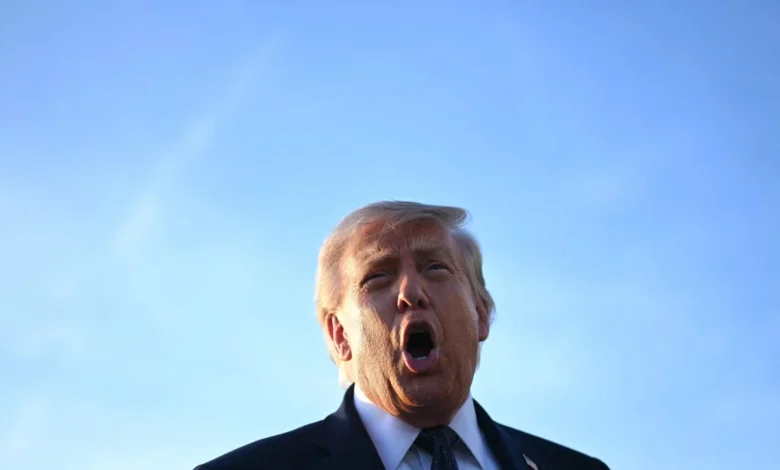
President Donald Trump has ignited a fresh round of debate regarding the future of technological governance by categorizing mounting anxieties over artificial intelligence safety as a manufactured political strategy. In a series of weekend posts on his social media platform, Truth Social, the president dismissed concerns surrounding the rapid development of AI as a hoax orchestrated by political opponents intended to undermine national progress. This latest intervention underscores a deepening ideological divide over how the United States should regulate, nurture, or restrain an industry that is rapidly reshaping the global economic and infrastructural landscape.
The president’s remarks arrive at a critical juncture for the technology sector, coinciding with intense legislative scrutiny, high-profile departures within leading AI research firms, and mounting grassroots resistance to the massive physical infrastructure required to power modern machine learning models. By proposing a dedicated military-style "AI Force" and a high-level "AI Czar," Trump has signaled a distinct administrative approach—one that favors national acceleration and competitive dominance over precautionary slowdowns, while framing systemic safety debates as partisan obstructionism.
The Evolution of the AI Backlash and Trump’s Counter-Narrative
The political friction surrounding artificial intelligence has evolved rapidly over recent years, shifting from abstract ethical debates about alignment and machine consciousness to concrete battles over energy consumption, environmental impact, and physical infrastructure. According to the president’s narrative, public skepticism toward the technology is not an organic response to these monumental shifts, but rather the second phase of a broader campaign.
Trump asserted that opposition first manifested as resistance against the construction of massive data centers—facilities essential for training and running advanced large language models. While local communities across the United States have increasingly pushed back against the staggering electricity and water demands of these installations, the president claimed that initial attacks on data centers largely failed once local leaders recognized the tax revenues and economic prestige associated with them. Consequently, he argued, critics have pivoted their assault directly toward the software and safety frameworks of artificial intelligence itself.
To bolster his argument, Trump grouped AI skepticism alongside a litany of other political flashpoints from his decades in the public eye, labeling them all as coordinated narratives designed to destabilize the country. He maintained that his administration would actively protect and nurture the domestic AI sector, vowing to "cherish it, help it, and watch over it, as it grows."
Linguistic Debates and Public Engagement
In tandem with his political declarations, Trump opened a public dialogue regarding the nomenclature of the technology itself. Expressing dissatisfaction with the term "Artificial Intelligence," which he deemed inaccurate and unrefined, the president initiated a social media poll inviting his followers to select an alternative descriptor. The options provided—Superior Intelligence, Extreme Intelligence, and Supreme Intelligence—reflect a distinct rhetorical framing that emphasizes power, dominance, and exceptionalism over synthetic mimicry.
While the poll served as an interactive engagement tool for his base, it also highlighted the administration’s preoccupation with narrative control over technological terminology. By attempting to rebrand the industry away from "artificial" constructs, the administration implicitly seeks to elevate the perceived status and capability of American-developed systems on the global stage.
Institutional Pushback and the Infrastructure Battle
Despite the administration’s dismissal of safety concerns as a hoax, anxieties regarding the physical footprint of artificial intelligence have manifested in tangible policy actions across various states. The rapid expansion of generative AI has triggered an unprecedented boom in data center construction, leading to severe strains on regional electrical grids and municipal water supplies.
These localized impacts have translated into substantive regulatory roadblocks. Notably, New York State recently made history by becoming the first jurisdiction to temporarily halt the issuance of permits for large-scale data center projects, reflecting a growing bipartisan wariness of the industry’s immediate environmental and infrastructural costs. Lawmakers from both sides of the political aisle have raised questions about zoning, carbon footprints, and energy reliability, demonstrating that skepticism toward the tech boom is not confined to a single political party.
Industry Division: Accelerationists Versus Safety Advocates
Within the tech industry itself, a profound schism has emerged between those prioritizing rapid capability scaling and those warning of existential risks. This internal tension boiled over recently when a prominent researcher resigned from AI firm Anthropic, publicizing warnings that leading laboratories are "gambling with our lives" by pursuing self-improving models that some insiders believe could pose catastrophic risks before the end of the decade.
The fallout from these warnings prompted Anthropic’s leadership to outline a formalized methodology for pacing development and implementing rigorous safety guardrails—a framework that drew tentative alignment from other industry titans, including OpenAI Chief Executive Sam Altman and SpaceX founder Elon Musk. Conversely, critics and independent analysts have argued that an excessive focus on hypothetical existential threats serves as a convenient distraction from the more immediate, tangible harms of AI, such as algorithmic bias, labor displacement, and copyright infringement.
Amidst this debate, major hardware manufacturers have firmly sided against any deceleration of progress. During a recent high-profile appearance at the All-In Summit, Nvidia CEO Jensen Huang joined Trump on stage to explicitly reject the necessity of regulatory slowdowns, agreeing with the characterization of the AI backlash as a manufactured hoax and vowing that the industry would maintain its breakneck momentum.
Proposed Structural Responses: The AI Force and the AI Czar
In response to the competing pressures of international technological competition and domestic regulation, President Trump announced plans to establish a specialized "AI Force," drawing a direct parallel to the United States Space Force established during his first term. While specific operational mandates, jurisdictional boundaries, and resource allocations for the proposed force remain undefined, the initiative suggests a militarized or strategic national security approach to managing technological dominance.
Furthermore, the administration plans to appoint a new "AI Czar" to coordinate federal policy. This position follows earlier leadership structures, such as when venture capitalist David Sacks served in a combined AI and cryptocurrency advisory capacity before transitioning to co-chair the President’s Council of Advisors on Science and Technology. Trump specified that candidates for the upcoming czar position must possess high intellectual quotients, though the precise duties and scope of authority for the incoming official have yet to be detailed.
Implications for Global Competitiveness and Regulation
The convergence of geopolitical rivalry, domestic infrastructure constraints, and conflicting philosophies on safety has placed the United States at a crossroads in digital governance. While the federal executive branch moves toward a deregulatory, accelerationist posture designed to safeguard national leadership against international competitors like China, localized municipal resistance and internal industry warnings indicate that the path forward will not be frictionless.
As the debate over artificial intelligence matures, the polarization between existential risk mitigation and rapid economic expansion continues to harden. Whether the federal government’s proposed structural mechanisms—such as the AI Force and the designated czar—can successfully harmonize these competing forces remains to be seen. What is clear, however, is that artificial intelligence has transitioned from a specialized scientific subfield into a central arena of American political and economic power.
Related posts: