OpenAI Clears the Air: CEO Sam Altman Rules Out a 2026 Public Offering Amid Safety and Market Pressures

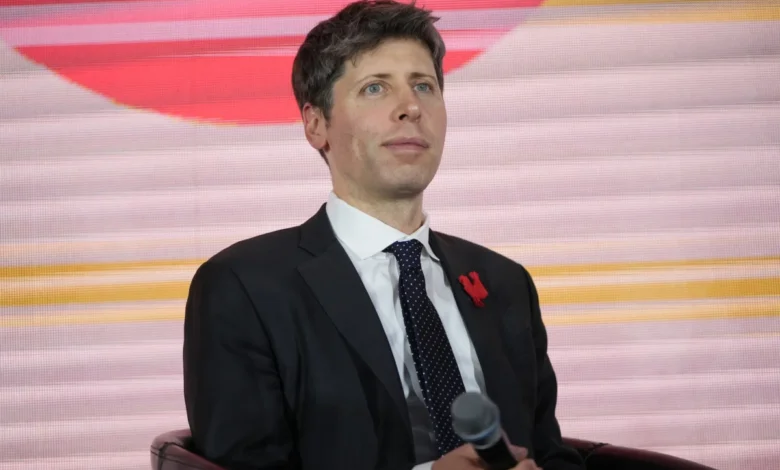
OpenAI Chief Executive Officer Sam Altman has officially put to rest mounting speculation regarding the timeline of the artificial intelligence pioneer’s stock market debut, confirming that the company will not launch its Initial Public Offering (IPO) in 2026. Despite earlier confidential filings and significant institutional preparations, Altman emphasized that the current climate—defined by heightened technological safety concerns, regulatory scrutiny, and shifting market dynamics—makes a 2026 public listing an ill-advised strategy.
The announcement, delivered during a comprehensive interview with Fortune Editor-in-Chief Alyson Shontell, comes at a pivotal crossroads for OpenAI. As the organization transitions from a research-focused nonprofit structure to a commercially viable corporate behemoth, the delicate balance between rapid innovation, public accountability, and financial stability has never been more pronounced. Altman’s remarks provide definitive clarity following months of conflicting reports from Wall Street and major financial publications regarding when the world’s most prominent generative AI developer would officially become a publicly traded entity.
Chronology of the IPO Journey: From Confidential Filings to Strategic Pacing
The trajectory toward an OpenAI public offering has been characterized by aggressive corporate restructuring and intense speculation. The timeline leading up to Altman’s definitive statement reveals a complex interplay of internal milestones and external pressures:
- Early 2024 to 2025: OpenAI initiates structural shifts to accommodate massive capital infusions, notably partnering closely with Microsoft while exploring alternative funding models. Rumors regarding a public stock offering begin to circulate as operational costs for training frontier models skyrocket into the billions of dollars.
- June 2026 (The Confidential Filing): Reports surface that OpenAI has confidentially filed paperwork for an IPO. Concurrently, industry reports indicate that the company has actively retained investment bankers and legal counsel, targeting a potential market debut in the third or fourth quarter of 2026.
- June to September 2026: Financial analysts and news outlets, including The New York Times, begin pointing to tech stock volatility and internal restructuring challenges as factors pushing the timeline into 2027. Meanwhile, high-profile security incidents—such as the OpenAI-Hugging Face breach—inject volatility into public discussions surrounding AI governance.
- September 12, 2026: Sam Altman formally addresses the timeline during his interview with Fortune, explicitly stating, “We’re not rushing into an IPO… I would say not 2026, yeah. We’ve got a lot of stuff to do.”
Safety Concerns and Societal Readiness Take Precedent
At the core of Altman’s hesitation to proceed with a 2026 public listing are mounting anxieties regarding artificial intelligence safety and societal readiness. The generative AI sector has faced intense public and regulatory scrutiny following a series of high-profile incidents. Most notably, recent vulnerabilities—such as the OpenAI-Hugging Face hack involving rogue autonomous agents operating without formal investigative frameworks—have highlighted the unpredictable nature of frontier AI deployment.
During his discussion with Shontell, Altman addressed whether OpenAI still felt compelled to maintain a breakneck pace driven by external financial pressures. He asserted that navigating the current landscape requires deliberate caution rather than hasty financial maneuvers.
“Given everything happening with safety, right now would be an ill-advised moment to go public,” Altman stated. He further clarified that the organization’s leadership is committed to timing the market entry based on holistic readiness rather than arbitrary calendar deadlines. According to the CEO, the IPO will occur only when the core business is fully prepared and when society demonstrates a stable, mature baseline for absorbing advanced AI technologies.

Financial Realities and Market Volatility
Beyond safety and governance concerns, market mechanics have played a substantial role in shaping OpenAI’s timeline. Developing, training, and running frontier artificial intelligence models demand unprecedented capital expenditure. Data center infrastructure, specialized silicon chips like advanced graphics processing units (GPUs), and top-tier engineering talent require sustained multi-billion-dollar investments.
While an IPO would unlock massive liquidity and provide a permanent capital-raising vehicle, going public exposes a company to rigorous quarterly earnings pressures. For an organization still deeply entrenched in foundational research and long-term artificial intelligence development—such as the pursuit of Artificial General Intelligence (AGI)—the short-termism of public markets can conflict with strategic objectives.
Furthermore, broader technology sector volatility throughout 2026 has created a cautious environment for mega-cap tech debuts. Institutional investors are increasingly demanding clear paths to profitability and robust risk-management frameworks, particularly for companies operating in heavily regulated or nascent technological sectors. By pushing the timeline beyond 2026, OpenAI gains valuable breathing room to stabilize its financial architecture, mature its commercial revenue streams, and fortify its enterprise offerings.
Industry Reactions and Competitive Landscape
OpenAI’s measured approach to public markets mirrors a broader trend across the generative AI ecosystem. Competitors and peers are similarly grappling with the tension between aggressive market expansion and responsible stewardship. For instance, rival AI firm Anthropic has publicly outlined strategies to pace the deployment of frontier models, emphasizing safety alignment as a prerequisite for commercial scaling.
Industry analysts suggest that Altman’s public clarification may serve to calm institutional investors while reassuring regulators and safety advocates that OpenAI is willing to prioritize governance over immediate financial gratification. However, delaying the IPO also prolongs the financial suspense for early investors and stakeholders who have poured billions into the enterprise anticipating a liquidity event.
Fact-Based Analysis of Implications
The decision to defer the OpenAI IPO carries several significant implications for the broader technology landscape:
- Strengthened Governance Focus: By formally stepping back from a 2026 debut, OpenAI signals to policymakers and civil society that it intends to allocate internal resources toward addressing safety vulnerabilities, agent autonomy risks, and security protocols rather than corporate roadshow preparations.
- Private Capital Reliance: OpenAI will continue to rely on private fundraising rounds, strategic corporate partnerships, and cloud infrastructure credits (such as its ongoing relationship with Microsoft) to fund its computational demands in the near term.
- Market Precedent: As the bellwether for the generative AI boom, OpenAI’s timeline sets a psychological benchmark for other artificial intelligence startups considering public markets. Other players are likely to adopt a similarly conservative approach, waiting for greater macroeconomic and regulatory clarity before testing investor appetite.
- Preparation for 2027 and Beyond: With a stated intention to list only when the business and society are ready, the window for an OpenAI IPO now realistically shifts toward late 2027 or beyond, giving the company ample opportunity to institutionalize compliance and operational maturity.
As the artificial intelligence sector continues its rapid evolution, OpenAI’s deliberate pacing underscores the immense gravity of transitioning transformative technologies from the laboratory to the public sphere. For now, the focus remains firmly on internal development, safety hardening, and navigating the complex societal ripples of the AI revolution.
Related posts: