Trump Announces New US AI Force and Special Czar to Oversee National Artificial Intelligence Strategy

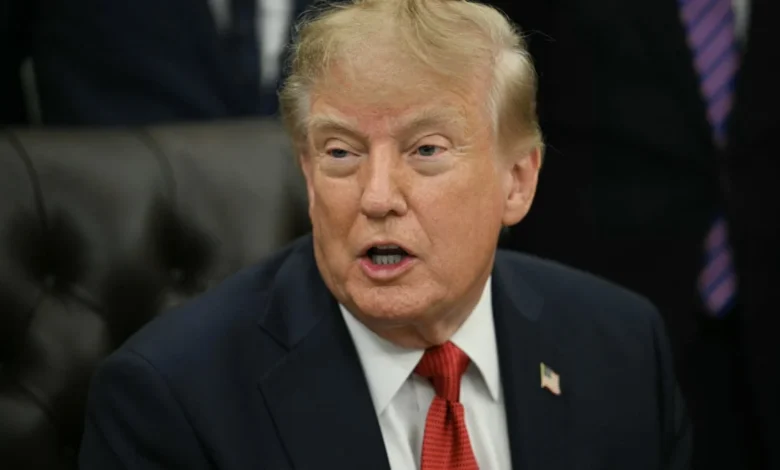
President Donald Trump has announced plans to establish a specialized "AI Force" modeled after the Space Force branch created during his first presidential term, signaling a significant shift in how the federal government plans to manage, regulate, and integrate artificial intelligence. The announcement, delivered via a detailed statement on Truth Social, outlines an ambitious framework that includes appointing a new high-level "AI czar" and restructuring how the government interacts with the burgeoning technology sector.
The initiative arrives at a critical juncture for federal technology policy, coinciding with a series of high-profile technical missteps within the Department of Defense regarding automated systems and battlefield intelligence. By combining structural reorganization with a deregulatory economic philosophy, the administration aims to position the United States as the undisputed global leader in artificial intelligence development while attempting to address emerging national security vulnerabilities.
The Blueprint for the US AI Force and Leadership Structure
According to the president’s social media announcement, the newly proposed "AI Force" will draw inspiration from the United States Space Force, established in December 2019. Much like the Space Force was designed to consolidate and streamline satellite operations, missile warning systems, and space-based communications previously fragmented across the Air Force, Army, and Navy, an AI Force is expected to unify the military’s sprawling and often disconnected artificial intelligence initiatives under a single command structure.
Central to this new executive strategy is the creation of a high-ranking "AI czar" position. Trump noted that applicants for the post should be "High I.Q. individuals," signaling a desire for top-tier technical and managerial talent from the private sector. This position follows the departure of venture capitalist David Sacks, who previously served as the administration’s AI and cryptocurrency czar before transitioning to an advisory role within the White House following the expiration of his tenure as a special government employee.
In addition to structural reforms, the administration’s policy vision emphasizes a light-touch regulatory approach. Trump explicitly stated that the federal government would not "hinder or stifle the growth of this incredible industry," promising instead that the administration would support and monitor its evolution. Furthermore, the president floated the idea of rebranding the term "artificial intelligence" to more flattering alternatives, suggesting designations such as "supreme," "superior," or "extreme" intelligence to better reflect the technology’s transformative potential.
Context, Chronology, and Recent Military AI Failures
The unveiling of the AI Force comes against a backdrop of escalating concern regarding the reliability of artificial intelligence systems deployed in high-stakes military and intelligence environments. Over the past year, the Department of Defense has faced intense scrutiny following several operational failures attributed to an overreliance on automated tools.
The timeline of recent military AI incidents underscores the urgency behind calls for better oversight:
- February: Pentagon investigators launched inquiries into a deadly military strike that destroyed a girls’ school in Iran. Early findings and independent investigations have focused heavily on whether an overreliance on algorithmic targeting and faulty AI assessment played a role in the civilian casualties.
- September 18: CNN reported a near-catastrophic intelligence failure in which an AI-generated report mistakenly asserted that a Chinese cargo ship was transporting nuclear weapons components. According to the reporting, armed U.S. service members were actively preparing to board the vessel before analysts discovered that the underlying intelligence had been generated entirely by an unverified AI chatbot. The operation was aborted at the eleventh hour, with internal sources later characterizing the incident as an event that could have triggered an international military conflict.
Despite these alarming developments, Trump dismissed broader societal anxieties regarding existential AI risks as manufactured "hoaxes." Instead, the administration’s stated strategy relies on using the existing legal and judicial framework to prosecute "bad actors" who misuse the technology maliciously, rather than imposing blanket preventative regulations on developers and enterprises.
Economic Implications and Industry Reactions
The announcement has elicited a complex spectrum of reactions from technology executives, legal experts, and national security analysts. Silicon Valley leaders have generally welcomed the administration’s pledge to avoid restrictive regulations, viewing a hands-off economic approach as vital for maintaining America’s competitive edge against geopolitical rivals like China. Supporters argue that excessive compliance burdens would push vital technological innovation overseas, weakening the nation’s long-term economic and strategic standing.
Conversely, national security analysts and military ethicists have raised urgent questions regarding the operational readiness and safety of integrating AI systems into combat and intelligence workflows. The revelation that an AI chatbot nearly precipitated a kinetic conflict with a nuclear-armed power has intensified demands for rigorous testing, evaluation, validation, and verification (TEVV) standards within the Department of Defense.
Legal scholars have also pointed out the challenges of defining the exact mandate of an "AI Force." While the Space Force operates as a distinct branch of the Armed Forces with codified responsibilities, an AI Force operating primarily as an administrative or coordinating body would require clear legislative authorization from Congress to establish budgetary authority, personnel guidelines, and inter-agency jurisdiction.
Broader Impact on National Security and Future Outlook
The creation of an AI Force and the appointment of a new AI czar represent a pivotal moment for federal technology governance. As machine learning models become increasingly integrated into national defense, financial markets, and critical infrastructure, the tension between fostering rapid innovation and ensuring foolproof security will remain a defining challenge for policymakers.
Whether the proposed AI Force will function as a powerful bureaucratic mechanism to rein in rogue software deployment, or simply serve as another layer of administrative coordination within the defense apparatus, remains to be seen. As the White House prepares to officially nominate its new technology lead and flesh out the operational parameters of the initiative, lawmakers, defense contractors, and technology firms alike will be watching closely to see how the administration balances the promise of technological supremacy with the imperative of operational safety.
Related posts: