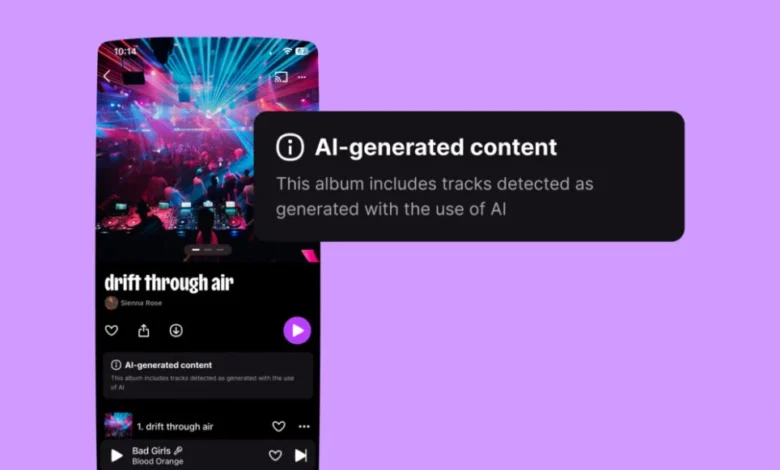
The digital music landscape is experiencing a profound transformation, with streaming giant Deezer announcing on Monday a significant milestone: artificial intelligence (AI)-generated tracks now account for a staggering 44% of all new music uploaded to its platform. This revelation underscores a dramatic acceleration in the prevalence of algorithmic creativity within the music industry, raising critical questions about artist rights, content authenticity, and the very future of music consumption. Deezer, headquartered in Paris, further detailed that it is currently processing nearly 75,000 AI-generated tracks daily, accumulating to more than two million such submissions each month.
Despite the monumental volume of AI content inundating upload queues, the actual consumption of these tracks on Deezer remains strikingly low, hovering between 1% and 3% of total streams. Compounding this disparity, a significant majority—85%—of these AI-generated streams are identified as fraudulent by the company’s robust detection systems and are subsequently demonetized. This dual reality of burgeoning supply and limited, often illicit, demand paints a complex picture for the music streaming ecosystem, highlighting both the technological accessibility of AI music generation and the persistent challenges of content integrity and fair compensation.
The Exponential Growth of AI Music: A Chronology of Concern
The latest figures from Deezer are not an isolated anomaly but rather the culmination of a continuous and escalating surge in AI-generated music uploads. The trajectory of this growth reveals an exponential pattern that has caught the attention of industry stakeholders globally.
- January 2025: Deezer first launched its pioneering AI-music detection tool, identifying approximately 10,000 AI tracks per day. This initial foray into combating algorithmic content was a proactive step, positioning Deezer as an early adopter in addressing potential issues.
- September 2025: Within nine months, the daily influx of AI tracks had tripled to 30,000, indicating a rapid adoption and deployment of AI music generation tools by creators.
- November 2025: The number further escalated to 50,000 AI tracks per day, reflecting a sustained upward trend that began to signal a systemic shift in content creation.
- January 2026: Just two months later, daily AI uploads reached approximately 60,000, demonstrating an increasingly steep curve of content generation.
- April 2026 (Present): The current figure of nearly 75,000 AI-generated tracks per day, representing 44% of all new uploads, signifies a critical threshold. This means that almost half of all fresh content hitting Deezer’s servers is now machine-made, a statistic that was unimaginable just a few years prior.
This rapid proliferation of AI-generated music, from 10,000 daily tracks to 75,000 in just over a year, underscores the unprecedented speed at which generative AI technologies are maturing and becoming accessible. For context, major streaming platforms like Spotify often report millions of new tracks uploaded annually. Deezer’s current rate of two million AI tracks per month alone highlights the immense volume of digital content that platforms must now manage, moderate, and store, raising questions about server capacity, data integrity, and environmental impact. The sheer "noise" generated by this volume could also potentially drown out legitimate human artists, making discovery even more challenging.
Deezer’s Pioneering Measures and Industry Leadership
In response to this escalating trend, Deezer has adopted a proactive and stringent policy framework designed to safeguard its platform and protect the interests of human artists. The company’s comprehensive approach includes:
- Early Detection and Labeling: Deezer was the first streaming platform to begin tagging AI-generated tracks at the platform level in June 2025. This initiative, launched just months after the initial deployment of its detection tool, has been instrumental in categorizing and managing the influx of AI content. Throughout 2025, Deezer successfully tagged over 13.4 million AI tracks on its platform, setting a precedent for transparency in the industry.
- Algorithmic De-prioritization: Songs identified as AI-generated are automatically removed from algorithmic recommendations. This critical step ensures that Deezer’s curated listening experiences, such as personalized playlists and discovery features, prioritize human-created music, preventing AI content from unduly influencing listener preferences or dominating discovery channels.
- Exclusion from Editorial Playlists: Further reinforcing its commitment to human artistry, Deezer explicitly excludes AI tracks from its editorial playlists. These playlists, often curated by music experts, play a significant role in artist promotion and audience reach, and their reservation for human creators underscores the platform’s stance on creative authenticity.
- Reduced Storage Quality: In a new policy announced alongside the latest figures, Deezer will no longer store hi-res versions of AI tracks. This measure not only reduces the platform’s storage burden but also sends a clear message about the perceived value and priority given to human-created audio, which often benefits most from high-fidelity formats.
Alexis Lanternier, CEO of Deezer, articulated the company’s commitment in a recent press release, stating, "AI-generated music is now far from a marginal phenomenon and as daily deliveries keep increasing, we hope the whole music ecosystem will join us in taking action to help safeguard artists’ rights and promote transparency for fans." He further emphasized Deezer’s success, noting, "Thanks to our technology and the proactive measures we put in place more than a year ago, we have shown that it’s possible to reduce AI-related fraud and payment dilution in streaming to a minimum." This statement positions Deezer not just as a reactive platform, but as a leader in defining best practices for managing AI in music.
The Listener’s Perspective: A Demand for Transparency
The rapid ascent of AI-generated music has also sparked a significant debate among listeners regarding authenticity, labeling, and fair representation. A survey conducted by Deezer in November 2025, in collaboration with Ipsos, provided crucial insights into public sentiment:
- Indistinguishable Content: A striking 97% of participants reported that they could not discern the difference between fully AI-generated music and human-made music. This finding highlights the advanced capabilities of current AI models and underscores the ethical imperative for clear labeling, as consumers are largely unable to make informed choices based solely on auditory cues.
- Chart Integrity Concerns: Over half of the respondents (52%) expressed the belief that 100% AI-generated songs should not be included in mainstream charts alongside human-made songs. This indicates a strong desire among consumers to preserve the integrity and competitive landscape of music charts for human artists, who invest significant time, emotion, and resources into their craft.
- Overwhelming Demand for Labeling: An overwhelming 80% of respondents unequivocally stated that 100% AI-generated music should be clearly labeled for listeners. This demand for transparency is a direct call to action for streaming platforms and distributors, emphasizing the importance of empowering listeners to understand the origin of the content they consume.
These survey results reinforce the notion that while AI music may be technologically impressive, consumers largely value human creativity and seek clear distinctions. The findings provide a strong mandate for industry-wide collaboration on labeling standards and chart policies.
Broader Industry Landscape and Divergent Approaches
Deezer’s proactive stance and the latest data come at a time when the broader music industry is grappling with the profound implications of generative AI. The commercial impact of AI music was dramatically underscored last week when an AI-generated track topped the iTunes charts in multiple key markets, including the United States, United Kingdom, France, Canada, and New Zealand. This event demonstrated that AI-generated content is not merely a novelty but a force capable of achieving mainstream commercial success, further intensifying the debate around its regulation and integration.
Other major streaming services and industry players are adopting varied approaches to this evolving challenge:
- Qobuz: In February 2026, the French streaming service Qobuz announced its plans to tag AI-generated content on its platform. Known for its high-fidelity audio offerings and focus on authentic music experiences, Qobuz’s move aligns with Deezer’s emphasis on transparency and quality control.
- Spotify: The world’s largest streaming service, Spotify, has also been actively updating its AI policies. While it employs filters to identify and remove low-quality AI music and spam content—a long-standing battle for the platform—Spotify often relies on distributors to label tracks and provide transparency. This approach places a significant burden on upstream partners, leading to inconsistencies and ongoing challenges in content moderation. Spotify has historically struggled with "white noise" and other non-musical content flooding its platform, making the integration of sophisticated AI detection crucial.
- Apple Music: Apple Music, another major player, is reportedly moving towards adding transparency tags to distinguish AI music. Similar to Spotify, Apple Music also places a degree of responsibility on distributors for accurate labeling, suggesting a fragmented approach across the industry where robust, standardized labeling practices are still developing.
The legal and ethical dimensions of AI in music are equally complex. Issues such as copyright infringement (especially concerning the use of copyrighted material to train AI models without consent or compensation), the creation of "deepfake" voices mimicking established artists, and the ownership of AI-generated works are at the forefront of legal battles and policy discussions globally. Major record labels, including Universal Music Group, have already taken legal action against AI companies for alleged copyright violations, indicating a growing confrontation between traditional music stakeholders and the burgeoning AI industry.
Economic and Creative Implications for the Music Ecosystem
The rapid rise of AI-generated music carries far-reaching economic and creative implications for all facets of the music ecosystem:
- For Artists and Creators: The most immediate concern for human artists is the potential for revenue dilution. Fraudulent AI streams, even if demonetized by platforms like Deezer, can still consume bandwidth and potentially crowd out legitimate artists in discovery algorithms. Furthermore, the sheer volume of AI content makes it increasingly difficult for human artists to gain visibility and cut through the noise. There are also profound ethical considerations regarding the use of artists’ work, voices, and styles to train AI models without proper attribution, consent, or compensation. While AI tools can offer new creative avenues for artists, the existential threat to human-centric artistry remains a significant worry.
- For Streaming Platforms: Deezer’s experience highlights the substantial operational costs associated with detecting, moderating, and storing massive volumes of AI-generated content. Platforms face reputational risks if they fail to manage this influx effectively, potentially alienating both artists and listeners. The challenge lies in striking a delicate balance between fostering innovation (as AI tools can also be beneficial) and protecting the integrity of their music libraries and payout systems. Developing and maintaining sophisticated AI detection technologies requires significant investment and ongoing development.
- For Music Labels, Publishers, and Copyright Holders: The traditional music industry faces immense pressure to adapt existing copyright laws, which were not designed for a world where machines can generate original-sounding music. New licensing models for AI-generated content, questions of ownership, and the definition of "authorship" are critical areas of debate. While there’s potential for new revenue streams from licensing AI tools or AI-generated works, the disruption to established business models is undeniable. The industry must navigate the complex terrain of protecting intellectual property rights in the age of generative AI.
- For Music Consumption and Culture: The long-term impact on music consumption patterns and cultural value is still unfolding. While survey data suggests listeners value human creativity and transparency, the pervasive nature of AI could lead to a desensitization or a shift in how music is perceived. Will hyper-personalized, algorithmically generated soundtracks replace curated human experiences? The debate over "authenticity" in music will undoubtedly intensify, shaping how future generations engage with and value musical art.
Regulatory Landscape and the Path Forward
The challenges posed by AI in music extend beyond individual platforms and necessitate a concerted, industry-wide response, potentially involving regulatory bodies. There is a growing call for standardized guidelines, clear legal frameworks, and collaborative efforts among streaming services, record labels, artist associations, and governments. Discussions around global AI governance, intellectual property reform, and ethical AI development are gaining momentum.
Deezer’s leadership in this space, particularly its commitment to transparency and fraud reduction, provides a crucial blueprint for other platforms. The company’s actions underscore that technological solutions, coupled with clear policy decisions and a strong ethical stance, are vital for navigating the complexities of AI-generated music. The ongoing evolution of AI technology means that these policies and detection methods will need to be continuously updated and refined.
In conclusion, Deezer’s recent announcement serves as a powerful wake-up call for the entire music ecosystem. The extraordinary proliferation of AI-generated music demands urgent and coordinated action to safeguard artists’ rights, ensure fair compensation, and maintain transparency for listeners. As AI continues to advance, the collective efforts of the industry will determine whether this technological revolution enhances or undermines the value of human creativity in the world of music.
Related posts: