How New Residential Construction Impacts Surrounding Property Values and Neighborhood Dynamics

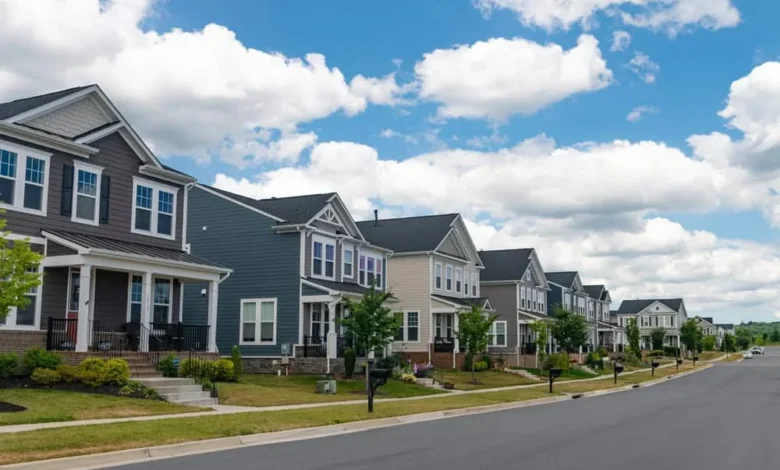
When developers finish construction on a new batch of modern homes tucked into an established, older street, a familiar wave of curiosity—and often anxiety—sweeps through the neighborhood. Longtime homeowners immediately begin calculating what these fresh sale prices mean for the equity in their own properties. Prospective buyers entering the market ask similar questions, knowing that a home’s financial value is traditionally anchored to recent transactions in the immediate vicinity.
However, the assumption that new construction automatically drives up neighboring property values is a widespread real estate misconception. In reality, whether a fresh housing development acts as a catalyst for local appreciation or becomes a drag on the market depends on a complex intersection of design, municipal infrastructure, broader economic conditions, and localized supply and demand. As the American housing market navigates shifting economic paradigms, understanding how new builds influence nearby values is essential for both buyers mapping out their next move and homeowners protecting their investments.
The Macroeconomic Landscape and Market Trends
To understand how localized construction affects home values, analysts must first look at the broader economic environment. Real estate markets do not operate in a vacuum. Broader macroeconomic trends—such as fluctuating mortgage interest rates, inflation, and national inventory levels—often dictate home values far more powerfully than a single infill development on a residential street.
Recent housing data illustrates this delicate balance. According to market reports from real estate brokerage Redfin, the median U.S. home-sale price sat at $388,613 during the four-week period ending November 8, marking a 0.9% decline compared to the previous year. This represented a continuous downward trend, underscoring consecutive weeks of annual price softening across various regions.
When national or regional housing prices enter a cooling phase, sale prices surrounding a newly constructed home may dip in tandem with the wider market, regardless of whether the new project itself was well-received. Conversely, in a booming seller’s market, even a mediocre development might benefit from rising tides that lift all local valuations temporarily. Therefore, differentiating between micro-level development impacts and macro-level market trajectories is the first critical step for any accurate real estate evaluation.
The Anatomy of Influence: When New Construction Helps or Hurts
When new homes alter the financial landscape of an existing neighborhood, the outcome hinges heavily on architectural execution, density, and community integration. Industry professionals emphasize that construction can swing either way depending on execution.
Jez Alogla, founder of Alogla Homes, offers a developer’s perspective on the fine line between positive and negative impacts: "New construction can have a positive impact on the value of existing homes in the surrounding area when it is thoughtfully planned, designed, and consistent with the overall character of the community," Alogla explains. "However, the impact is not always positive. Excessive density, poor architectural design, inadequate infrastructure, increased traffic, loss of privacy, or homes that are inconsistent with the surrounding market often negatively affect neighboring properties."
Alogla notes that the ultimate outcome relies on a matrix of variables: the precise location of the development, the quality and aesthetic design of the structures, the price point relative to the existing housing stock, local zoning regulations, and how seamlessly the project integrates into the established neighborhood fabric.
The Critical Role of Architectural Scale and Street Fit
One of the most immediate visual and structural indicators of how a new home will affect its neighbors is its fit within the existing streetscape. Scale, massing, building materials, and architectural character dictate whether a new structure harmonizes with or disrupts a block.
Marc Santarromana, founder of Design First Builders, elaborates on this delicate balance: "A well-designed, well-built home that matches the scale and character of its street can also lift nearby values, because it raises the comparable sales buyers and appraisers look at," Santarromana says.
However, Santarromana warns of the inherent risks associated with mismatched developments. "The risk is a home that is much larger, denser, or stylistically out of step with the block: that can make neighbors’ homes feel dated or overshadowed, even if the new home itself sells well. Quality matters too: solid construction and timeless materials hold value, while trendy finishes age fast. So look beyond the listing price and ask whether a new home fits both the neighborhood and the broader community, because that fit is what decides whether values rise together or split."
When a new build successfully matches the neighborhood’s aesthetic, it becomes a strong comparable sale—commonly known in the industry as a "comp." Real estate agents and licensed appraisers rely on these nearby transactions to establish market value. If a newly constructed home sells at a premium due to modern finishes and energy-efficient systems, it elevates the benchmark for the entire street, potentially pushing up appraisals for older neighboring homes. Conversely, if a monstrous, over-scaled modern box is jammed onto a lot historically occupied by modest single-story bungalows, it can overwhelm adjacent properties, negatively skewing buyer perceptions and dampening localized demand.
Housing Supply Dynamics and Buyer Psychology
Introducing new construction into an established neighborhood fundamentally alters local housing supply metrics. On one hand, adding inventory can theoretically moderate price spikes by satisfying pent-up buyer demand. On the other hand, high-end new builds often inject a fresh wave of affluent buyers into areas they might not have previously considered, thereby stimulating neighborhood revitalization.
Michelle Chaney, finance director at Zeilman-James Homes, Inc., highlights the psychological and economic shifts triggered by infill development: "New residential construction can bring renewed interest to established neighborhoods by attracting buyers who are looking for modern designs, energy efficiency, and updated amenities," Chaney states.
While acknowledging that increased inventory expands choices, Chaney notes that it simultaneously strengthens a neighborhood’s overall marketability. "New construction may influence comparable home sales by establishing additional price points, although differences in age, features, and quality must be considered. Ultimately, the effect on surrounding property values depends on local demand, market conditions, and how well the new homes complement the existing community."
Evaluating the Impact: A Practical Guide for Homeowners and Buyers
For homeowners seeking to gauge how a nearby construction project might influence their property value—and for prospective buyers trying to determine if a home surrounded by new development is priced fairly—relying on assumptions is a risky strategy. Industry experts recommend a methodical, data-driven approach to local market analysis.
To accurately assess a development’s impact, stakeholders should gather and evaluate specific local metrics:
- Review recent comparable sales within a tight, quarter-mile radius of the subject property, noting how prices have trended over the past 12 to 24 months.
- Investigate local municipal planning and zoning documents to understand the full scope of approved or proposed construction projects in the immediate area.
- Assess infrastructure capacity, including local traffic patterns, school district enrollments, and municipal parking availability, to determine if the new development strains community resources.
- Compare the price-per-square-foot metrics of the newly built homes against older, surrounding residences to spot significant valuation gaps.
By systematically documenting these details, buyers and sellers can discern whether local price movements are driven by the new construction or merely reflecting wider macroeconomic trends. Consulting a qualified local real estate agent can further illuminate these dynamics, providing specialized insight into how neighborhood comps are reacting to ongoing development.
Broader Economic Implications and Analytical Outlook
The interplay between new construction and established neighborhoods carries significant implications for urban planning, municipal tax bases, and long-term community sustainability. When development is managed thoughtfully, it can inject much-needed capital into older neighborhoods, funding infrastructure improvements, updating commercial corridors, and attracting demographic diversity.
However, poorly managed development—characterized by over-density and inadequate infrastructure planning—risks alienating long-term residents, straining municipal services, and triggering localized depreciation despite broader regional growth. As cities across the United States grapple with housing shortages and affordability challenges, municipal planners face mounting pressure to balance the economic benefits of infill development with the preservation of neighborhood character.
Ultimately, new construction is neither an absolute blessing nor a guaranteed curse for property values. Its financial footprint is shaped by a multitude of localized factors: architectural harmony, density controls, construction quality, macroeconomic conditions, and the delicate equilibrium of supply and demand. By looking past initial listing prices and examining the fundamental fit between new builds and their historic surroundings, market participants can navigate the complexities of modern real estate with clarity and confidence.