Indeed chief economist: Aging Baby Boomers are America’s real labor problem, not AI | Fortune


America’s Unprecedented Workforce Shift: A Looming Economic Reckoning
For two and a half centuries, the United States has enjoyed a foundational economic advantage: a continuously expanding workforce. This steady influx of labor has been a silent engine of prosperity, allowing the economy to absorb technological advancements, recover from recessions, and adapt to myriad disruptions with remarkable resilience. It has fueled industrial expansion, supported innovation, and maintained a dynamic consumer base. However, this era is drawing to a close, and the nation has yet to fully grasp the profound implications of this demographic pivot.
Indeed Hiring Lab research forecasts a significant contraction in the U.S. labor force, projecting a decline of nearly 6 million workers by 2032. This is not a temporary dip or a cyclical downturn; it is a structural shift rooted in fundamental demographic realities. The national birth rate has been on a consistent downward trajectory for decades, a trend observed across many developed nations, stemming from a complex interplay of economic pressures, changing social norms, increased access to education and family planning, and delayed childbearing. Concurrently, the vast cohort of Baby Boomers, born between 1946 and 1964, are now entering and accelerating through their retirement years at a pace that far outstrips the rate at which younger generations are entering the workforce to replace them. This demographic equation creates an undeniable "cliff," fundamentally altering the supply side of the labor market.
The Demographic Imperative: Why the Workforce is Shrinking
The history of U.S. workforce expansion is intrinsically linked to key historical periods. Post-World War II, the Baby Boom generation provided an immense demographic dividend, swelling the ranks of workers through the latter half of the 20th century. This was complemented by waves of immigration, which historically served as a vital mechanism for replenishing and diversifying the labor pool, particularly in periods of domestic birth rate stagnation. The U.S. Census Bureau data consistently illustrates the aging of the American population, with the proportion of citizens over 65 steadily increasing. In 2020, about 16% of the U.S. population was aged 65 or older, a figure projected to rise to over 21% by 2050. This demographic shift inevitably leads to a higher dependency ratio, where fewer working-age individuals support a growing number of retirees. The current retirement wave of Baby Boomers is unprecedented in scale, with an estimated 10,000 individuals turning 65 every day, many choosing to exit the workforce, further exacerbating the decline in labor force participation rates.
Economists have long highlighted the critical role of population growth and a youthful demographic in sustaining economic vitality. A growing workforce typically correlates with increased productivity, innovation, and consumer demand, contributing directly to GDP growth. The impending contraction, therefore, signals a fundamental challenge to these established pathways of economic expansion. Federal Reserve officials and Treasury analysts have begun to acknowledge these long-term demographic headwinds as a significant factor influencing future economic growth projections, emphasizing that traditional monetary and fiscal policies alone may be insufficient to counteract the structural impacts of a shrinking labor force.
The AI Paradox: Augmentation vs. Displacement in a Tight Labor Market
Simultaneously, businesses across all sectors are just beginning to grapple with the transformative potential of artificial intelligence. Much of the public discourse surrounding AI has fixated on its potential to automate tasks, leading to widespread concerns about job losses and cost savings. However, this narrow focus risks missing the broader, more nuanced picture. If the primary concern is AI’s wholesale replacement of human jobs, the focus may be misplaced, especially given the concurrent demographic shifts.
Current evidence suggests little to no widespread, AI-driven job displacement across the economy. Instead, companies are actively investing in and hiring for roles related to AI implementation, infrastructure development, and deployment. This indicates a phase of AI adoption focused more on augmentation and efficiency gains rather than outright workforce reduction. For instance, a 2023 report by IBM indicated that over 40% of enterprises globally are already deploying AI, and the demand for AI skills in job postings has surged dramatically. Tech giants like Google, Microsoft, and Amazon are not just developing AI tools; they are aggressively recruiting AI engineers, data scientists, and machine learning specialists, illustrating a robust growth in AI-centric roles.
The evolution of AI, from rule-based expert systems of the 1980s to the machine learning algorithms of the 2000s and the recent explosion of generative AI, shows a progression towards tools that enhance human capabilities. While AI can undoubtedly automate repetitive, data-intensive, or analytical tasks, its current limitations in areas requiring complex problem-solving, emotional intelligence, creativity, and manual dexterity mean that it serves more as a co-pilot than a complete replacement for many roles. This distinction is crucial in understanding its interaction with the demographic challenge: AI is emerging at a time when human labor is becoming scarcer, potentially serving as a productivity multiplier rather than purely a job destroyer.
A Critical Mismatch: Where the Jobs Are vs. Where the Workers Are
The true complexity of the impending labor crisis lies in a profound occupational mismatch. The demographic cliff is poised to hit different sectors with varying degrees of severity, and crucially, the industries most impacted by severe labor shortages are often the least susceptible to significant disruption by AI in its current form.
Consider the healthcare sector. Healthcare deserts, where access to medical services is severely limited, have become increasingly common in rural and underserved urban areas across the country. The Health Resources and Services Administration (HRSA) projects a potential shortage of over 140,000 full-time physicians by 2038, a figure that does not even account for the pressing needs for nurses, allied health professionals, and elder care workers. The American Nurses Association has consistently warned of a growing nursing shortage, estimating a need for 200,000 new nurses each year to meet demand. These roles, deeply dependent on human empathy, critical thinking, and physical presence for direct patient care, are fundamentally resistant to full AI automation. While AI can assist with diagnostics, administrative tasks, or even robotic surgery support, it cannot replicate the human touch of a bedside nurse or the nuanced judgment of a surgeon.
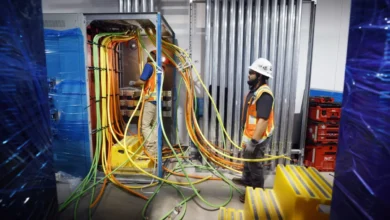
Similarly, sectors like construction and skilled trades—plumbers, electricians, welders, carpenters—face chronic and worsening labor deficits. The National Association of Home Builders reported that 80% of its members cited the cost and availability of labor as their most significant challenge in 2023. These occupations require hands-on expertise, physical presence, problem-solving in dynamic environments, and often direct interaction with clients, making them largely impervious to AI replacement. Automating parts of a logistical workflow or designing buildings with AI tools is distinct from the physical act of laying bricks, wiring a home, or repairing a complex machine.
Conversely, white-collar sectors such as software development, marketing, finance, and administrative roles, which have traditionally attracted a significant portion of skilled labor, are precisely those most exposed to AI’s transformative capabilities. AI tools can automate coding, content generation, data analysis, and customer service functions, potentially streamlining operations and reducing the need for entry-level positions or augmenting the productivity of existing workers. For instance, while a software developer’s job may be significantly enhanced by AI, reducing the time spent on repetitive coding or debugging, a nurse’s core function of providing direct patient care remains fundamentally human-centric, even if AI assists with paperwork or scheduling. This creates a disquieting imbalance: a surplus of labor (or augmented labor) in some areas, while critical, human-dependent sectors face severe, unfillable gaps.
Barriers to Reallocation: Navigating the Skills Gap and Career Transitions
The intuitive solution—reallocating workers from AI-impacted sectors to high-demand fields—is fraught with significant practical challenges. A worker displaced from an office-based marketing role cannot instantly transition into a registered nurse or a licensed electrician. The pathways are blocked by formidable barriers: stringent licensing requirements, substantial retraining costs and time commitments, geographical immobility, and often, misaligned wage expectations.
Indeed’s research consistently demonstrates the "closed" nature of many career pipelines. Even when shortages in fields like healthcare or trades are acute and well-documented, the ability for workers to cross industry lines is severely hampered. For instance, becoming a registered nurse typically requires a two-to-four-year degree, clinical hours, and passing a national licensure exam. Becoming a master electrician involves years of apprenticeship, journeyman experience, and rigorous examinations. These are not quick pivots. Furthermore, retraining costs can be prohibitive for individuals, and geographic relocation for a new opportunity might be impossible due to family commitments or housing costs.
Historically, societal and educational systems have, perhaps inadvertently, steered talent toward a relatively narrow set of white-collar careers, particularly in finance, law, and technology, which promised stable growth and outsized wages. This has created an oversupply or intense competition in some fields while neglecting critical vocational and technical pathways. Many high-demand occupations, from skilled trades to certain healthcare roles, continue to suffer from a "PR problem." Despite offering ample stability, competitive wages, and clear career progression, these jobs are often perceived as less prestigious or desirable, leading many students and job seekers to overlook them. This ingrained perception, coupled with a lack of robust early-stage career exposure and guidance, contributes significantly to the persistent talent pipeline issues.
The Compounding Costs of Inaction: Economic and Societal Ramifications
This growing mismatch between labor supply and demand carries a steep and escalating cost across the economy and society. Employers are already feeling the pinch through extended hiring cycles, increased recruitment expenses, and a diminished pool of qualified candidates. This translates into higher operational costs and reduced efficiency. For businesses, delays in filling critical roles can stifle innovation, delay projects, and ultimately impact profitability and competitiveness. For the individual job seeker caught on the wrong side of this mismatch, the consequences include prolonged unemployment or underemployment, delayed income, stalled career progression, and extended periods of uncertainty, eroding financial stability and professional morale.
When shortages persist in critical occupations, the effects cascade and compound. In healthcare, persistent shortages strain existing workers, leading to burnout, reduced quality of care, and even closures of facilities, particularly in vulnerable communities. In construction, a lack of skilled workers inflates housing costs and delays infrastructure projects, impacting economic development and quality of life. Economists warn that such widespread labor market inefficiencies can contribute to inflationary pressures, as companies compete for scarce talent, driving up wages without corresponding productivity gains across all sectors. Ultimately, unaddressed, this mismatch threatens to slow overall economic growth, diminish national productivity, and reduce the United States’ global competitiveness. Government agencies, including the Department of Labor and Commerce, have begun to emphasize the need for proactive policy responses to mitigate these long-term economic risks.
Forging a New Path: Strategies for Employers, Workers, and Policymakers
Addressing this multifaceted challenge requires a concerted and strategic effort from employers, individual workers, and policymakers. Employers must fundamentally rethink their approach to workforce planning and talent acquisition. This involves looking beyond traditional recruiting channels and expanding their search geographically, across diverse industries, and across various career stages. Investment in robust apprenticeships, reskilling programs, and earlier-stage training pipelines is no longer a luxury but an economic imperative. Instead of solely seeking fully formed talent, companies must commit to building talent from within and from adjacent fields. An Indeed survey revealed that while two-thirds of U.S. workers prioritize skill development, fewer than half believe their employer shares this commitment. This disparity highlights a critical gap that employers must bridge by offering clear pathways for upskilling and career advancement. Many progressive companies are now collaborating with community colleges and vocational schools to design curricula tailored to their specific needs, thereby creating dedicated talent pipelines.
Workers, too, must adapt to an increasingly dynamic labor market. Career paths are becoming less linear as AI reshapes existing roles and creates new ones. The ability to identify and leverage transferable skills will be paramount. Indeed’s research demonstrates that seemingly disparate roles—such as a project manager, a data analyst, and a retail supervisor—often share a core set of business operations skills relevant to over 70% of jobs nationwide. Workers who proactively invest in continuous skill development, embrace lifelong learning, and remain open to transitioning across industries will gain a significant advantage as demand shifts more rapidly across sectors. This includes a willingness to consider roles that might traditionally have been overlooked but offer stability and good compensation.
Finally, the very technological tools causing some of this disruption also hold immense potential to smooth the matching process. AI must evolve beyond merely automating tasks to becoming a powerful enabler of labor market fluidity. AI-powered platforms can help workers understand how their existing skills translate to roles they might not have considered, surfacing realistic career transitions and identifying skill gaps that can be addressed through targeted training. For employers, AI can help look beyond traditional credentials and rigid filters to identify skilled workers who might otherwise be screened out. The vast amounts of labor market data already exist; the opportunity to leverage AI to act on this data, at scale, to create more efficient and equitable matches, has never been greater. Government initiatives, such as funding for AI-driven job matching platforms and data analytics for workforce development, could significantly accelerate this process.
The American Workforce: A Legacy of Resilience in the Face of New Challenges
The overarching challenge is not a fundamental lack of talent or capability within the American workforce. Historically, America has consistently boasted a hardworking, innovative, and adaptable labor force. This intrinsic resilience is unlikely to change. What is changing is the luxury of relying solely on organic workforce growth to power the economy forward. A smaller, more concentrated labor force in an increasingly demanding array of roles leaves little margin for error: slow matches, misaligned hiring practices, or workers stranded on the wrong side of a skills gap will have amplified consequences. The stakes of getting this right—of strategically navigating this demographic and technological transition—are extraordinarily high, impacting everything from national productivity and economic competitiveness to social equity and the well-being of individual citizens.
For the past two and a half centuries, betting against the American workforce’s capacity to overcome formidable challenges has consistently proven to be a losing proposition. As the nation faces this new, complex confluence of demographic contraction and technological acceleration, there is compelling reason to believe in its continued ability to adapt, innovate, and thrive. The path forward demands foresight, collaboration, and a renewed commitment to investing in human capital, ensuring that the next chapter of American economic history is as dynamic and prosperous as its past.