The Evolution of Enterprise Rank Tracking: Navigating AI Overviews and Strategic SEO Integration in 2024

The global landscape of search engine optimization has shifted from a focus on individual keyword positions to a complex discipline of data science and multi-platform visibility. For large-scale organizations, enterprise rank tracking now encompasses the monitoring of millions of data points across diverse devices, hyper-local geographies, and a burgeoning array of search features. The modern enterprise requirement extends beyond traditional search engine results pages (SERPs) to include AI Overviews, featured snippets, local packs, and generative AI environments. As search engines transition into "answer engines," the intelligence gathered from these tools is increasingly being integrated into corporate dashboards, CRM workflows, and executive reporting suites to drive cross-functional business decisions.
The Paradigm Shift in Search Intelligence
The distinction between basic rank tracking and enterprise-grade software is defined by scale and interoperability. While entry-level tools are designed for small-to-medium businesses checking several hundred keywords on a daily or weekly basis, enterprise platforms are engineered to manage the complexity of high-traffic websites. These platforms prioritize high data volumes, granular location targeting—down to specific zip codes or coordinates—and near-real-time refresh rates.
Industry analysts note that ranking data, once viewed as a siloed visibility metric, is now a critical component of the broader corporate data stack. When paired with Business Intelligence (BI) tools, rank tracking identifies market opportunities and competitive risks. When connected to web analytics, it validates whether visibility is successfully converting into traffic. Most crucially, when integrated with Customer Relationship Management (CRM) systems, enterprise rank tracking allows organizations to draw a direct correlation between search position movements and measurable upticks in the sales pipeline.

Chronology of SEO Evolution and the Rise of AI
The evolution of search tracking has followed a distinct timeline, moving from simple text-based results to a multi-modal AI environment:
- 2010–2015: The Era of the "Ten Blue Links": Search tracking was primarily focused on desktop results and organic positions 1 through 10.
- 2016–2020: The Rise of SERP Features: Google introduced featured snippets, local packs, and "People Also Ask" boxes, forcing trackers to account for "Position Zero" and visual real estate.
- 2021–2023: Mobile-First and Hyper-Localization: Tracking became fragmented across devices, with mobile rankings often diverging significantly from desktop results due to location-based intent.
- 2023–Present: The Generative AI Revolution: The introduction of Google’s Search Generative Experience (SGE), now known as AI Overviews, and the rise of LLMs like ChatGPT and Perplexity, have necessitated a new category of measurement: Answer Engine Optimization (AEO).
Market data suggests that AI Overviews now appear for a significant percentage of high-intent commercial queries. This shift has forced enterprise SEO teams to move beyond tracking URLs to tracking citations within AI-generated summaries.
Technical Requirements for Enterprise-Grade Evaluation
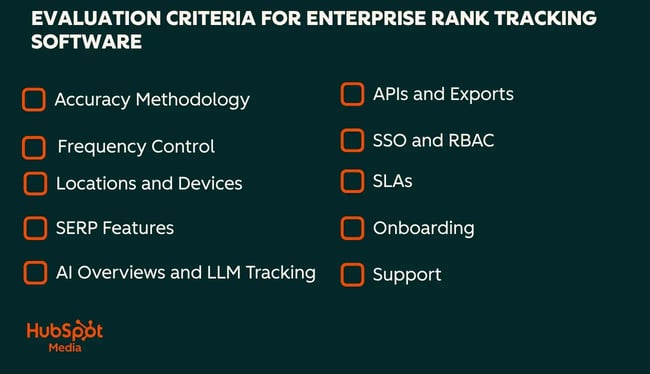
Selecting a tracking platform at the enterprise level requires a rigorous evaluation of technical infrastructure and data governance. Organizations are increasingly demanding transparency in accuracy methodology. This includes understanding whether vendors utilize dedicated datacenter IPs, residential proxies, or a hybrid approach to circumvent bot detection and ensure results reflect authentic user experiences.
Frequency control has also emerged as a non-negotiable feature. While daily tracking remains the industry standard, high-stakes periods—such as global product launches, major retail events like Black Friday, or rapid news cycles—require hourly or on-demand refresh capabilities. Furthermore, the granularity of location tracking must now support city-level and zip-code-level data to serve the needs of regionalized enterprise operations.
Beyond data collection, security and administrative governance are paramount. Enterprise environments require Single Sign-On (SSO) integration, Role-Based Access Control (RBAC), and detailed audit logs. These features ensure that data access is restricted to authorized personnel and that the platform complies with internal IT security protocols. Service Level Agreements (SLAs) are also scrutinized, with a focus on guaranteed uptime and data freshness commitments.
Strategic Integration of SEO and CRM
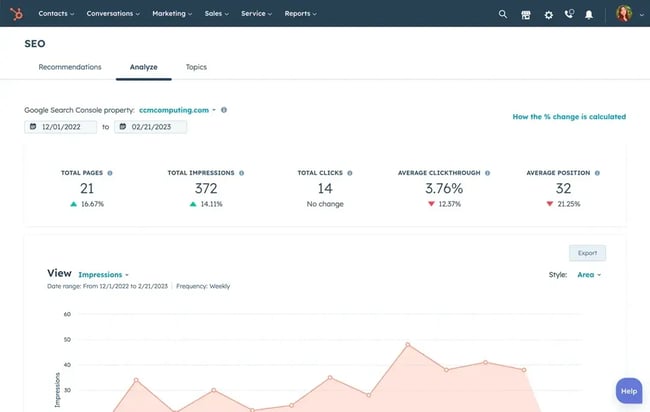
The integration of SEO data into a unified customer platform represents a major trend in 2024. Platforms like HubSpot have pioneered this approach by embedding SEO marketing software directly within their Marketing Hub. This integration addresses a common enterprise pain point: data fragmentation.
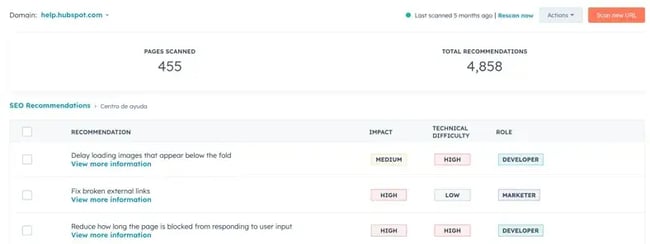
When rank data lives in the same environment as lead attribution and revenue data, marketing teams can prove the ROI of SEO efforts more effectively. For instance, an enterprise can scan thousands of live pages for SEO recommendations and prioritize optimizations based on which pages are historically linked to high-value lead generation. This "priority-ranked" optimization is essential for teams managing vast content libraries where treating every SEO issue as urgent is a physical impossibility.
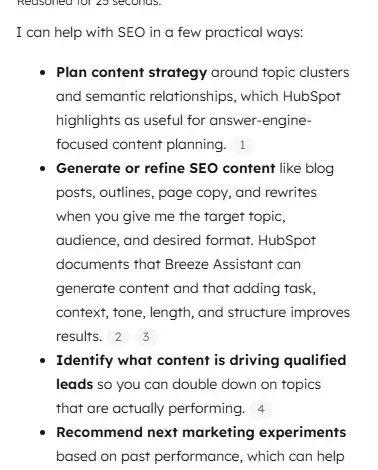
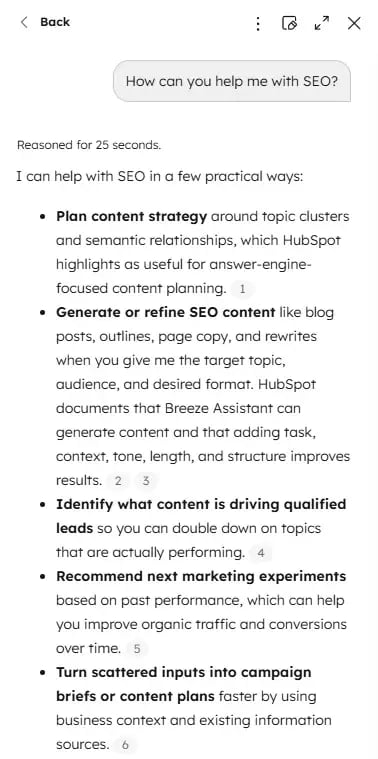
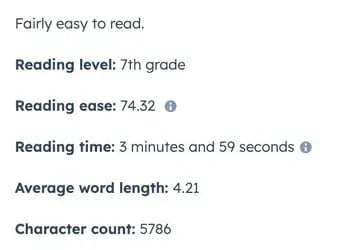
Moreover, the inclusion of AI-driven assistants, such as HubSpot’s Breeze, allows junior team members to execute complex SEO tasks, such as content auditing and readability analysis, under the guidance of enterprise-grade algorithms. This democratization of SEO data ensures that search discipline is maintained across large, decentralized content teams.
The New Frontier: Answer Engine Optimization (AEO)
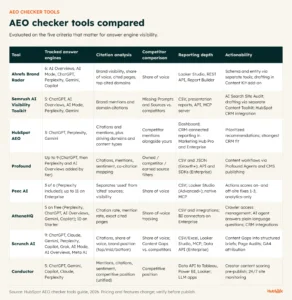
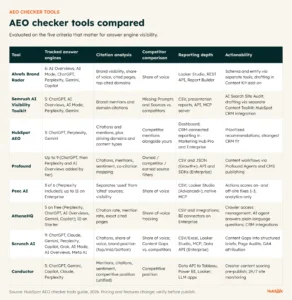
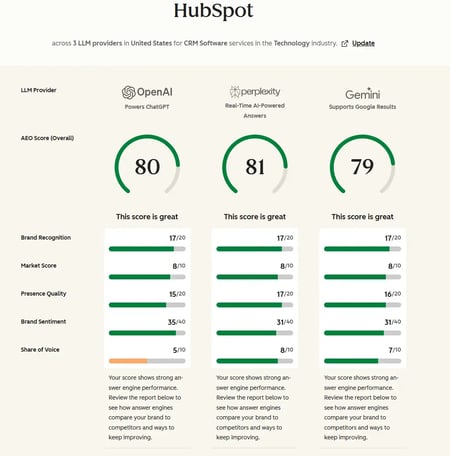
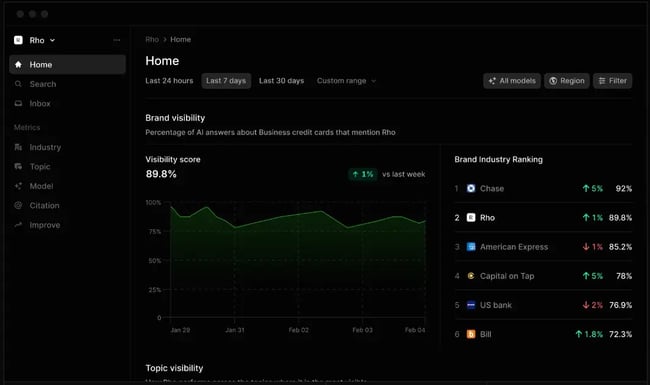
As search behavior shifts toward generative AI, the industry is witnessing the birth of AEO measurement. Traditional SERP tracking is being supplemented by tools like the HubSpot AEO Grader and specialized platforms like Profound. These tools evaluate a brand’s "share of model"—measuring how often a brand is cited by AI systems like ChatGPT, Gemini, and Perplexity.
AEO tracking evaluates five core dimensions:
- Brand Intelligence: How accurately the AI understands the brand’s core offerings.
- Market Position: Where the AI places the brand within the competitive landscape.
- Sentiment Analysis: The tone and favorability of AI-generated responses.
- Recognition Depth: The frequency and prominence of brand citations.
- Competitive Benchmarking: How these metrics compare to direct rivals.
This narrative analysis is becoming a critical component of brand management. A company may rank first in traditional search while being entirely omitted from an AI Overview, representing a significant "visibility gap" that traditional tools cannot identify.
Competitive Intelligence and Pixel Position Analysis
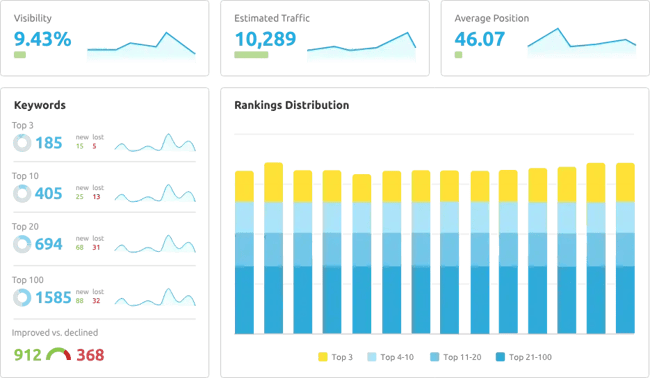
At the enterprise scale, competitor tracking has evolved into a sophisticated analysis of "Share of Voice" and "Pixel Position." Share of Voice measures a domain’s dominance across entire topic clusters rather than isolated keywords. This provides a macro-view of market authority, allowing executives to see which competitors are gaining ground over a 12-month trajectory.

Pixel Position tracking offers an even more granular view. Because AI Overviews, local packs, and shopping units often push organic results "below the fold," a "Position 1" ranking may actually appear several hundred pixels down the page. Enterprise tools now measure the actual vertical distance from the top of the browser to the first organic result. This data is vital for understanding the true click-through potential of a ranking in an increasingly crowded visual environment.
Furthermore, large enterprises must track brand variants and affiliate cannibalization. In sectors like retail or financial services, an organization’s own resellers or affiliates may outrank the parent domain for branded queries. Monitoring these relationships allows for better partner management and ensures that the most profitable properties are capturing the highest-intent traffic.
Market Implications and Analyst Perspectives
Industry experts suggest that the "siloed SEO" model is nearing obsolescence. The transition toward unified platforms indicates that SEO is being reclassified as a core business intelligence function rather than a narrow technical specialty.
The fiscal implications of choosing the wrong software are significant. Analysts warn that pricing models—which may charge per keyword, per user, or per location—can scale exponentially. A platform that appears cost-effective at 10,000 keywords may become prohibitively expensive as an enterprise expands into new global markets or increases its tracking to 500,000 keywords.
Consequently, the current market trend favors platforms that offer "all-in-one" visibility toolkits. Semrush One and Profound are examples of this shift, providing a single subscription that covers traditional SEO, competitive intelligence, and emerging AI visibility. This consolidation reduces the "tool fatigue" often cited by enterprise marketing departments and ensures a single source of truth for search data.
Conclusion: The Requirement for Continuous Monitoring
The consensus among digital strategy leaders is that enterprise rank tracking is no longer optional; it is a foundational requirement for maintaining market share. The complexity of the modern SERP—defined by AI, hyper-localization, and multi-device fragmentation—requires a level of data sophistication that basic tools cannot provide.
The future of the industry lies in the seamless flow of search intelligence into broader corporate systems. Whether through unified CRM workflows, AI-specific benchmarking, or scalable content operations, the objective remains the same: to transform raw ranking data into actionable insight that drives revenue. As search engines continue to evolve into interactive answer engines, the organizations that invest in robust, integrated tracking infrastructures will be the ones best positioned to own the digital conversation.
Related posts: