The Complete Guide to Answer Engine Optimization and the Role of AEO Checkers in Modern Digital Marketing

As the digital landscape pivots from traditional blue-link search results toward synthesized, AI-generated responses, businesses are facing a fundamental shift in how they reach their audiences. When users turn to platforms like ChatGPT, Perplexity, and Gemini, they are often presented with a comprehensive answer that resolves their inquiry without ever clicking through to a website. This "zero-click" behavior has rendered traditional search engine optimization (SEO) incomplete, necessitating a new discipline: Answer Engine Optimization (AEO). An AEO checker is the primary tool used by digital strategists to monitor whether their brand is appearing in these AI-driven summaries, ensuring that visibility does not vanish into the black box of generative AI.
The Shift in Search Behavior
The transformation of the search ecosystem began in earnest when Google introduced AI Overviews (AIO) in May 2024. This move codified a change that had been building for years: the preference for direct, summarized answers over a list of external links. Unlike standard search, where a website’s position is dictated by backlink authority and keyword density, answer engines parse massive datasets to synthesize a single, authoritative reply.
![AEO checker tools that measure answer engine visibility [2026]](https://53.fs1.hubspotusercontent-na1.net/hubfs/53/aeo-checker-1-20260903-3858273.webp)
This change is not merely cosmetic. Data from industry analysts suggests that nearly 40% of informational search queries now trigger some form of generative AI response. For brands, this means that even if they rank number one in organic search, they may remain invisible if the AI engine chooses to cite a competitor or a tertiary source within its summary. Consequently, the reliance on traditional metrics—such as keyword ranking in a static list—has become an insufficient proxy for brand authority and visibility.
Understanding the AEO Landscape
AEO is not a replacement for SEO, but rather its evolution. SEO remains the foundational layer; answer engines still rely on the crawlability, site structure, and technical authority provided by standard SEO practices to determine which sources are trustworthy enough to cite. However, AEO adds a layer of "entity recognition" and "direct answer" architecture.
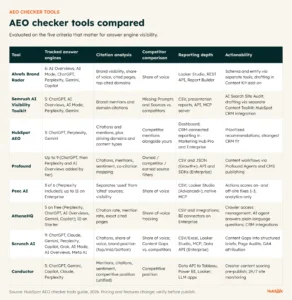
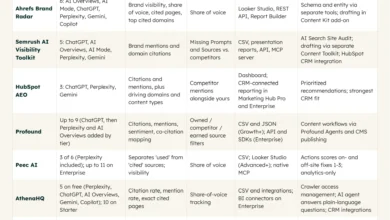
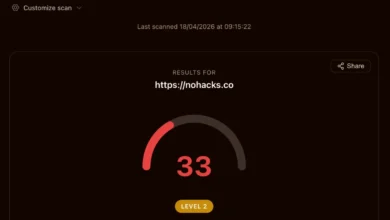
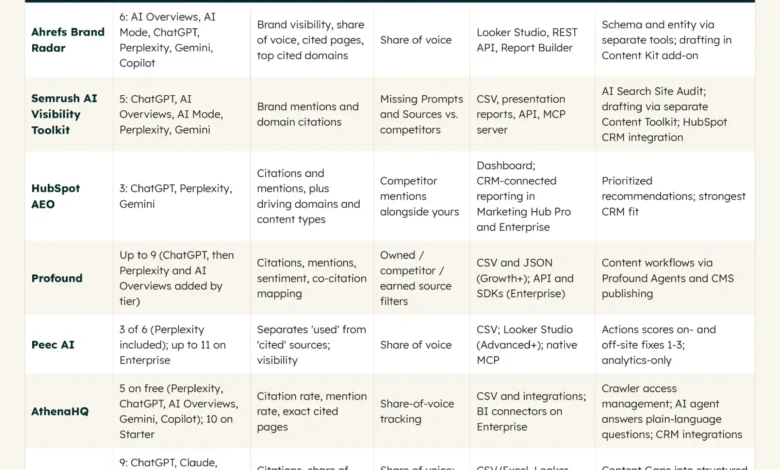
An AEO checker functions as a diagnostic bridge. It continuously queries the major AI engines—ChatGPT, Perplexity, and Google’s Gemini—using a set of target keywords and questions relevant to a specific brand. By automating these inquiries, the software can determine whether a brand is being cited, whether it is mentioned without a link, or if a competitor is capturing that share of voice. The diagnostic output of these tools typically identifies content gaps, flagging where schema markup is missing, where direct answers are not clearly structured, or where an entity is being misrepresented by the AI.
![AEO checker tools that measure answer engine visibility [2026]](https://no-cache.hubspot.com/cta/default/53/9dd5e54b-fbef-4dd0-bc44-1689feb1ea18.png)
Chronology of AI Search Integration
The timeline of this transition highlights the speed of industry adoption:
- Late 2022: The public release of ChatGPT triggers a massive shift in user expectations, moving from "search-then-click" to "ask-and-receive."
- May 2024: Google launches AI Overviews in the United States, officially integrating generative summaries into the world’s largest search engine.
- June 2026: Google begins the rollout of dedicated Generative AI performance reports within Search Console, acknowledging that marketers need distinct data to track AIO visibility.
- Late 2026 and Beyond: The emergence of specialized AEO SaaS platforms allows for the continuous monitoring of citations, moving beyond the anecdotal "spot-checks" that characterized the early phase of generative search.
Manual Monitoring vs. Automated Tools
For smaller organizations, a manual approach to AEO is a necessary starting point. This involves defining a list of "High-Intent Queries"—questions that potential customers ask that lead directly to a purchase or service inquiry. By utilizing incognito or signed-out browser sessions, marketers can observe whether an AI Overview appears.
However, manual monitoring is fraught with limitations. Because AI models are non-deterministic, they may provide different answers based on session history, location, and the specific phrasing of the prompt. Furthermore, Google’s systems only trigger AIOs when the AI deems the summary to be "additive" to the search experience. Consequently, a single manual check is statistically insignificant.
![AEO checker tools that measure answer engine visibility [2026]](https://53.fs1.hubspotusercontent-na1.net/hubfs/53/aeo-checker-2-20260903-852936.webp)
Professional AEO checkers mitigate this by running thousands of automated, localized queries. By aggregating this data over time, these tools can identify trends—such as a specific domain’s declining citation rate—before they translate into a tangible drop in web traffic or lead volume.
Criteria for Selecting an AEO Checker
As the market for AEO tools matures, organizations should evaluate software based on four core criteria:
- Engine Coverage: Does the tool track across all major platforms (ChatGPT, Perplexity, and Gemini)?
- Citation Context: Does it distinguish between a "mention" (the brand is named) and a "citation" (a direct link is provided)?
- Actionability: Does the platform offer clear, prioritized recommendations on how to fix content gaps?
- Integration: Can the data be integrated into existing CRM or content management systems to track the impact of AEO on actual revenue?
The Broader Impact and Implications
The rise of AEO is fundamentally changing the role of the content marketer. Historically, content was written for "keyword density" and "link-building potential." In the age of answer engines, content must be written for "informational clarity" and "authoritative structure."
![AEO checker tools that measure answer engine visibility [2026]](https://53.fs1.hubspotusercontent-na1.net/hubfs/53/aeo-checker-3-20260903-8904553.webp)
If a brand fails to adapt, the implications are significant. As AI engines prioritize brevity and accuracy, brands that lack clear, concise, and schema-supported content risk becoming irrelevant to the growing demographic of users who never leave the AI interface. Conversely, brands that successfully optimize for these engines stand to gain immense authority, as being the primary cited source in a complex AI answer serves as a powerful endorsement of expertise.
Future-Proofing the Digital Funnel
Integrating AEO into the broader marketing funnel requires a unified approach. Leading platforms like HubSpot have begun to embed AEO insights directly into their CRM environments, allowing marketers to tie AI citations to actual deal closures. By connecting the "top of funnel" (AI visibility) to the "bottom of funnel" (sales revenue), companies can justify the investment in AEO as a direct revenue driver rather than a vanity metric.
However, a word of caution remains: AI attribution is not yet a perfect science. While tools can identify that a click originated from a search engine, the "zero-click" nature of AI answers means that much of the brand influence occurring within the AI interface remains opaque. Marketers should treat visibility scores as a leading indicator of brand health and authority, even if not every interaction can be tracked as a direct session.
![AEO checker tools that measure answer engine visibility [2026]](https://53.fs1.hubspotusercontent-na1.net/hubfs/53/aeo-checker-4-20260903-6212698.webp)
In summary, the transition to answer-first search is the most significant shift in digital marketing since the inception of the search engine itself. Whether a brand is utilizing manual checks or advanced SaaS solutions, the objective remains the same: ensuring that when a customer asks a question, the brand is the answer. As the technology continues to evolve, the ability to adapt to this new paradigm will likely separate market leaders from those left behind in the static links of the past.