How to Verify AI Retrieval and Indexing Status for Web Content in the Era of Generative Search

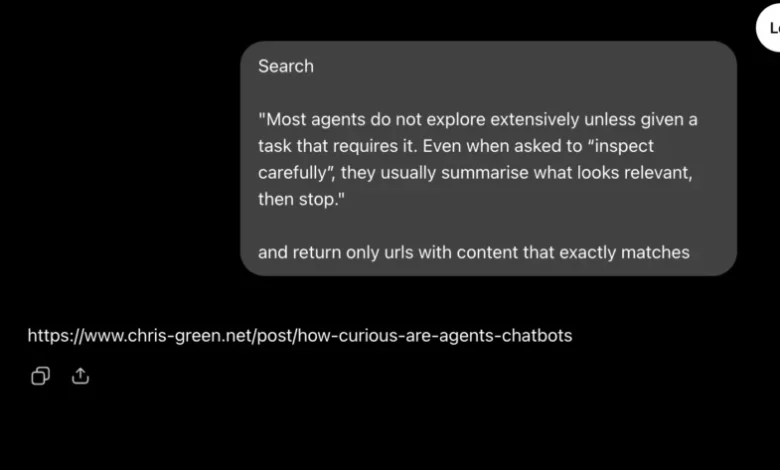
The fundamental practices of Search Engine Optimization (SEO) are undergoing a significant transition as generative AI models and AI-powered search engines shift the landscape of information retrieval. Historically, SEO professionals relied on the "site:" search operator in Google and Bing to determine whether a specific page had been successfully crawled and indexed. This method, while simple, provided a binary confirmation of a page’s presence in the index. However, the rise of Large Language Model (LLM) interfaces, such as ChatGPT with search capabilities, necessitates new methodologies for verifying whether content is being retrieved and utilized by AI systems.
The Evolution of Index Verification Methods
For decades, the standard protocol for technical SEO involved using site-specific operators or searching for unique, long-tail text strings within quotation marks. By copying a distinctive paragraph from a web page and placing it in search engine query bars, webmasters could confirm if their content had been indexed or if it had been syndicated elsewhere.
While tools like Google Search Console (GSC) and Bing Webmaster Tools (BWT) remain the gold standard for diagnostic data, they provide a retrospective view. They reveal how engines have interacted with a site in the past but do not always provide real-time insight into how an AI chatbot or a RAG (Retrieval-Augmented Generation) system currently perceives or retrieves a specific piece of content. In the current search ecosystem, the inability to access granular logs for every AI model has led to a "black box" phenomenon where content creators are left to hypothesize why their information may not be surfaced by AI assistants.
A New Framework for AI-Driven Retrieval Testing
To address this visibility gap, a novel approach involves treating AI chatbots as a search interface. By inputting a prompt that requests a specific text match, users can force a model to reveal its current retrieval capabilities. A typical prompt for this verification might read: "Search for [insert unique text snippet here] and return any results which contain that exact text only."
This methodology serves as a diagnostic indicator. If an AI model successfully returns the source URL, it provides empirical evidence that the page has been crawled, processed, and effectively indexed within the model’s retrieval layer. Conversely, if the model fails to return the content, it suggests a potential bottleneck in discovery, crawling, or indexing, prompting the site owner to investigate technical barriers such as robots.txt directives, canonicalization issues, or low-quality signals that might lead to content being de-prioritized.
Chronology and Technical Implementation
The transition from traditional indexing to AI-assisted retrieval has unfolded over the past 24 months, marked by the rapid integration of search tools into conversational interfaces.

- Phase 1: Traditional Indexing (2000–2022): The era of keyword-based search dominated, where the presence of a page in the primary database was sufficient for ranking.
- Phase 2: The Emergence of RAG (2023–2024): Search engines began incorporating LLMs to synthesize information, making the "snippet" more important than the entire page architecture.
- Phase 3: The Verification Crisis (2025–Present): SEO professionals identified the need for "retrieval validation," leading to the development of manual and automated scripts designed to test whether specific content reaches the AI’s "context window."
To standardize this process, developers have begun creating browser-based extensions, such as "Exactly Matchy," which automate the snippet-extraction and chatbot-querying process. By streamlining this workflow, engineers can test multiple pages across different search environments, ensuring that content remains visible not just to traditional crawlers, but to the next generation of AI-driven research agents.
Data-Driven Insights and Troubleshooting
When a page fails to appear in AI-driven retrieval tests, the issue is rarely singular. Analysts must evaluate several technical variables:
- Discovery Latency: New content may be discovered but not yet indexed. A "wait-and-see" approach is often the first step, as large models require time to update their internal indices.
- Snippet Uniqueness: If the text provided in the query is too generic, the AI may prioritize higher-authority sites that contain similar language. High-value content must be distinct to be correctly attributed.
- Source Diversity: AI models often pull from a variety of sources. A single failed test may be an anomaly. It is recommended to perform the test four to five times to account for the model’s fluctuating source selection.
- Content Value Assessment: If a page is successfully retrieved but fails to generate traffic or ranking, the problem has shifted from "indexability" to "utility." AI models prioritize content that provides clear, actionable answers.
Implications for the Future of Search
The shift toward AI-assisted search forces a re-evaluation of what it means to be "visible." It is no longer enough to be in the index; a page must be "retrievable" by the logic-based systems governing AI responses. This requires a heightened focus on technical SEO—ensuring that site architecture is clean, mobile-friendly, and optimized for data parsing.
Furthermore, the reliance on AI chatbots for validation should come with a disclaimer: these responses are not the "truth" of the engine, but rather a representation of the data the model is currently accessing. Therefore, this manual validation should be viewed as a diagnostic tool rather than a comprehensive replacement for official analytics platforms like Google Search Console.
Conclusion and Strategic Recommendations
As the search landscape matures, the gap between traditional crawling and AI retrieval will continue to narrow. For stakeholders, the priority remains the same: ensuring that content is easily accessible and semantically structured. If a site owner finds that their content is missing from AI retrieval, they should prioritize:
- Technical Health: Reviewing crawl logs and server response times.
- Content Distinctiveness: Ensuring that unique data points or specific phrasing exist on the page to facilitate easier retrieval.
- Authority Building: Strengthening internal and external linking structures to ensure the page is prioritized during the crawling process.
While the "Exactly Matchy" style of testing offers a functional workaround for the current limitations of search transparency, it is a precursor to a more automated future. As AI search continues to evolve, the ability to monitor "retrievability" will likely become a core competency of modern digital marketing, moving beyond simple keyword monitoring into the realm of complex data engineering and AI-system optimization. The fundamental goal remains unchanged—delivering high-quality information to the user—but the verification of that delivery is becoming increasingly technical, necessitating a blend of traditional SEO expertise and new-age AI auditing.
Related posts: