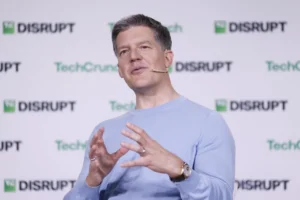
From Saturday Night Live Satire to a White House Seat: Anthropic CEO Dario Amodei Navigates a High-Stakes Weekend

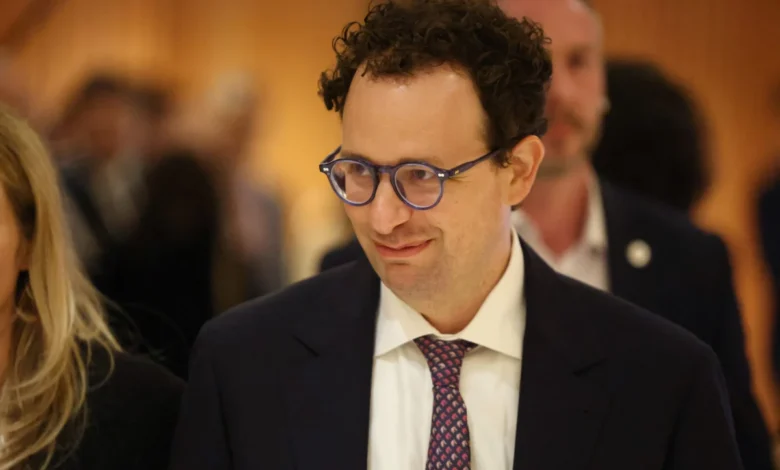
Anthropic Chief Executive Officer Dario Amodei is experiencing an unprecedented convergence of pop-culture notoriety and high-stakes geopolitics. The executive found himself thrust into the mainstream spotlight in a matter of 48 hours, transitioning from the punchline of a late-night television satire sketch to a private dinner guest at the White House with President Donald Trump. First broken by Axios and subsequently confirmed by industry sources, the high-profile meeting represents a critical pivot in the relationship between the administration and one of the world’s most influential artificial intelligence safety advocates.
The timing of the dinner underscores the rapid acceleration of AI policy as a centerpiece of national security and economic strategy. Amodei’s sudden prominence highlights a turbulent period for Anthropic, marked by high-stakes legal battles, philosophical divisions over the future velocity of AI development, and an increasingly hands-on federal approach to technology regulation.
Main Facts of the High-Level White House Meeting
The private dinner between President Trump and the Anthropic CEO marks their first one-on-one encounter. The meeting occurs against a backdrop of starkly contrasting philosophies regarding how artificial intelligence should be researched, deployed, and governed.
While the White House has increasingly leaned into an aggressive deregulation and acceleration posture—exemplified by recent administration proposals to rebrand artificial intelligence as "super intelligence" and dismiss public safety concerns—Amodei has positioned Anthropic as a champion of precautionary governance. Just weeks prior to the dinner, Amodei outlined a detailed roadmap to intentionally pace frontier AI development, ensuring that safety research and alignment protocols keep pace with raw capability scaling.
Despite these ideological differences, the invitation signals an acknowledgment within the administration that major AI labs cannot be sidelined as the government formulates comprehensive federal technology frameworks. The discussion is expected to touch upon national security partnerships, regulatory compliance, domestic computing infrastructure, and the contentious federal supply-chain classifications that have strained ties between defense agencies and AI developers.
A Fraught Chronology: From Pentagon Clashes to Pennsylvania Avenue
To understand the weight of the upcoming White House dinner, one must examine the rocky trajectory of Anthropic’s relationship with the federal government throughout 2026. The friction points trace back months, characterized by a mix of regulatory hostility, legal maneuvers, and diplomatic overtures from different factions within the administration.
Earlier in the year, tensions boiled over when the Pentagon designated Anthropic a "supply-chain risk." The punitive classification was levied in direct response to the company’s insistence on embedding rigorous safety guardrails and use-case restrictions into its enterprise agreements, limiting how military and intelligence agencies could deploy its frontier models. Rather than backing down, Anthropic took the unprecedented step of challenging the Department of Defense in federal court. In late August 2026, the company secured its first major legal victory in that ongoing battle, providing legal leverage as the two sides sought more stable footing.
Simultaneously, however, other wings of the administration maintained a pragmatic, collaborative dialogue with tech leaders, attempting to forge compromises between national defense objectives and commercial innovation. This dual track of confrontation and engagement ultimately culminated in the presidential dinner invitation, suggesting that top administration officials recognize the necessity of bringing critical AI stakeholders directly to the negotiating table.
Pop Culture Intersection: The Saturday Night Live Phenomenon

Adding an unexpected layer of surrealism to Amodei’s weekend, the Anthropic CEO became the subject of national satire just hours before breaking bread with the president. The season premiere of NBC’s long-running comedy institution, Saturday Night Live, featured a prominent sketch lampooning the tech executive and the broader cultural anxieties surrounding the rapid rise of generative artificial intelligence.
While tech executives are no strangers to media scrutiny, being targeted by Saturday Night Live signals a definitive cultural tipping point. Artificial intelligence has graduated from specialized Silicon Valley boardrooms and academic conferences to mainstream public consciousness, where everyday citizens grapple with its economic, social, and existential implications. For Amodei, the satire reflected the public’s simultaneous fascination and unease with the small group of unelected researchers who hold disproportionate influence over the trajectory of modern intelligence.
Strategic Differences: Accelerationism Versus Pacing
The core friction between Amodei and the Trump administration stems from fundamentally divergent views on the pacing of technological progress.
President Trump has consistently maintained a pro-growth, accelerationist stance, recently suggesting that public pushback against the technology is politically motivated and proposing a formal federal rebranding of the industry under the banner of "super intelligence." The administration has floated plans to establish specialized government "AI forces" and streamline deployment to ensure American technological supremacy over geopolitical rivals like China.
Conversely, Amodei has emerged as a leading voice for precautionary restraint within the industry. In mid-September 2026, the Anthropic chief published a comprehensive framework advocating for deliberate pacing mechanisms at the frontier of AI development. His thesis argues that unmitigated scaling without proportional breakthroughs in interpretability, alignment, and cybersecurity invites catastrophic risks—ranging from automated biological weapons proliferation to destabilizing economic shocks.
This philosophical chasm has put Anthropic at odds not only with aggressive market competitors who prioritize raw speed, but also with government officials who view any form of self-regulation or caution as an unnecessary bottleneck to national power.
Broader Industry Impact and Strategic Implications
The high-level engagement between the White House and Anthropic carries profound implications for the broader artificial intelligence ecosystem. As governments worldwide race to establish regulatory regimes, the United States is defining its baseline approach to public-private partnership in the tech sector.
If the dinner succeeds in bridging the gap between Anthropic’s safety-first ethos and the administration’s focus on dominance and speed, it could establish a new template for how AI labs interact with federal defense and regulatory bodies. A successful dialogue could lead to a softening of the Pentagon’s supply-chain risk posture, a resolution to ongoing litigation, and a more harmonized framework for national security guardrails.
Conversely, should the meeting fail to produce common ground, it may harden ideological battle lines within the tech sector. It would signal to other AI developers that maintaining strict ethical boundaries could come at the cost of federal contracts, regulatory favor, and political goodwill.
As artificial intelligence continues to reshape the global geopolitical and economic landscape, Dario Amodei’s weekend journey—from late-night comedy sketches to the West Wing—serves as a vivid illustration of the complex, high-stakes reality facing contemporary technology leaders. The decisions forged behind closed doors at the White House will likely reverberate far beyond Silicon Valley, shaping the safety protocols and governance structures that will govern the future of machine intelligence for decades to come.
Related posts: