Apollo Chief Economist Torsten Slok Issues Scathing Critique of the AI Infrastructure Investment Boom

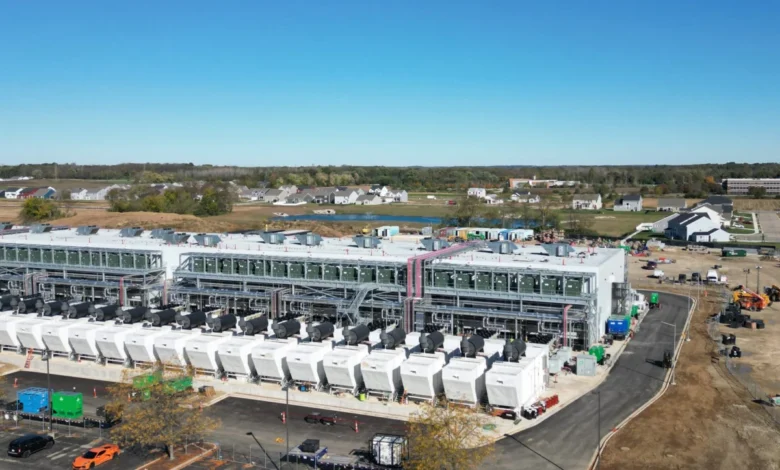
The artificial intelligence sector, once viewed by Wall Street as an unstoppable engine of growth, is facing a moment of profound structural skepticism. Torsten Slok, chief economist at Apollo Global Management, has spent the past week systematically dismantling the narrative that the current wave of massive capital expenditure in data centers and compute capacity is backed by a sustainable economic foundation. Through a series of research notes, Slok has argued that the industry is trapped in a cycle of circular financing, unproven productivity returns, and a dangerous disconnect between the cost of compute and the actual value delivered to businesses.
This critique arrives at a pivotal juncture for the global financial markets. As major technology firms—often referred to as the "hyperscalers"—prepare to commit upwards of $1 trillion in combined capital expenditure (capex) in the coming year, investors are beginning to question whether this massive outflow of liquidity will ever translate into tangible earnings growth. The recent market retreat from AI-adjacent stocks suggests that the era of blind enthusiasm for AI infrastructure may be giving way to a more rigorous, profit-focused analysis.
The Economic Mismatch: Cost Versus Utility
At the heart of Slok’s argument is a fundamental economic tension: the marginal cost of producing AI compute has outpaced the marginal benefit provided to the average enterprise. According to Apollo’s research, the demand curve for compute is not the "unlimited" resource that proponents of the AI bull case have suggested. Instead, it is highly sensitive to price, meaning that if the return on investment (ROI) for AI tools does not materialize, the demand for underlying infrastructure will inevitably stall.
Slok posits that AI currently functions more as a significant cost center rather than a growth driver for the broader economy. For companies outside of the "Magnificent Seven" technology giants, there is scant evidence that integrating advanced language models or generative AI tools is resulting in meaningful improvements to revenue per worker or profit margins. The core issue, as Slok notes, is that business success is rarely a matter of raw computational power. "AI may be a great calculator, but in business, intelligence is mostly judgment," he wrote. "Judgment depends on context, and the answer varies with which human or which model you ask. Perhaps most importantly, AI does not understand accountability, trust, culture, unwritten rules, ethical trade-offs or fairness."
The Chronology of Skepticism
The recent wave of warnings from Apollo began in earnest on Tuesday, October 20, when Slok highlighted a cooling in token spending growth. This metric, often used as a proxy for the actual utilization of AI models, suggested that the explosive demand for compute is plateauing. By Thursday, the focus shifted toward the financial plumbing of the industry, specifically the "circularity" inherent in current spending patterns.
The circularity argument is perhaps the most damning aspect of the current AI boom. Data indicates that a significant portion of the revenue reported by AI startups is derived from funding provided by the very hyperscalers or venture capital firms that are also their primary investors. When a startup uses venture capital money to purchase compute services from a major cloud provider, the cloud provider recognizes this as revenue. If that cloud provider is also an investor in the startup, the capital is effectively returning to the investor’s balance sheet, creating an illusion of organic growth. Slok highlighted that approximately 80% of the top 1% of AI spenders are venture-backed, suggesting that many of these enterprises are not self-sustaining entities but are instead burning through investor capital to fuel their data center consumption.
By Saturday, the discourse reached a crescendo with the assertion that AI has delivered "zero financial payoff" to the U.S. corporate sector outside of the dominant tech players. This observation underscores a growing rift between the elite firms that own the infrastructure and the broader S&P 500 companies that are expected to adopt these technologies to remain competitive.
Financial Instability and Market Reactions
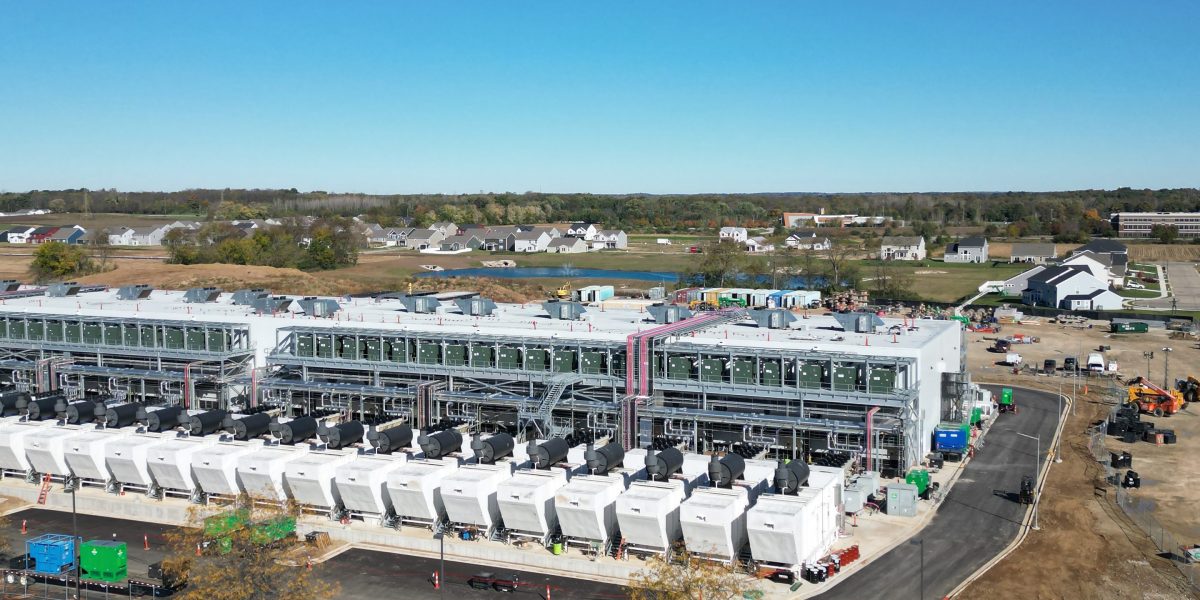
The consequences of this misalignment are beginning to manifest in the credit markets. Investors are increasingly wary of the debt-fueled nature of the AI expansion. Meta Platforms, which has projected capital expenditures in the range of $135 billion to $145 billion for the current year, has seen its credit risk metrics reach record levels. On Thursday, the cost of insuring Meta’s debt against default through five-year credit default swaps (CDS) hit an all-time high of 114.79 basis points, a sharp rise that reflects market anxiety regarding the company’s massive spending trajectory.
The situation is even more pronounced among smaller, specialized AI firms—often termed "neoclouds." CoreWeave, a prominent player in the GPU-as-a-service market, has seen its valuation face significant pressure, with its stock declining by more than 30% in a single month. Simultaneously, its CDS spreads have ballooned to 1,145 basis points, signaling that bond markets are pricing in a much higher risk of default for companies whose business models rely entirely on the continued, rapid expansion of AI infrastructure.
The "Hidden" Debt Problem
The concerns raised by Slok are echoed by regulatory and rating bodies. Mark Habib, the S&P Global Head for Digital Infrastructure, recently warned of the dangers of "interconnected financing structures." During a roundtable discussion in London, Habib noted that the market likely lacks visibility into the true extent of AI-linked debt. Because many of these complex financing deals are structured through private contracts or unconventional partnerships, they often evade public disclosure requirements.
"It is safe to assume that there is more debt out there that we are not seeing," Habib stated. He pointed out that if transactions are not being rated or reported, the credit risk associated with them is effectively invisible to the broader market, creating a potential blind spot for investors who believe they have a clear picture of the hyperscalers’ financial health.
Implications for the Future of AI Investment
The shift in sentiment toward AI represents a transition from a "growth-at-all-costs" mentality to a "show-me-the-money" phase. The initial stage of the AI revolution was defined by the build-out of physical capacity—the construction of massive data centers and the acquisition of high-end GPUs. This phase was characterized by a high degree of confidence in the future utility of AI.
However, as Slok’s analysis suggests, the industry is now entering a secondary, more difficult phase: the monetization phase. If the productivity gains do not materialize, the justification for continued massive capital expenditure will evaporate. Should this occur, the result could be a prolonged period of consolidation, where smaller, undercapitalized AI firms are forced to exit the market or be acquired at distressed valuations.
Furthermore, the impact on the Magnificent Seven—Alphabet, Amazon, Apple, Meta, Microsoft, Nvidia, and Tesla—could be profound. These companies have tied their stock performance, in varying degrees, to the promise of AI dominance. If the broader corporate sector continues to show resistance to paying for AI services, these tech giants may be forced to dial back their capex programs, potentially triggering a broader market correction.
Ultimately, the argument presented by Apollo is not necessarily that AI lacks long-term potential, but that the current market valuation and investment levels are disconnected from present reality. The "AI bull case" has assumed that demand is infinite and that businesses will inevitably integrate these tools. If the current trajectory of "slow payoff" continues, the technology sector may be forced to confront a reality where AI is a useful tool for optimization, but not the paradigm-shifting profit machine that investors were promised. For now, the "capex orgy," as some analysts have dubbed it, remains the primary focus of the market, but the growing chorus of dissent suggests that the window for proof-of-concept is rapidly closing.