Trump Administration Pursues New Tariff Strategies Following Supreme Court Rebuff, Signaling Broader Trade Conflict and Economic Uncertainty.

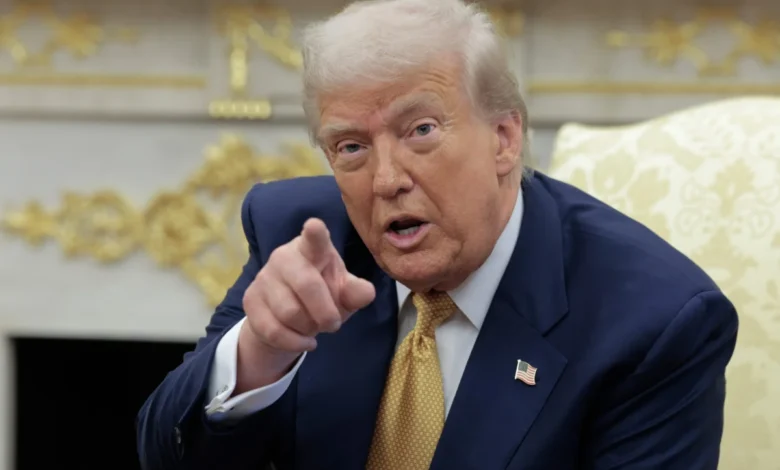
The administration of President Donald Trump is embarking on a refined and legally fortified strategy to implement its protectionist trade agenda, moving to impose new 25% tariffs on numerous imports from Brazil later this month. This pivot comes in the wake of a significant Supreme Court ruling in February that severely curtailed the administration’s ability to levy duties under the International Emergency Economic Powers Act (IEEPA), compelling the government to reimburse billions in previously collected funds. The new approach, leveraging Section 301 of the Trade Act of 1974, signals a determined effort to maintain a robust tariff policy despite judicial setbacks and mounting economic concerns.
The Supreme Court’s Rebuke and the Tariff Fallout
The Supreme Court’s landmark decision in February delivered a considerable blow to President Trump’s sweeping tariff ambitions. The ruling stipulated that the IEEPA, primarily designed for national security emergencies, could not be broadly interpreted to justify economic tariffs without specific congressional authorization. This legal clarification necessitated a massive repayment scheme for duties already collected under the invalidated authority.
-
The IEEPA Controversy and Its Legal Demise: Historically, the IEEPA grants the President broad powers to regulate international commerce during a declared national emergency. The Trump administration had invoked this act to impose tariffs on a range of goods, citing various national security justifications. However, legal challenges argued that these applications exceeded the statute’s intended scope, asserting that economic protectionism did not inherently constitute a national emergency in the manner required by the act. The Supreme Court ultimately sided with the challengers, reinforcing the separation of powers and limiting executive discretion in trade policy. This judgment underscored the judiciary’s role in scrutinizing the legal basis of presidential actions, particularly when they involve significant economic impact.
-
Billions in Refunds: A Fiscal Blow: The immediate financial repercussion of the Supreme Court’s decision has been substantial. According to the U.S. Treasury’s monthly statement, approximately $71 billion in tariff refunds have already been issued to importers. The total projected refunds are expected to reach an staggering $166 billion. This unexpected fiscal outflow stands in stark contrast to the initial expectation that these tariffs would serve as a significant revenue generator for the government. James Knightley, ING’s chief international economist, articulated this disappointment, stating, “The hope was tariffs were going to be a big revenue raiser, and right now it appears that actually tariffs are going to be potentially a loser through the second half of this year.” The need to reimburse such a colossal sum not only depletes government coffers but also complicates fiscal planning, turning a projected boon into a substantial liability. This financial reversal has also reignited debates about the economic efficacy and true cost of protectionist trade measures.
Brazil: A Test Case for New Tariff Tactics
The recent announcement of 25% tariffs on many Brazilian imports serves as the clearest indicator yet of the administration’s new, more legally robust tariff strategy. These tariffs, unveiled this week, are the culmination of a year-long investigation conducted by the Office of the U.S. Trade Representative (USTR) under Section 301 of the Trade Act of 1974. The USTR concluded that Brazil had engaged in "unfair trade practices," providing the statutory basis for the new duties.
-
Unfair Trade Practices and the Section 301 Investigation: The USTR’s investigation into Brazil’s trade practices likely scrutinized areas such as subsidies, intellectual property rights, market access barriers, or other policies deemed discriminatory or harmful to U.S. economic interests. While specific details of the "unfair practices" cited have not been fully disclosed, such investigations typically involve extensive data collection, stakeholder consultations, and an assessment of the economic impact on U.S. industries. The formal nature of a Section 301 investigation, including a public comment period and detailed findings, lends greater legal defensibility compared to the more unilateral application of IEEPA. This process allows the administration to present a more detailed case for its tariff actions, potentially mitigating future legal challenges.
-
A History of Tensions: Brazil and U.S. Trade Relations: The imposition of these fresh tariffs is not an isolated event but rather revives a recurring theme of trade friction between the two nations. Last year, the White House imposed tariffs totaling 50% on certain Brazilian imports, a move explicitly linked to Brazil’s former president, Jair Bolsonaro. Bolsonaro was accused of leading a conspiracy to overturn his reelection loss in 2022 and was subsequently sentenced to 27 years in prison. This prior punitive action, while politically motivated, established a precedent for using trade measures in response to perceived transgressions by the Brazilian government. Brazil, as Latin America’s largest economy and a significant trading partner for the U.S., exports a diverse range of goods, including agricultural products like coffee and orange juice, minerals, and manufactured goods. Any disruption to this trade flow has significant implications for both economies, affecting commodity prices, supply chains, and consumer costs. Brazil’s Ministry of Foreign Affairs is expected to issue a formal protest, potentially signaling a move to challenge these tariffs through diplomatic channels or even the World Trade Organization, although the U.S. has often bypassed WTO rulings in recent years.
Section 301: A Legal Lever for Trade Enforcement
The shift towards Section 301 represents a strategic adjustment by the Trump administration, recognizing the limitations of IEEPA while still pursuing its trade objectives. This section of the Trade Act of 1974 empowers the President to take action, including tariffs, against countries that engage in unfair trade practices that harm U.S. commerce.
-
The Legal Framework: Understanding Section 301: Section 301 provides a structured, albeit sometimes lengthy, process for addressing foreign trade barriers or unfair practices. It requires the USTR to conduct an investigation, engage in consultations with the foreign government, and make findings regarding the alleged unfair practices and their impact on U.S. interests. Crucially, actions taken under Section 301, such as tariffs, are generally considered to be within the President’s executive authority, particularly when supported by a thorough investigation and findings of harm. Unlike IEEPA, which relies on a broad interpretation of "national emergency," Section 301 is specifically designed to address trade disputes, offering a more direct and legally robust pathway for imposing duties. This legal foundation is expected to provide greater resilience against judicial challenges, a lesson learned from the IEEPA experience.
-
Precedent and Power: Section 301’s Past Applications: This is not the first time the Trump administration has utilized Section 301. During his first term, President Trump notably employed this method to impose 25% tariffs on approximately $250 billion worth of Chinese imports. These tariffs, stemming from investigations into China’s intellectual property theft and forced technology transfer policies, faced legal challenges but were ultimately not struck down by the courts. This precedent provides a critical blueprint for the current strategy, demonstrating that Section 301 can withstand judicial scrutiny. Melissa Irmen, the director of advocacy for the National Association of Foreign-Trade Zones, highlighted another key advantage of this method: once an investigation is completed and tariffs are imposed, the rates can be adjusted without restarting the entire process. “If you set the tariff at say 15% and it’s deemed that it needs to be modified, then changing it to 30% isn’t the same involved process,” she explained, underscoring the flexibility and enduring power of this tool. This flexibility allows for dynamic adjustments in response to evolving trade conditions or the effectiveness of the initial tariff rates.
Economic Realities: Disappointment and Distortion
Despite the administration’s persistent belief in tariffs as a tool for economic revitalization and revenue generation, the empirical evidence thus far has been largely disappointing. The stated goals of boosting government revenue and reviving American manufacturing have largely failed to materialize, and in some areas, have even proven counterproductive.
-
Manufacturing Gains Fall Short: One of the primary justifications for the tariffs was to stimulate domestic manufacturing and bring jobs back to the U.S. However, the data reveals a stark reality: U.S. manufacturing output has increased by a measly 1.1% year-over-year as of June. This growth rate is considerably lower than what proponents of the tariff policy had envisioned and falls short of significantly altering the landscape of American industrial production. Economists argue that the complexities of global supply chains and the diverse factors influencing manufacturing output – such as automation, labor costs, and technological advancements – mean that tariffs alone are insufficient to drive a dramatic resurgence. In fact, for many U.S. manufacturers that rely on imported components, tariffs can increase input costs, making them less competitive globally.
-
Inflationary Pressures and Monetary Policy Challenges: The economic ripple effects of tariffs extend beyond manufacturing. Tariffs are essentially taxes on imported goods, which are typically borne by U.S. importers and often passed on to consumers in the form of higher prices. This can contribute to inflationary pressures across the economy. James Knightley further warned that more tariffs could raise prices and complicate the Federal Reserve’s efforts to lower interest rates. The Fed’s primary mandate includes maintaining price stability, and if tariffs contribute to persistent inflation, it could limit the central bank’s room for maneuver, potentially delaying rate cuts that many businesses and consumers desire. This creates a challenging paradox for the administration, which has repeatedly urged the Fed to lower rates while simultaneously pursuing policies that could push prices upward. The interplay between trade policy and monetary policy adds another layer of complexity to the nation’s economic outlook.
Business Navigates a Shifting Landscape
For American businesses, particularly importers and those reliant on global supply chains, the administration’s consistent use of tariffs creates an environment of profound uncertainty and operational challenges. The experience with IEEPA-based tariffs, which were hastily implemented only to be later deemed illegal, has left many companies wary and frustrated.
-
The Burden of Uncertainty on Importers: The rapid implementation of tariffs under IEEPA last year forced companies to scramble, adjust pricing, and navigate complex customs procedures, often absorbing significant costs. Now, with the administration pivoting to Section 301, businesses face the prospect of a similar cycle of disruption. Importers could once again pay duties for months or even years, only to potentially seek refunds if courts eventually strike down these new tariffs. Melissa Irmen articulated this concern, stating, “We may have the same situation where tariffs are implemented, tariffs are collected for a period of time, and by the time the court decision happens, if it does go the way IEEPA went, we may have to see another refund process again.” This uncertainty is a major impediment to long-term business planning, as companies struggle to predict costs, secure supply chains, and make investment decisions. The ongoing threat of new tariffs, even if implemented with more legal rigor, forces businesses to allocate resources to contingency planning rather than growth.
-
Anticipating Legal Battles: While Section 301 provides a stronger legal footing than IEEPA, it does not guarantee immunity from lawsuits. Irmen suggested that future legal challenges could focus on whether the administration adequately proved that a foreign practice harmed the U.S. economy, or whether the imposed tariffs are a proportionate and effective remedy for the alleged harm. These arguments require detailed economic analysis and legal interpretation, potentially leading to prolonged litigation. For instance, an importer of Brazilian goods might argue that the tariffs are arbitrary or that their specific product category does not contribute to the alleged "unfair trade practices." The legal battles could tie up significant judicial resources and further prolong the period of uncertainty for affected industries.
Broader Implications: A Future of Executive-Led Trade Policy
The administration’s renewed commitment to tariffs, even through more circuitous legal routes, signals a determined and potentially long-lasting shift in U.S. trade policy. This approach has significant geopolitical and domestic political implications.
-
The European Union and Beyond: Expanding Tariff Targets: Brazil is unlikely to be the sole target of this new Section 301-driven tariff strategy. The administration has already proposed tariffs on dozens of other trading partners, including the European Union, following investigations into their enforcement of bans on goods made with forced labor. This suggests a systematic effort to identify and address perceived unfair practices globally, using the Section 301 framework as the primary enforcement mechanism. Such actions could strain diplomatic relations with key allies and potentially trigger retaliatory tariffs, leading to a broader global trade war. The European Union, a powerful economic bloc, would likely respond robustly to any new tariffs, escalating trade tensions on a much larger scale. This expansion of tariff targets could reshape global trade dynamics, forcing countries to re-evaluate their trade relationships and supply chain dependencies.
-
Executive Power and the Political Calculus: The persistence of the Trump administration in pursuing tariffs, even in the face of legal challenges and mixed economic results, can be understood through a domestic political lens. Some polls have predicted that Democrats may win the House and split the Senate following the upcoming midterms. If Republicans lose control of Congress, and President Trump struggles to pass new legislation to further his agenda, he may increasingly rely on his executive powers to implement policy. James Knightley noted this potential shift: “If you can’t do tax and spending, you’re going to be more limited to areas where the president has executive powers. And trade, of course, is one of those.” Trade policy, particularly through instruments like Section 301, offers a powerful avenue for presidential action without direct congressional approval, making it an attractive tool for an administration facing legislative gridlock. This strategic emphasis on executive power could define the latter half of the President’s term, regardless of the economic consequences or international backlash.
In conclusion, the Trump administration’s decision to impose new tariffs on Brazil, utilizing Section 301 of the Trade Act of 1974, marks a critical turning point in its trade policy. Having been compelled to refund billions after the Supreme Court curtailed its use of IEEPA, the administration is now demonstrating a sophisticated and legally resilient approach to its "America First" agenda. While this strategy promises greater legal durability, it comes with significant economic uncertainties for businesses, potential inflationary pressures for consumers, and the risk of escalating global trade conflicts. As the administration continues to identify and investigate other trading partners, Brazil serves as a bellwether for a future where executive-driven trade policy, underpinned by Section 301, remains a dominant feature of U.S. international relations. The long-term efficacy and broader implications of this renewed protectionist drive will undoubtedly be a subject of intense scrutiny and debate in the months and years to come.