‘Star Trek’ and ‘X-Men’ icon Patrick Stewart dies at 86: ‘We lost one of the greats of stage and screen today’ | Fortune

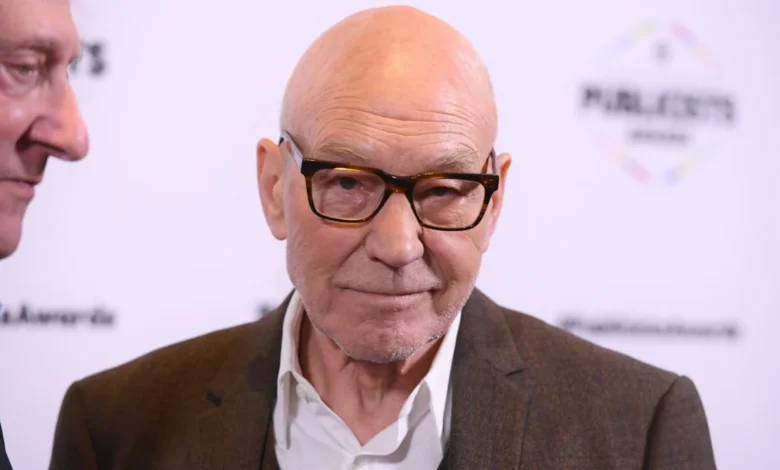
The passing of the classically trained titan was confirmed on Wednesday in Los Angeles by his spokesperson, Kelly Bush Novak. The cause of death followed what was described as a brief and poignant struggle with Alzheimer’s disease and Lewy Body Dementia. While Stewart had remained a vibrant public figure well into his eighties, his medical diagnoses had been kept private, shielded from the public eye until the final days of his life. His departure marks the end of a transformative era in British and international theater, as well as a seismic shift in the cultural landscape of popular science fiction.
A Legacy Forged on the Stage
Long before he was synonymous with the USS Enterprise or the X-Mansion, Stewart was a cornerstone of the Royal Shakespeare Company (RSC). His journey began in the working-class town of Mirfield, Yorkshire, where he was born into a household defined by hardship. The son of a former regimental sergeant major, Stewart grew up in a home without indoor plumbing, witnessing the domestic violence inflicted upon his mother by his father—a trauma that would eventually lead him to become a lifelong advocate for Refuge, a charity supporting victims of domestic abuse.
Stewart’s professional training at the Bristol Old Vic Theatre School served as the crucible for a career that spanned seven decades. His time with the RSC, lasting 14 years, saw him tackle the most demanding roles in the Western canon, including Macbeth, Shylock, and Mark Antony. His ability to marry the rhythmic, elevated language of the Bard with a grounded, psychological intensity earned him three Olivier Awards and a lasting reputation as one of the finest character actors of his generation.
The Science Fiction Paradigm Shift
In 1987, Stewart made what was widely considered at the time to be a risky pivot. Having just concluded a stint in Edward Albee’s Who’s Afraid of Virginia Woolf?, he accepted an offer to anchor a syndicated science fiction revival: Star Trek: The Next Generation. Industry pundits at the time were skeptical, predicting a swift failure for the series. Instead, Stewart’s portrayal of Captain Jean-Luc Picard—a character he famously infused with the gravitas of a Shakespearean lead—became a cultural phenomenon.
The "Picard effect" redefined the expectations for lead actors in genre television. Over seven seasons and 178 episodes, Stewart transformed a space-faring commander into a paragon of moral complexity and intellectual leadership. His influence extended to the X-Men franchise, where his portrayal of Professor Charles Xavier brought an unprecedented level of gravitas to the superhero genre. His ability to pivot between the high-minded tragedy of a stage production and the high-concept world of the Marvel Universe allowed him to bridge the gap between "high art" and mass-market entertainment.
Chronology of a Remarkable Career
- 1940: Born in Mirfield, Yorkshire, England.
- 1950s: Begins amateur dramatics at age 12; wins a scholarship to the Bristol Old Vic.
- 1966: Joins the Royal Shakespeare Company, beginning a 14-year residency.
- 1987: Debuts as Captain Jean-Luc Picard in Star Trek: The Next Generation.
- 1996: Wins a Grammy Award for Best Spoken Word Album for Peter and the Wolf.
- 2000: Debuts as Professor Charles Xavier in the first X-Men feature film.
- 2008: Receives a Tony Award nomination for his performance in Macbeth.
- 2010: Knighted by Queen Elizabeth II for his services to drama.
- 2013: Marries singer-songwriter Sunny Ozell.
- 2023: Publishes his memoir, Making It So, detailing his upbringing and career.
- 2026: Final credited appearance in The Sheep Detectives.
Official Responses and Industry Tributes
The outpouring of grief from the entertainment community has been immediate and profound. Hugh Jackman, who shared the screen with Stewart across multiple X-Men films, took to social media to mourn the loss of both a mentor and a friend. "We lost one of the greats of stage and screen today," Jackman wrote. "And, in my book, a tremendous friend and man. I learned so much from him. I will miss you, Patrick Stewart, all of my days."
William Shatner, the original Captain Kirk, echoed these sentiments, noting the "intelligence, grace, and a deep sense of humanity" that Stewart brought to every performance. The industry, from the boardrooms of Paramount to the stages of the West End, has signaled that a void has been left that few performers possess the range to fill. His death follows the recent passing of Walter Koenig, creating a somber atmosphere for the Star Trek community, which has lost two of its most iconic voices in quick succession.
Impact on the Craft of Acting
Stewart’s influence on the craft of acting cannot be overstated. He was a vocal proponent of the necessity of theater, often expressing frustration at the industry’s obsession with "telly" over the transformative power of live performance. Yet, he was paradoxically the man who proved that high-caliber acting could thrive in any medium.
His commitment to Shakespearean pedagogy continued even while he was a global star; he established the Paramount Shakespeare Company to provide workshops for working actors. By treating a syndicated sci-fi show with the same reverence he afforded to Henry IV, he elevated the standards of television writing and performance. His technique was characterized by a rich baritone, a command of silence, and a subtle physicality that could convey volumes without a word being spoken.
Beyond the Persona: A Life Well Lived
While he was often perceived as the stoic, formal commander, Stewart’s later years were marked by a playful, internet-savvy persona. Whether he was posing in a lobster suit for a photo or sharing glimpses of his life with his wife, Sunny Ozell, he delighted in subverting the expectations of his fans. He took rumors and memes in stride, even when the internet mistakenly "killed" him or engaged in debates about his private life.
His legacy is not merely in the characters he played, but in the barriers he broke down. He lived through the transition of the British stage from a traditional, class-based institution to a globalized industry, and he was at the forefront of the technological evolution of the blockbuster film. He leaves behind two children, Sophia and Daniel, and a vast, global audience that grew up watching him navigate the stars and the complexities of the human condition.
Analysis: A Cultural Barometer
The passing of Patrick Stewart represents the conclusion of a specific brand of 20th-century stardom. He belonged to a generation of actors who were forged in the repertory theaters of England, trained in the discipline of language and movement, and then catapulted into the age of the digital blockbuster. His career trajectory serves as a case study for the modern actor: how to maintain artistic integrity while participating in global franchises.
As the industry moves forward, the "Stewart model"—a blend of classical rigor and popular appeal—remains the gold standard. He leaves behind a body of work that is as likely to be studied in drama schools as it is to be consumed on streaming platforms. In his own words, he often found the stage to be his "safe space," a refuge from the turbulence of his childhood. Today, that refuge stands as a monument to a life dedicated to the exploration of what it means to be human, whether on the bridge of a starship or in the dark, haunting soliloquies of the Scottish play.
The industry mourns, but the consensus remains that Sir Patrick Stewart’s work, much like the characters he brought to life, will persist, ensuring that his influence is felt by generations of actors and audiences who have yet to encounter his brilliance.