The Rise and Fall of a Geometric Anomaly
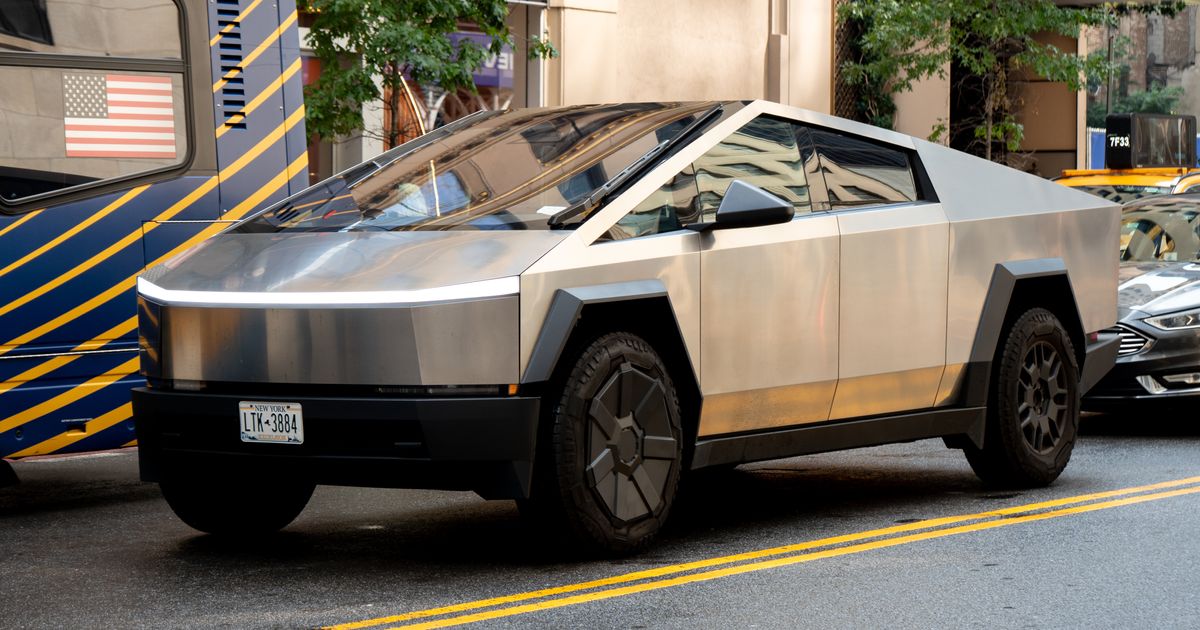
The Tesla Cybertruck was first unveiled to the public in November 2019. From its inception, the vehicle was designed to disrupt the traditional truck market, dominated by established giants like the Ford F-150 and Chevrolet Silverado. Musk pitched the Cybertruck not as a traditional utility vehicle, but as a "stealth-fighter" for the road, characterized by an exoskeleton of cold-rolled stainless steel and a distinct, angular silhouette that defied the aerodynamic conventions of modern automotive engineering.
However, the journey from prototype to production was fraught with delays. Originally slated for release in 2021, the vehicle did not reach the first customers until the 2023 model year. During this four-year gestation period, the public perception of both the vehicle and its chief executive underwent a significant transformation. What began as a curiosity of engineering quickly became a symbol of a polarized cultural climate.
By the time the truck hit the streets, its reception was sharply divided. Proponents praised its boldness and raw performance metrics, while critics pointed to its unconventional design as a failure of ergonomics and safety. The vehicle’s lack of traditional pedestrian-safety features and the high-profile incidents involving its "frunk" (front trunk) sensors further fueled a narrative that the Cybertruck prioritized provocative aesthetics over practical, everyday usability.
A Chronology of the Cybertruck Era
- November 2019: Tesla unveils the Cybertruck prototype in Hawthorne, California. During the demonstration, the "Armor Glass" windows shatter during a durability test, creating an immediate, viral moment of failure.
- 2021-2022: Amid global supply chain shortages and production challenges, Tesla repeatedly delays the start of mass production, focusing instead on the Model Y and Model 3.
- November 2023: Tesla begins official deliveries of the Cybertruck to customers, with prices starting significantly higher than the initial 2019 estimates.
- 2024: The vehicle faces intense scrutiny regarding its stainless-steel exterior’s susceptibility to corrosion and its overall weight, which necessitates specialized infrastructure for servicing.
- February 2026: European regulatory bodies continue to reject the vehicle’s design on grounds of pedestrian safety, effectively closing off a major international market.
- November 2026: Musk confirms that production will wind down by the middle of next year, shifting focus to the Cybercab.
Market Performance and Financial Implications
Financial analysts have long viewed the Cybertruck as a "halo car"—a product intended to generate headlines and brand excitement rather than significant profit. Estimates suggest that Tesla’s production of the truck peaked at approximately 30,000 units annually, a figure that falls well short of the initial 250,000-unit annual projection Musk made early in the development cycle.
In comparison, the Tesla Model 3 and Model Y remain the company’s primary financial engines, with millions of units sold globally. The discrepancy between the Cybertruck’s high-visibility marketing and its relatively low sales volume suggests that it struggled to find a foothold beyond a niche demographic of early adopters and brand loyalists. The vehicle’s extreme design also limited its utility in commercial sectors, where fleet managers prioritize reliability, ease of repair, and standardized insurance profiles over unconventional styling.
Safety and Regulatory Hurdles
The Cybertruck’s design choices created a unique set of regulatory challenges. In the United States, the vehicle was permitted on the road under current standards, but it faced significant pushback from road safety advocates. The lack of standard crumple zones, the rigidity of the stainless-steel panels, and the potential for the heavy, sharp-edged body to pose a heightened risk to other road users became a focal point of legislative discussions in various municipalities.
Internationally, the outlook was even bleaker. European Union safety standards regarding pedestrian impact protection effectively rendered the vehicle unmarketable in that region. For a company like Tesla, which relies on global scale to maintain its margins, the inability to sell a core model in the European market represented a significant strategic setback.
A Legacy of Marketing over Utility
While the Cybertruck may be viewed by many as a commercial failure, some industry observers argue that its primary purpose was never intended to be mass-market penetration. As a "mobile billboard," the Cybertruck was remarkably effective. Its flat, expansive surfaces made it a favorite for aftermarket wraps, with businesses ranging from local service providers to national brands utilizing the vehicle to attract attention in dense urban centers.
This branding phenomenon echoed the history of the Ford Edsel, a vehicle that, much like the Cybertruck, was intended to revolutionize a segment but instead became shorthand for a high-profile misstep. The Edsel’s failure in the late 1950s was attributed to a disconnect between corporate ambition and consumer preference—a dynamic that appears to have repeated itself nearly 70 years later.

The Shift Toward Autonomy
The decision to discontinue the Cybertruck is intrinsically linked to Tesla’s broader pivot toward "Robotaxi" technology. The Cybercab, which is expected to occupy the manufacturing capacity currently allocated to the Cybertruck, represents a more traditional, utilitarian approach to the future of transportation. By focusing on autonomous systems, Tesla is attempting to address the growing demand for ride-sharing and cost-efficient urban transit, a departure from the individualistic, high-performance ethos that the Cybertruck embodied.
The transition also suggests a shift in Tesla’s internal engineering philosophy. Lessons learned from the Cybertruck—particularly regarding the manufacturing of stainless-steel components and the integration of complex electrical systems—are reportedly being integrated into the company’s future design pipeline. However, the loss of the Cybertruck leaves a void in Tesla’s lineup, ending the company’s brief foray into the full-size pickup market.
Broader Industry Impact
The legacy of the Cybertruck will likely be debated for years to come. For some, it will be remembered as a daring attempt to challenge the status quo of automotive design. For others, it will serve as a cautionary tale about the limitations of "visionary" product development when it ignores the fundamental requirements of safety and mass-market functionality.
As the final units roll off the production line in 2025, the automotive industry finds itself in a period of consolidation. With the rise of affordable electric vehicles from international competitors and the waning enthusiasm for ultra-premium, experimental designs, the market has signaled a return to practicality. The Cybertruck’s departure is, in many ways, an acknowledgment that even the most influential companies must eventually align their products with the realities of consumer demand and global regulatory environments.
In the final assessment, the Cybertruck served as a defining artifact of the mid-2020s: a high-tech, high-drama, and highly controversial machine that captured the world’s attention, even if it could not convince the world to drive it. Its discontinuation marks the end of an era defined by ambition, noise, and a fundamental belief that the rules of the road were meant to be broken.