Peter Krause Reflects on Three Decades of Television, His Shocking 9-1-1 Exit, and Leading NBC’s New Action-Thriller Line of Fire

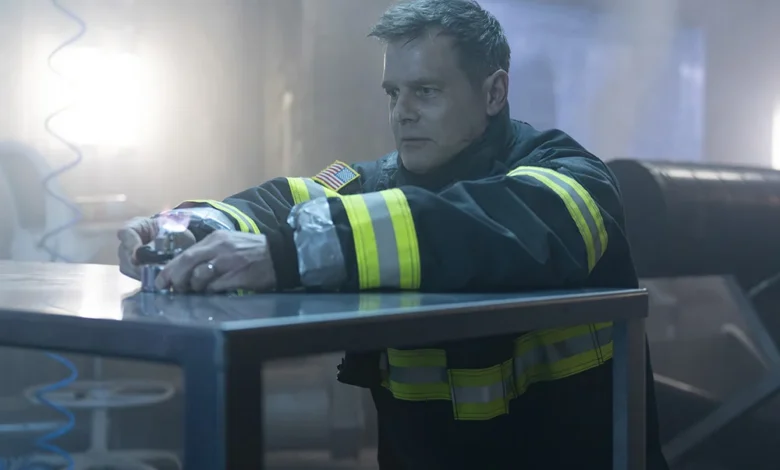
For more than thirty years, actor Peter Krause has maintained a consistent and respected presence across American television screens. From his early breakout work in sketch comedy with Carol Burnett in 1990 to defining roles in critically acclaimed programs such as Sports Night, Six Feet Under, Parenthood, and, most recently, the high-octane procedural 9-1-1, Krause has built a career centered on complex, grounded characters. Rather than gravitating toward conventional archetypes, the veteran actor has repeatedly chosen roles defined by moral inquiry, resilience, and personal redemption.
This trajectory continues with his latest television venture, Line of Fire, an NBC action-thriller created by Joshua Safran and executive produced by Jenna Bush Hager. In the series, Krause stars as Mike Hollingsworth, a retiring Secret Service agent who finds himself and his law enforcement family thrust into the crosshairs of a sophisticated conspiracy. As Krause transitions into this new chapter, he has also opened up about the bittersweet conclusion of his eight-season tenure on ABC’s 9-1-1, offering deeper insight into the grueling physical realities of the genre, the behind-the-scenes bonds forged with his castmates, and the lingering fan theories surrounding his character’s controversial departure.
From Sketch Comedy to Prestige Drama: A Retrospective on a Decisively Steady Career
Krause’s longevity in the entertainment industry is a rarity in a medium known for volatility. Following his television debut in 1990 on Carol Burnett’s Carol & Company, Krause worked steadily throughout the decade, experiencing a brief professional gap only in 1993. His performance as sportswriter Casey McCall in Aaron Sorkin’s critically praised 1998 comedy-drama Sports Night showcased his ability to navigate sharp dialogue and workplace dynamics, though the series was short-lived, concluding after two seasons.
However, it was his transition to HBO’s groundbreaking existential drama Six Feet Under in 2001 that elevated Krause to global prominence. Portraying Nate Fisher, a conflicted funeral director navigating grief, family dysfunction, and his own mortality, Krause spent seven magical years anchoring a series that redefined television storytelling. The role earned him multiple Emmy and Golden Globe nominations and cemented his association with complex emotional narratives. Seeking a tonal shift following the heavy existentialism of Six Feet Under, Krause subsequently joined NBC’s Parenthood in 2010 as Adam Braverman. The family drama provided a more optimistic, grounded framework, allowing him to explore the nuances of modern fatherhood and domestic stability over six seasons.
Over the decades, Krause’s professional choices have consistently prioritized character motivation over genre constraints. Reflecting on his career trajectory, the actor notes that he is primarily drawn to figures navigating a moral compass, individuals striving to lead an honorable life despite overwhelming internal and external pressures.

Stepping Into NBC’s Line of Fire
Krause’s return to network television via Line of Fire places him at the center of an intricate family dynamic fused with high-stakes political intrigue. Created by Joshua Safran—whose previous credits include Gossip Girl and Quantico—the NBC series centers on the Hollingsworth family, a multi-agency clan of law enforcement professionals whose lives intersect through duty, secrets, and betrayal.
Alongside Krause, the series features Hope Davis as Jane Hollingsworth, a U.S. Marshal and Mike’s estranged wife. The cast is rounded out by their adult children: Clare, an FBI agent played by Kat Cunning; Micah, a fellow Secret Service agent portrayed by Tommy O’Brien; and Russell, a Department of Justice analyst played by Taylor Bloom. The narrative kicks off in the series premiere when the Hollingsworth family becomes the target of a trained serial killer, forcing them to rely on their collective tactical expertise while managing deeply entrenched personal grievances.
Krause credits his agents, Peter Levine and Jamie Feld, with bringing the pilot script to his attention. Initially hesitant to commit to another demanding broadcast schedule following his departure from 9-1-1, Krause was ultimately won over by Safran’s mastery of narrative architecture, the unexpected plot twists, and the integration of sharp humor within a tense thriller framework. Furthermore, the complex, combustible history between Mike and Jane Hollingsworth offered an immediate acting challenge that distinguished the project from his previous television work.
The Physical Toll and Emotional Aftermath of 9-1-1
Before stepping into the world of Secret Service conspiracies, Krause spent eight seasons anchoring Fox and later ABC’s blockbuster emergency procedural 9-1-1 as Los Angeles Fire Department Captain Bobby Nash. The series, which crossed its milestone 100th episode in 2024, relied heavily on large-scale disaster sequences and physical stunts, creating a rigorous work environment for its primary cast.
In late 2024, viewers were shocked when showrunner Tim Minear and the creative team made the controversial narrative decision to kill off Bobby Nash during a high-stakes containment arc. The creative choice sparked immediate pushback from fans and cast members alike, many of whom had anticipated the character surviving through the end of the series. Krause has since acknowledged that while the physical demands of wearing heavy fire gear, running through intense practical sets, and enduring various minor injuries—including a persistent knee issue—made the production grueling, the camaraderie among the cast remained exceptional.

Reflecting on the emotional weight of his exit, Krause noted that the tight-knit ensemble had functioned like a real-life firefighting unit, supporting one another through demanding physical conditions, such as underwater shoots in Mexico and complex stunt coordination. Although he admits he was not actively seeking an exit from the series, Krause recognizes that the narrative shock of losing Bobby Nash allowed supporting characters, such as Kenneth Choi’s Chimney, room for professional and personal evolution.
Persistent Fan Theories and the Legacy of Bobby Nash
Months after his final appearance aired, the cultural footprint of Bobby Nash remains strong. A vocal subset of the 9-1-1 fandom continues to speculate on internet forums and social media platforms that the captain may still be alive, pointing to ambiguities in the narrative structure of his final sequence where his body was not explicitly shown being removed from a contaminated medical facility.
When queried about these ongoing theories, Krause maintains a playful ambiguity, noting that within the heightened, almost comic-book-like reality of 9-1-1, unconventional narrative twists are never entirely outside the realm of possibility. Whether or not Bobby Nash ever returns via flashback, dream sequence, or an elaborate amnesia plotline, Krause emphasizes his enduring pride in the character’s core arc. He regards Bobby’s journey—moving from profound personal trauma and addiction to self-forgiveness, mature leadership, and renewed love—as a defining milestone in his television career.
Broader Industry Implications and Future Outlook
Krause’s seamless transition from a long-running broadcast procedural to a prestige network action-thriller underscores the shifting economics of modern television. As broadcast networks increasingly rely on serialized, high-concept dramas with recognizable star power to retain live audiences in an era dominated by streaming platforms, veterans like Krause provide foundational stability and instant audience trust.
With Line of Fire airing Monday nights on NBC and streaming the next day on Peacock, Krause continues to occupy a rare space in contemporary entertainment: an actor capable of bridging the gap between serialized prestige drama and comforting broadcast appointment viewing. As he navigates the complex family dynamics of the Hollingsworth household, Krause remains focused on the fundamental elements that drew him to the medium three decades ago—compelling storytelling, authentic character relationships, and narratives that encourage viewers to reflect on their own moral compasses.