Jo Koy on ‘Blue in the Face,’ Steven Spielberg, Biggie’s Mom and Learning What His Name Really Means at Long John Silver’s

A Strategic Shift in Stockton
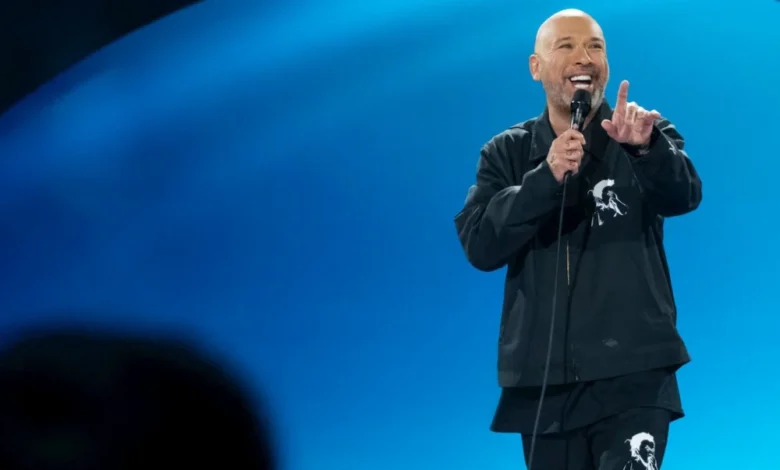
The selection of Stockton, California, as the backdrop for this special was a calculated departure from the industry standard of filming in entertainment hubs like Los Angeles or New York. For Jo Koy, born Joseph Glenn Herbert, the Central Valley city represented more than just a venue; it was a site of significant historical weight for the Filipino diaspora.
Stockton’s "Little Manila" once served as the largest Filipino enclave in the United States, yet the community suffered systemic displacement during the mid-20th century. Urban renewal projects, specifically the construction of the Crosstown Freeway in the 1960s, effectively decimated the neighborhood, erasing a cultural epicenter. Koy’s initial preparation for the show involved a heavy-hitting monologue detailing the "No Filipinos Allowed" signs and discriminatory practices that plagued the region decades ago.
However, the reality of the live event forced an improvisational pivot. Upon walking onto the stage to a sold-out crowd and a spontaneous standing ovation, Koy observed a diverse cross-section of the population—Asian, Black, Latino, and white audience members united in the arena. Recognizing that the atmosphere had shifted from a historical inquiry to a communal celebration, he opted to abandon his planned somber introduction. Instead, he embraced the moment as a testament to progress, focusing on the shared success of the present rather than the tragedies of the past.
The Craft of the Special
The production process for Blue in the Face reflects Koy’s hands-on approach to his creative output. With both performances running over two hours, the final 55-minute cut required a rigorous editing process. Koy, who maintains personal oversight of his editing suite, aimed to structure the special as a "bookend" narrative. The central theme focuses on the importance of maintaining a close-knit circle of support and honoring the individuals who contributed to one’s rise.
This editing philosophy is consistent with his broader professional trajectory. His previous special, Live From Brooklyn, became a focal point for his career after a high-profile bit involving the Notorious B.I.G. led to a direct line of communication with the late rapper’s mother, Voletta Wallace. While the bit initially lacked clearance, the resulting negotiation and eventual blessing from the Wallace estate allowed Koy to integrate Biggie’s legacy into his work permanently, bridging the gap between hip-hop culture and Filipino-American comedy.
The Cultural Impact of Personal Narrative
Koy’s comedy is deeply rooted in his relationship with his mother, whose experiences as a single immigrant parent provide the backbone for much of his material. From her defiant reaction to discrimination in a 1984 shoe store to her efforts to build a community through church-led potlucks, his stories serve as a primary source of history for a generation that often saw their experiences excluded from mainstream media.
The etymology of his stage name, "Jo Koy," further underscores this connection to his roots. What he long believed was a simple nickname was actually a linguistic misunderstanding. His Auntie Evelyn was frequently calling him "Jo ko"—Tagalog for "my Jo"—which evolved phonetically into the moniker that would eventually become synonymous with his brand. This discovery, made over a meal at a fast-food restaurant, highlights the intersection of his personal life and public persona.

Industry Implications and Future Prospects
The premiere of Blue in the Face on September 15 has positioned Koy as a serious contender for industry accolades, including the Golden Globe for best performance in stand-up comedy on television and the upcoming Emmy race for outstanding variety special. These nominations reflect a broader trend in the television industry, where streaming services have elevated stand-up specials from filler content to prestige programming.
Koy’s relationship with major studios has also undergone a shift. His entry into film, specifically the DreamWorks production Easter Sunday, was facilitated by a direct, unexpected endorsement from Steven Spielberg. After viewing Koy’s Hawaii-based special Comin’ in Hot, the legendary director initiated the conversation that led to the development of a film based on the domestic dynamics of a Filipino-American family. Despite the film’s release during the crowded post-pandemic theatrical window—competing against massive franchises like Top Gun: Maverick and Jurassic World—it maintained a steady presence, validating the marketability of stories centered on minority experiences.
Looking Toward the Horizon
As of the conclusion of his current Netflix deal, Koy is in a position of creative independence. Having navigated the transition from local clubs to global arenas and major motion pictures, he has established a blueprint for performers who wish to retain creative control over their narrative. His recent work on the animated project Forgotten Island further illustrates his commitment to exploring Filipino folklore within a studio framework, bringing traditional narratives to a wider, younger audience.
The professional landscape for comedians has changed significantly since the release of Richard Pryor’s Live in Concert, which Koy cites as his primary inspiration. While Pryor and his contemporaries like Eddie Murphy and Chris Rock used their platforms to challenge societal norms, Koy operates in a landscape where the digital footprint of a comedian is permanent. His current focus on "keeping the circle tight" is both a personal philosophy and a professional strategy, ensuring that his content remains authentic to the community that fostered his growth.
Analytical Context: The Evolution of Stand-Up
Data regarding the success of niche-market comedy specials suggests that audience demand for culturally specific storytelling is at an all-time high. The move by platforms like Netflix to invest in talent with deep regional roots—such as Stockton, rather than traditional urban epicenters—indicates a broader strategy of hyper-local engagement. By validating the history and the present-day reality of cities like Stockton, performers are able to build a loyal, recurring audience that transcends the traditional "major market" model.
The transition from the "Live From Brooklyn" era to the "Blue in the Face" era marks a maturation in Koy’s style. Where earlier sets relied heavily on character-driven impressions, his recent work displays an increased focus on thematic coherence. By weaving personal anecdotes about family, the loss of mentors, and the weight of success into a 55-minute package, he successfully avoids the pitfalls of the "compilation" style special, instead providing a structured, cinematic experience.
As the industry looks toward the next cycle of prestige comedy, the case of Jo Koy serves as a model for how legacy, cultural heritage, and corporate-backed distribution can coexist. Whether he chooses to remain in the hour-long special format or transition into longer-form narrative storytelling, his work remains a focal point for understanding how the Filipino-American experience is being recorded and celebrated in the 21st century.
Related posts: