The inaugural AI Music Awards marks a bold and chaotic milestone for the future of digital artistry

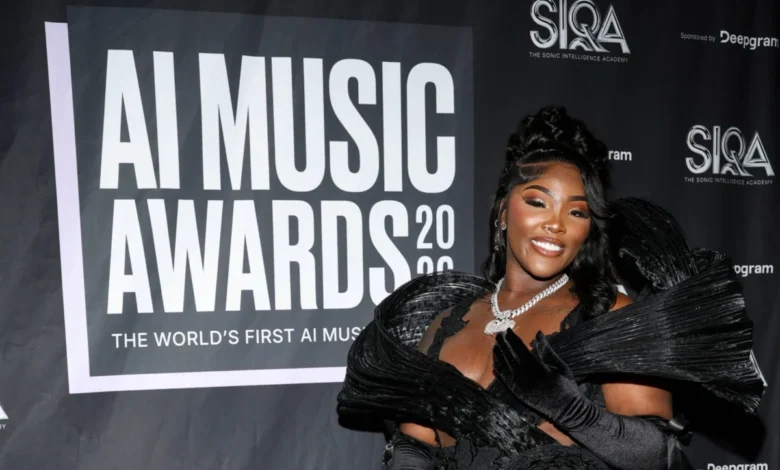
The Mayan Theater in Downtown Los Angeles recently played host to a surreal, high-stakes experiment in the evolution of pop culture: the inaugural AI Music Awards. Powered by the Sonic Intelligence Academy (SIQA), the event sought to carve out a legitimate space for a medium that has largely been treated as a pariah by the traditional music industry. While the evening was plagued by technical malfunctions and a lingering sense of amateurism, the gathering underscored a burgeoning subculture determined to legitimize AI-generated music, human-AI hybrids, and the digital avatars that bridge the gap between silicon and soul.
The event, occurring just a short walk from the Crypto.com Arena—the long-standing home of the Grammy Awards—was designed as an antithesis to the Recording Academy’s cautious, and often skeptical, approach to generative AI. By establishing its own "Verified Registry" to categorize tracks as fully AI-generated, human-assisted, or hybrid, SIQA is attempting to build the infrastructure that the major labels have so far refused to construct.
A Timeline of Digital Disruption
The road to the Mayan Theater began in January, when software engineer Timirah "TJ" James and her sister, Mia James, launched the Sonic Intelligence Academy. Recognizing the industry-wide friction regarding AI, the founders moved quickly to institutionalize their movement. Within weeks of their launch, the academy bypassed standard industry channels, launching their own proprietary charts for AI music during the same week as the Grammy Awards, a strategic move intended to draw a line in the sand between traditional gatekeepers and the new, algorithmically-driven class of creators.
The Friday ceremony was the culmination of this rapid mobilization. However, the event’s "growing pains" were evident from the outset. A mid-afternoon flight ground-stop issued by the Federal Aviation Administration (FAA) hampered the arrival of several media outlets, creating a frantic atmosphere in the lobby. By the time the doors opened, the lack of traditional security protocols and the erratic nature of the run-of-show pointed to an organization that is still learning how to manage the logistical complexities of a live awards production.
The Human Element Behind the Algorithm
One of the most pervasive myths surrounding the rise of AI music is the total erasure of the human creator. In reality, the Mayan Theater was filled with musicians, producers, and performers who view AI not as a replacement, but as an expansive, cost-effective tool.
The red carpet featured a diverse array of artists, including hip-hop veteran Fredro Starr, formerly of the group Onyx. Starr, who has adopted the moniker "Mad AI," showcased his recent record, "It All Started in Brooklyn," which he claims holds the distinction of being the first AI-augmented album pressed to vinyl. Starr’s presence served as a bridge between the classic era of hip-hop and the digital frontier. He argued that the "spirit of hip-hop" remains a fundamentally human endeavor, noting that while AI enhances the production, the emotional core—the "feeling"—is still derived from human experience and vocal performance.
This sentiment was echoed by other nominees, including Telisha "Nikki" Jones, the creator behind the AI persona Xania Monet. Jones, who dominated the awards by securing wins for both Artist and Song of the Year, has faced intense public scrutiny for her success, including a high-profile controversy regarding a multi-million dollar record deal and public criticism from established artists like Kehlani. For Jones, the awards show was less about the technology and more about leveling the playing field for independent creators who lack the massive budgets of major-label artists.
Technical Hurdles and Production Realities
Despite the clear vision of its founders, the ceremony suffered from significant operational challenges. The evening was marred by a 30-minute delay and a series of malfunctions involving the show’s digital infrastructure. A teleprompter, described by host Giovanni Wilson as having "a mind of its own," caused repeated confusion, leading presenters to skip entire categories or struggle with the flow of the program.
Deepgram, an AI startup specializing in text-to-speech agents, served as a primary sponsor. However, the integration of their technology proved erratic; AI-generated introductions often overlapped with human speech, and pre-recorded commercials played at nonsensical intervals, creating a jarring experience for the audience. The confusion culminated in a botched attempt to play a movie trailer for the film "A Good Hand Wasted," which left the stage in an awkward, silent limbo.
Legal and Ethical Implications
The broader context of the event is framed by intense legal scrutiny. The music industry is currently embroiled in multiple high-profile lawsuits against generative AI firms like Suno and Udio, centering on copyright infringement and the unauthorized use of training data.
The AI Music Awards appears to be an attempt to circumvent these legal tensions by creating a self-contained ecosystem. Yet, questions regarding intellectual property remain. For instance, the event featured advertisements for a social network called "Trinity Social," which included AI-generated imagery prominently displaying the logo of Rockstar Games. When asked for comment, Rockstar did not confirm authorization, highlighting a recurring issue: the ease with which AI can generate content that potentially infringes on corporate intellectual property.
The irony was not lost on observers; an event celebrating the empowerment of creators was, at times, utilizing the very technologies that have sparked the most intense criticism regarding the protection of artist rights.
The Future of the "New Music Industry"
Despite the technical chaos, the event did achieve its primary goal: providing a sense of validation for its participants. The performances were the night’s saving grace, featuring a mix of live musicians and lip-syncing avatars. The inclusion of a live house band provided a stark contrast to the digital nature of the tracks, suggesting that even in an AI-dominated landscape, the physical act of performance—even when simulated—remains a vital component of the music industry.
Artists like Sheena Taylor and Ramona Höffel, who traveled from Switzerland to represent her AI persona "Vireya," spoke with genuine passion about how these digital tools allowed them to articulate emotions they previously couldn’t express through traditional mediums. For them, the awards were not merely a vanity project, but a platform for personal discovery.
As the ceremony drew to a close at 9:45 p.m., Timirah James addressed the thinning crowd with a sense of defiance. She promised that the technical difficulties would be resolved by next year, asserting that SIQA has successfully created the infrastructure for what she terms "the new music industry."
An Evolving Landscape
Whether the AI Music Awards can evolve from a fringe, experimental gathering into a respected institution remains to be seen. The mainstream music industry continues to view AI with a mix of apprehension and legal hostility. However, the sheer existence of the Mayan Theater event suggests that a significant segment of the creative community has already moved past the "if" phase of AI and into the "how."
The transition from 2010s-era traditional pop to the fragmented, AI-assisted soundscapes of the future is still in its infancy. There is no guarantee that AI music will achieve the cultural hegemony of past decades, nor that it will solve the ethical dilemmas regarding labor and copyright. Yet, as the attendees spilled out into the Los Angeles rain, the message was clear: a new generation of creators is finding their voice through silicon, and they are no longer waiting for permission from the old guard to be heard. The "kinks" mentioned by the organizers are, in the eyes of the believers, simply the growing pains of a new, inevitable era of digital expression.
Related posts: