President Donald Trump focuses on Hollywood tax incentives while a massive nationwide ground stop paralyzes U.S. aviation

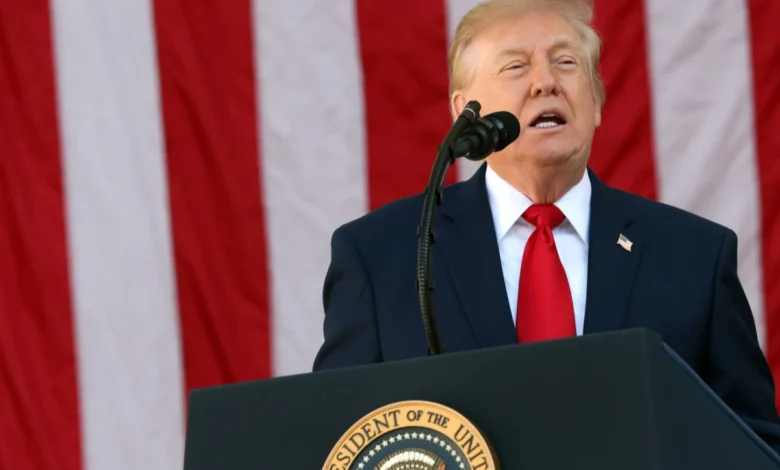
A sprawling, unprecedented disruption of the American transportation infrastructure unfolded on Friday as a nationwide ground stop brought commercial aviation to a standstill, leaving tens of thousands of passengers stranded and air traffic control centers in a state of emergency. While the aviation sector grappled with the fallout of what officials identified as a critical telecommunications failure, the political landscape in Washington D.C. remained notably bifurcated. President Donald Trump, rather than addressing the mounting national transit crisis, pivoted his public communication strategy toward an ambitious legislative agenda aimed at revitalizing the American entertainment industry.
The aviation crisis began in the early hours of Friday morning, rapidly escalating as reports of systemic computer outages emerged from regional air traffic control hubs. Within hours, the Federal Aviation Administration (FAA) was forced to issue a sweeping ground stop order, grounding or delaying more than 10,000 flights. The paralysis affected every major carrier, creating a cascading effect that snarled transit across all 50 states and international connecting hubs.
A Chronology of the Aviation Disruption
The timeline of the event reflects the speed at which the technical failure overwhelmed domestic systems. At approximately 6:00 a.m. EST, flight crews and ground controllers began reporting intermittent data transmission failures. By 7:30 a.m., the FAA confirmed that a "significant telecommunications outage" was preventing the synchronization of flight plans and air traffic management data.
By 9:00 a.m., the total number of affected flights had surpassed 5,000. Airports across the country became epicenters of chaos, with terminals filling to capacity as travelers were informed that the ground stop was indefinite. By midday, the figure of impacted flights doubled, marking this as one of the most significant aviation disruptions in the post-9/11 era.
While the FAA and the Department of Homeland Security scrambled to identify the root cause of the failure, the administration’s public-facing response was largely deferred to the Secretary of Homeland Security, Markwayne Mullin. Addressing the press from the White House, Mullin sought to dampen speculation of a security breach or terrorist involvement. “This isn’t another 9/11,” Mullin stated, emphasizing that the incident was a technical, non-security-related telecommunication failure. Despite these assurances, the logistical nightmare for the traveling public continued to worsen as carriers struggled to recover from the lack of system availability.
The Legislative Pivot: The Motion Picture, Television, and Entertainment Revitalization Act
While the Secretary of Homeland Security addressed the logistical catastrophe, the President utilized his presence on the Truth Social platform to shift the national narrative toward a long-standing domestic economic objective: the passage of the Motion Picture, Television, and Entertainment Revitalization Act.
The President’s post appeared to be a direct rebuttal to reports surfacing in the political press, including a recent Politico analysis that suggested the push for federal film and television tax credits had hit a legislative wall following the recent midterm elections. Contrary to that assessment, President Trump signaled that a bipartisan coalition of lawmakers—spanning the ideological spectrum from Senator Adam Schiff to Senator Tim Scott—was actively coordinating to push the bill forward.
The President’s proposal centers on the argument that the American entertainment industry has been hollowed out by aggressive tax incentives offered by foreign governments, specifically citing Canada, the United Kingdom, and Australia. The proposed legislation seeks to incentivize production companies to return their operations to the United States. Trump characterized this as an economic imperative, asserting that the cost of such tax incentives would be offset tenfold by the tax revenue generated from domestic production activities and the employment of hundreds of thousands of blue-collar workers.
Economic Implications and Industry Analysis
The debate over federal tax credits for the entertainment industry is not new, but it has intensified as states and nations compete for the lucrative business of film and television production. Proponents of the legislation argue that the "emptying out" of Hollywood is a symptom of a globalized economy where production hubs migrate toward the most favorable tax environments. By offering federal-level incentives, the government aims to create a unified competitive advantage that rivals the incentives currently provided by foreign jurisdictions.
Economic analysts point to the potential "multiplier effect" of such legislation. The entertainment industry is a significant driver of secondary economic activity, including construction, logistics, catering, and equipment manufacturing. However, critics of the plan argue that federal subsidies for an industry that already generates high profitability could divert funds from more critical infrastructure or social services. There is also the question of whether a federal credit would simply lead to a "race to the bottom," where states and the federal government eventually engage in a zero-sum game of tax competition.
The inclusion of a bipartisan list of sponsors—ranging from Senators John Cornyn and Steve Daines to Senators Raphael Warnock, Alex Padilla, and Bernie Moreno—underscores the unique appeal of this legislation. Entertainment production is a primary economic driver in states as diverse as California, Georgia, New Mexico, and New York. The bipartisan consensus on this bill is rooted in the recognition that the "Made in America" label is as applicable to film and television as it is to manufacturing.
The Contrast in Priorities
The juxtaposition of the President’s focus on the entertainment bill and the real-time, ground-level crisis at the nation’s airports created a distinct political tension. Critics and political observers noted the disconnect between the administration’s silence on the flight disruptions and its vocal enthusiasm for the tax credit legislation.
In terms of public policy, the aviation crisis highlights the fragility of the nation’s aging infrastructure. The reliance on centralized telecommunications systems for air traffic control has been a point of concern for aviation safety experts for years. The Friday outage serves as a stark reminder that even minor technical failures can have outsized economic and social consequences. The economic cost of 10,000 grounded flights is estimated to reach hundreds of millions of dollars in lost productivity, passenger expenses, and airline revenue.
Conversely, the President’s push for the entertainment revitalization bill represents a long-term strategic play. By attempting to consolidate bipartisan support, the administration is betting that the economic promise of bringing film production back to American soil will provide a tangible win that resonates with both rural and urban constituencies.
Looking Ahead
As of Friday evening, the aviation industry remained in a state of recovery, with the FAA beginning to lift the ground stop in phases. However, the ripple effects are expected to last throughout the weekend, as airlines struggle to reposition crews and aircraft. The Department of Transportation has promised a full investigation into the nature of the telecommunications outage to prevent future occurrences.
In Washington, the path forward for the Motion Picture, Television, and Entertainment Revitalization Act appears to be accelerating, despite the chaotic backdrop. With meetings reportedly being set up among party leaders, the administration is signaling that this piece of legislation is a priority. Whether the momentum behind this bill can survive the scrutiny of the broader legislative agenda—and the immediate pressure to address the vulnerabilities in national infrastructure—remains to be seen.
The event underscores a broader trend in modern governance: the ability of an administration to maintain focus on long-term ideological goals even while being confronted with urgent, operational crises. For the traveling public, the immediate concern is the restoration of service. For the legislative and business communities, the focus is on whether the proposed revitalization of the entertainment industry will indeed provide the economic boom promised by the President, or whether it will become another battleground in the ongoing debate over the role of federal tax policy in shaping the American economy.
The coming days will likely provide clarity on both fronts. As flights resume, the aviation sector will need to address the structural deficiencies that allowed a single point of failure to paralyze the nation. Simultaneously, the success or failure of the entertainment tax credit legislation will serve as a bellwether for the administration’s ability to move complex, bipartisan economic policy through a divided Congress. For now, the nation remains in a state of transition—both in the skies and in the halls of power.