Once Upon a Time in Harlem documentary wins the eighth annual Library of Congress Lavine Ken Burns Prize for Film

The prestigious Library of Congress Lavine/Ken Burns Prize for Film has officially crowned its eighth annual winner, bestowing the $200,000 top honor upon the documentary Once Upon a Time in Harlem. Directed by David Greaves and utilizing a treasure trove of 16mm footage captured by his late father, the acclaimed filmmaker William Greaves, the film stands as a monumental achievement in non-fiction storytelling. The award, presented in partnership with The Better Angels Society, the Crimson Lion/Lavine Family Foundation, and the Library of Congress, solidifies the documentary’s status as the most significant financial grant in the nonfiction film landscape.
A Cinematic Time Capsule of the Harlem Renaissance
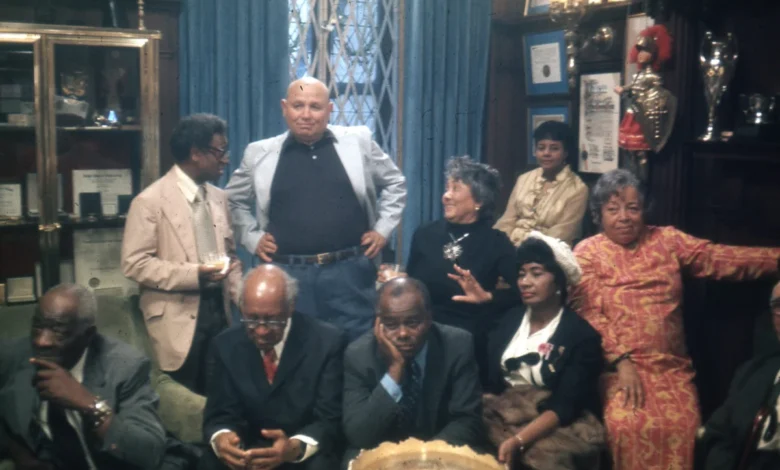
At the heart of the documentary is a singular, extraordinary historical event: a 1972 reunion held at the Harlem townhouse of jazz legend Duke Ellington. William Greaves, a pioneer in his own right, used his camera to document a gathering of the surviving titans of the Harlem Renaissance—an intellectual and artistic explosion that redefined African American culture in the early 20th century.
The footage, which sat in the archives for decades, features legendary figures such as artist Aaron Douglas, painter Romare Bearden, writer Arna Bontemps, artist Richard Bruce Nugent, photographer James Van Der Zee, and Ida Mae Cullen, the widow of poet Countee Cullen. Many of these luminaries had not crossed paths in over 50 years. The documentary captures their candid reminiscences, their debates over the preservation of Black culture, and their reflections on the shifting landscape of American history. Through the meticulous restoration work of David Greaves, this raw, 16mm footage has been transformed into a living archive, offering modern audiences a rare, unvarnished window into the minds of the architects of the Black American experience.
The Significance of the Lavine/Ken Burns Prize
The Lavine/Ken Burns Prize is not merely a financial award; it is an endorsement of excellence in historical documentation. Since its inception in 2019, the prize has distributed approximately $2.6 million to independent filmmakers who focus on American history. The selection process is rigorous, involving a national jury of distinguished filmmakers, historians, and archivists who evaluate over a thousand applications annually.

This year’s jury—comprising experts such as Yoruba Richen, Betsy West, Peter Yost, and representatives from the Library of Congress and Harvard’s Black Film Project—described the film as a "stunning, seminal work." By honoring Once Upon a Time in Harlem, the jury has underscored the vital importance of preserving the lived experiences of those who shaped American intellectual history. The award, selected by Acting Librarian of Congress Robert R. Newlen in consultation with Ken Burns, ensures that the film will reach a broader audience, serving as an educational cornerstone for future generations.
A Legacy Renewed: From Father to Son
The production of the film is a story of intergenerational collaboration. Produced by Liani Greaves, the granddaughter of William Greaves, the project serves as a bridge between the mid-20th-century origins of the footage and the contemporary digital era. David Greaves, speaking from the Camden International Film Festival in Maine, expressed his gratitude for the recognition, noting that his father and stepmother, Louise Greaves, would have been deeply touched by the honor.
For the filmmakers, the process was one of stewardship. Restoring the 16mm footage required not only technical precision but also a deep understanding of the context in which the footage was shot. By organizing the archival material into a cohesive narrative, the team has successfully preserved a moment that could have easily been lost to the entropy of time.
The Runner-Up and the Legacy of Romare Bearden
In a compelling instance of thematic alignment, the runner-up for the prize also centered on the Harlem Renaissance. Deborah Riley Draper’s film, Romare Bearden: A Life in Collage, was awarded a $50,000 prize. The documentary provides an intimate look at the life of the influential artist, who also appears in the footage for the winning film.
The dual recognition of these two films highlights a renewed national interest in the figures of the Harlem Renaissance. While Once Upon a Time in Harlem provides a group portrait of the movement’s survivors, Draper’s film offers a deep dive into the philosophy, artistic practice, and personal struggles of one of the movement’s most vital modernist voices. Together, the films provide a comprehensive look at an era that continues to inform contemporary discourse on art, race, and identity in America.

Broader Implications and Historical Impact
The recognition of these films comes at a time when the preservation of archival footage is increasingly recognized as a matter of national importance. The Library of Congress, through its National Audio-Visual Conservation Center, continues to emphasize that history is not just found in books, but in the visual records of the people who lived it.
The success of these documentaries suggests a shifting trend in public consumption of history. Modern audiences are showing a marked preference for "first-person" historical accounts—where the subjects, rather than modern narrators, debate their own legacies. This format, often referred to as "living history," allows viewers to witness the evolution of ideas as they were discussed in real-time. By providing a platform for these voices, the Lavine/Ken Burns Prize is effectively expanding the public record.
Chronology of Recognition and Future Outlook
The path to the prize is long and competitive. Following the announcement, the winners will be celebrated at an official ceremony in New York City on October 22, hosted by Ken Burns. This event will serve as a launchpad for the wider distribution of these works.
The impact of the prize is cumulative. Previous winners, such as the films on the bankruptcy of Detroit (Gradually, Then Suddenly), the life of Flannery O’Connor (Flannery), and the story of the 1985 Philly MOVE bombing (Philly on Fire), have all gone on to become essential viewing in academic and cultural circles. Once Upon a Time in Harlem now joins this elite pantheon of works that define the American narrative.
Honorable Mentions and the Future of Documentary Filmmaking
In addition to the winner and runner-up, the prize acknowledged four finalists, each receiving a $25,000 grant. These films demonstrate the diversity of the current American documentary scene:

- The Animated Mind of Oliver Sacks (dir. Dempsey Rice): A creative exploration of the neurologist’s inner life, utilizing animation to visualize his personal conflicts and clinical breakthroughs.
- Barrio Television (dir. Christina DiPasquale): A study of the 1970s Puerto Rican activist movement in New York, focusing on the creation of the first bilingual Latino series on U.S. public television.
- The Day Freedom Died (dir. Joseph Dorman and Kelly Williams): An examination of the 1873 Colfax Massacre, providing a sobering look at the violence that crippled the Reconstruction era.
- Zenón and the Rebel Boats (dir. Juan C. Dávila Santiago): A narrative on the resistance movement in Vieques, Puerto Rico, focusing on the life of Carlos "Taso" Zenón and his struggle against U.S. Navy occupation.
These projects underscore the commitment of the Lavine/Ken Burns Prize to support stories that might otherwise be overlooked by mainstream commercial outlets. As the documentary field faces ongoing challenges regarding funding and distribution, the $2.6 million total investment by the prize committee remains a critical lifeline for filmmakers dedicated to the rigorous, time-consuming work of historical inquiry.
Ultimately, the crowning of Once Upon a Time in Harlem is a testament to the enduring power of the lens. By connecting the 1972 reunion of artistic giants to the audiences of 2026, the filmmakers have ensured that the Harlem Renaissance remains not just a chapter in a textbook, but a vibrant, living conversation. As Ken Burns noted, the film is "a festive time travel through the memory of these extraordinary individuals," and its recognition today ensures that their ideas—and the debates they once had in a Harlem townhouse—will continue to influence American culture for decades to come.