The digital landscape has undergone a seismic shift, rendering traditional methods of traffic control obsolete. For over two decades, the standard protocol for website owners involved a binary choice: either grant access to a search engine crawler via the robots.txt file or block it entirely. This "all or nothing" approach, while never flawless, served as the bedrock of search engine optimization (SEO) strategy. However, the rise of generative AI, autonomous agents, and sophisticated large language model (LLM) training protocols has introduced a layer of complexity that renders simple block lists inadequate and potentially damaging to a brand’s visibility.
As of late 2026, the internet is no longer dominated by index-based search engines. It is now accessed by a heterogeneous ecosystem of entities, including traditional crawlers, AI training bots, retrieval-augmented generation (RAG) scrapers, and personalized AI agents that mimic human browsing behavior. The current crisis facing SEO teams is that while they may focus on robots.txt directives, the actual enforcement of traffic control is increasingly happening at the infrastructure level—specifically via Content Delivery Networks (CDNs) and Web Application Firewalls (WAFs)—often without the input or knowledge of the marketing department.
The Evolution of Web Crawling: A Chronology of Access
To understand the current urgency, one must look at the timeline of web interaction.

- The Early Web (1995–2010): The era of the "polite crawler." Search engines like AltaVista, Yahoo, and later Google adhered strictly to the robots.txt protocol. If a site owner didn’t want to be crawled, the bot respected the instruction.
- The Rise of Big Data (2011–2020): Crawling became more aggressive as social media platforms and aggregators sought to index real-time data. SEOs began using server-side logs to monitor high-frequency scrapers that ignored robots.txt, leading to the early implementation of rudimentary IP-based block lists.
- The Generative AI Explosion (2022–2024): The emergence of ChatGPT and Claude changed the game. Suddenly, massive volumes of content were being ingested for model training. This was the first time that "being indexed" did not necessarily correlate with "getting traffic."
- The Agentic Era (2025–2026): We have entered a phase where autonomous agents perform tasks on behalf of users—booking flights, comparing prices, and synthesizing research. These agents often bypass standard search result pages, interacting directly with site content in ways that traditional analytics software may fail to track.
The Infrastructure Gap: Why Robots.txt is No Longer Enough
The fundamental flaw in modern SEO strategy is the reliance on the robots.txt file as a security or access-control mechanism. It is important to note that robots.txt is a voluntary standard—a request, not a command. While reputable search engines respect these directives, bad actors and certain AI scrapers treat them as suggestions at best.
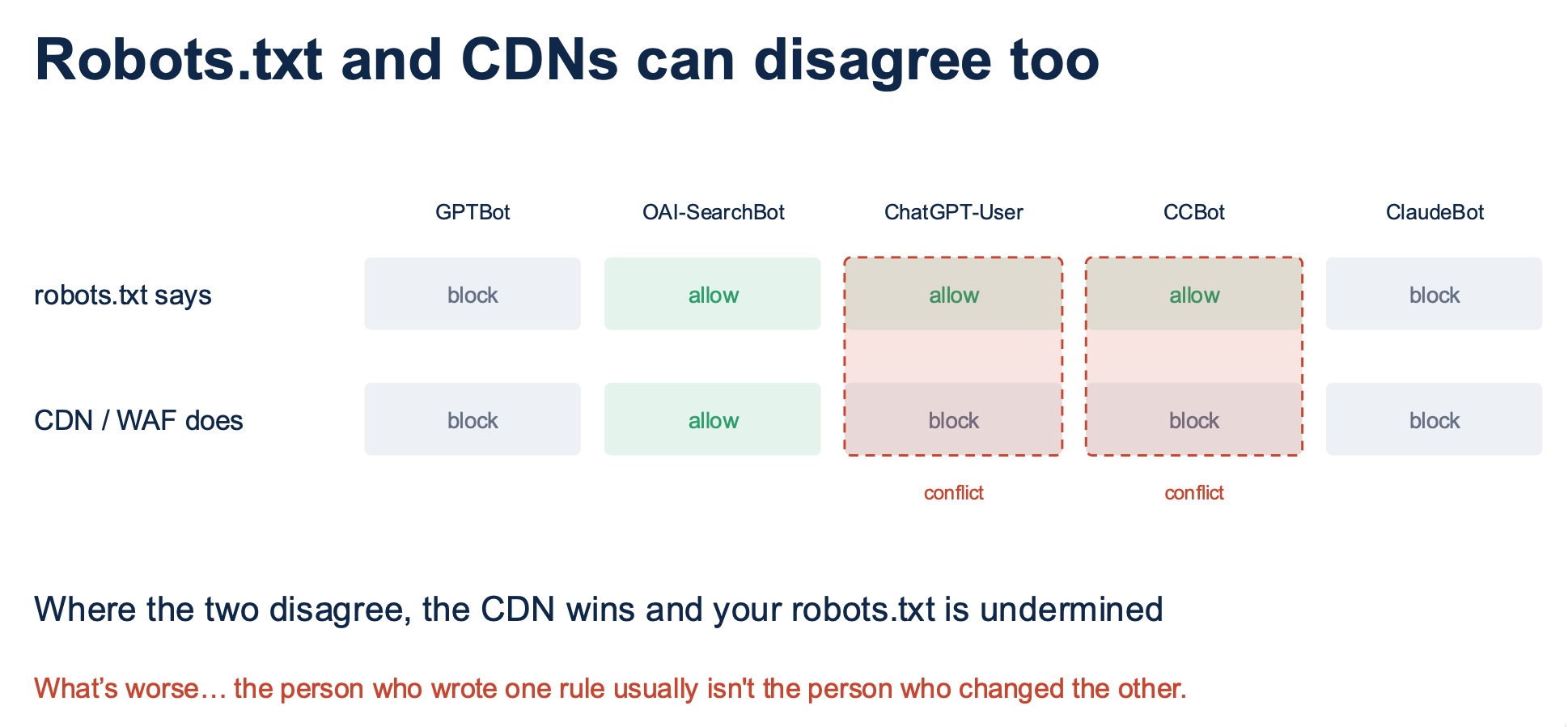
Furthermore, the enforcement of site access has shifted from the application layer to the network layer. Modern enterprise websites rely heavily on CDNs like Cloudflare, Akamai, or Fastly. These services offer automated "bot management" features designed to protect sites from DDoS attacks and credential stuffing. When an IT or security team configures these services to block "suspicious traffic," they may inadvertently be blocking the very AI crawlers that power modern search answer engines.
If a site’s security policy blocks a bot that is essential for a search engine’s RAG pipeline, the site owner may find their content removed from AI-generated summaries. Because these security policies are managed by engineering or DevOps teams, the SEO team often remains unaware that their traffic decline is a result of a misconfigured security rule rather than a loss of topical authority or technical health.
Supporting Data and Economic Implications
The economic stakes of these decisions are high. Recent data suggests that traffic from traditional search engines is declining as users shift toward conversational interfaces. If a business adopts an aggressive "block all AI" stance, it risks losing its place in the new digital storefront—the LLM-generated answer.
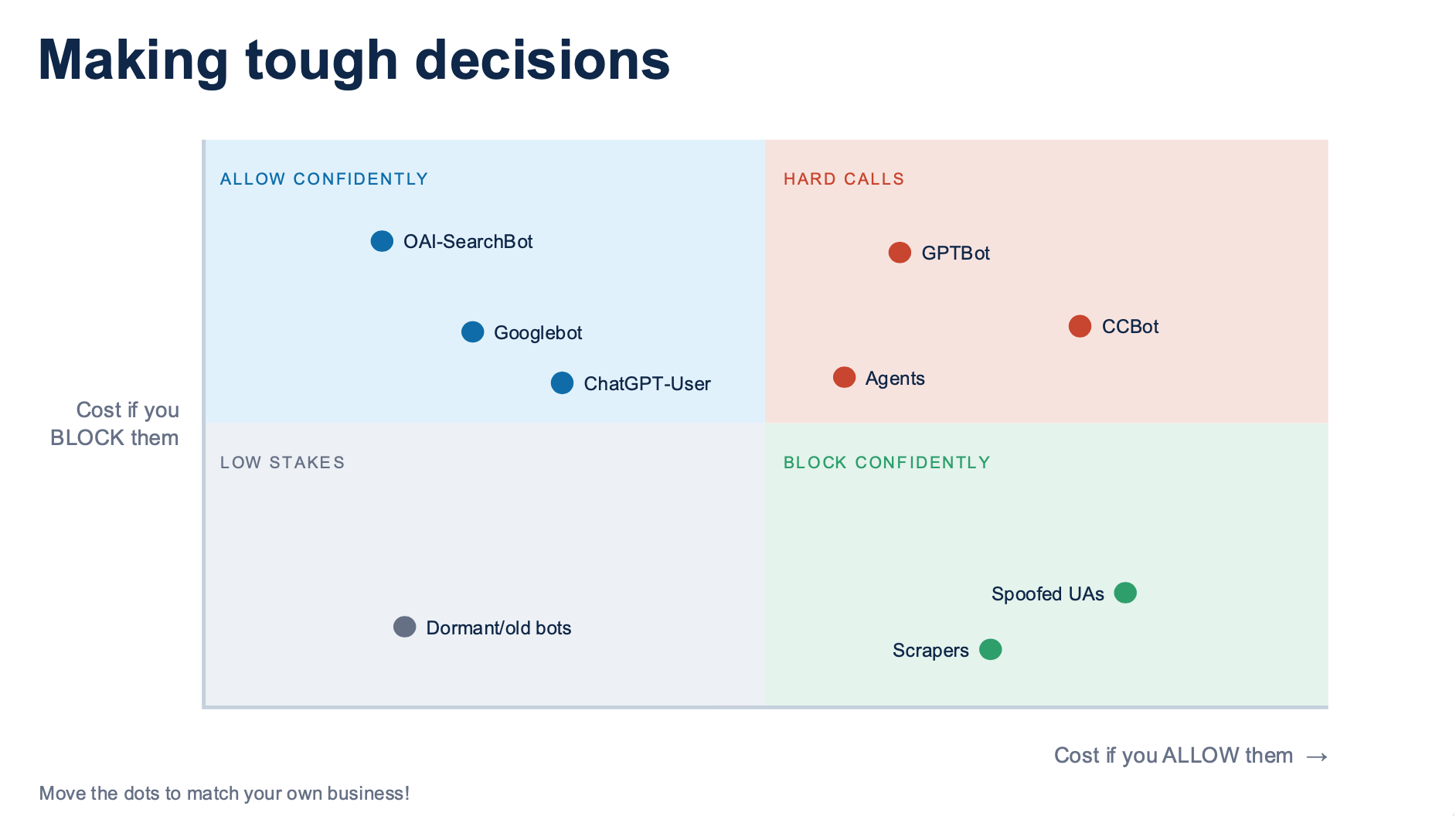
Conversely, allowing unrestricted access to training bots carries the risk of "data commodification," where a brand’s intellectual property is used to build a competing model without providing the brand with any direct traffic or commercial value. A 2026 industry report indicates that 42% of e-commerce brands have experienced significant fluctuations in referral traffic due to unmanaged bot activity, with many unable to distinguish between a "valuable" AI assistant bot and a "predatory" scrapers bot.
The Shift Toward Deliberate Bot Policy
Industry experts, including those presenting at the 2026 GEO (Generative Engine Optimization) Elite conference, argue that the industry must move toward a policy-based management framework. This requires a shift in how cross-functional teams operate:
- Unified Oversight: SEOs must be included in the conversation with security and engineering teams. Any bot-mitigation policy must be audited to ensure that "Search" and "AI Agent" bots are whitelisted or handled with specific, nuanced rules.
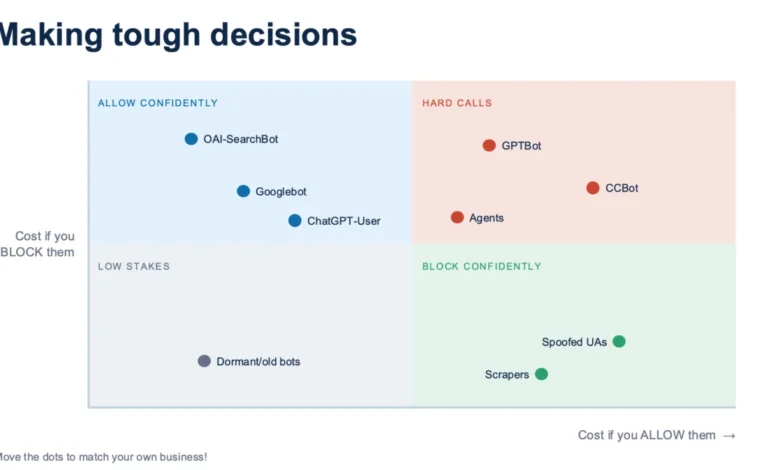
- Granular Identification: Rather than using broad IP bans, organizations should employ user-agent identification and behavioral analysis to determine the intent of the bot. Is the entity indexing content for a search result, or is it scraping price data for a competitor’s comparison tool?
- Value Measurement: Not all bots are created equal. Organizations need to track the "value" of AI traffic. If an AI agent consistently drives high-intent users to a product page, it should be treated as a priority partner rather than a nuisance to be blocked.
- Legal and Commercial Coordination: The decision to block or allow should involve legal counsel, particularly regarding the use of data for training models. This is no longer just a technical issue; it is a business strategy decision.
Broader Implications for the SEO Industry
The role of the SEO professional is evolving into that of a "Digital Ecosystem Architect." In the past, success was measured by clicks and rankings. In the coming years, success will be measured by how well a brand manages its presence within the AI-driven information retrieval ecosystem.
If companies continue to manage bots through legacy block lists, they risk "going dark" in the eyes of the AI agents that are increasingly becoming the primary interface for the internet. The goal is no longer just to prevent unauthorized access; it is to ensure that the right entities have access to the right content, at the right time, in a way that respects the brand’s commercial interests.
As autonomous agents become more prevalent, the ability to distinguish between a legitimate assistant and a malicious bot will define the success of digital marketing strategies. The era of "block or allow" is over; the era of "strategic integration" has begun. Firms that fail to align their technical infrastructure with their search visibility goals will likely find themselves sidelined as the internet evolves into a more automated, agent-driven environment.