The rapid ascent of generative artificial intelligence has fundamentally altered the digital landscape, shifting the paradigm of search from a link-based navigation model to an answer-centric retrieval system. As users increasingly rely on platforms like OpenAI’s ChatGPT, Perplexity, and Google’s Gemini to synthesize complex information, businesses are facing a critical visibility crisis. When a search engine provides a direct, AI-generated answer, the traditional practice of clicking through to a website often becomes unnecessary, leading to the phenomenon of "zero-click" searches. To remain relevant in this evolving ecosystem, organizations are turning to Answer Engine Optimization (AEO) checkers—specialized diagnostic tools designed to measure and improve brand presence within AI-generated responses.
The Shift from Links to Answers
Historically, Search Engine Optimization (SEO) focused on securing top-tier positions on search engine results pages (SERPs) to drive organic traffic. However, the introduction of Google’s AI Overviews in May 2024 marked a formal transition toward a summary-first user experience. Rather than serving as a mere directory of links, search engines are now functioning as comprehensive answer engines. These systems ingest vast datasets, synthesize information, and present a concise, authoritative response to the user’s query.
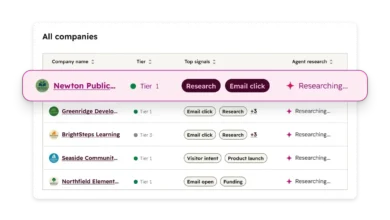
![AEO checker tools that measure answer engine visibility [2026]](https://53.fs1.hubspotusercontent-na1.net/hubfs/53/aeo-checker-1-20260903-3858273.webp)
This transition poses a significant challenge for marketers: if a brand is not cited or mentioned within the AI’s synthesized response, it risks being omitted from the consumer’s decision-making process entirely. Unlike traditional SERP rankings, which are relatively stable, AI-generated answers are dynamic and highly contextual. A brand might appear in one session and vanish in the next, making manual monitoring increasingly untenable for large-scale operations.
Understanding the AEO Checker Ecosystem
An AEO checker functions as a diagnostic bridge between a company’s web presence and the training data or real-time web-search capabilities of AI models. These tools typically perform four core functions: monitoring citation frequency, identifying brand mentions, analyzing content gaps against competitors, and evaluating technical readiness for AI crawlers.
The chronology of these tools’ development reflects the industry’s reactive posture to the AI boom. Between 2023 and early 2026, the market saw a proliferation of specialized SaaS solutions. While early adopters relied on manual spot-checks—a process involving incognito sessions and spreadsheet-based logging—the sheer volume of queries now requires automated solutions. Major players have responded by integrating AEO features into existing SEO suites, while niche startups have emerged to tackle the specific nuances of Perplexity’s citation panel or ChatGPT’s web-search logic.
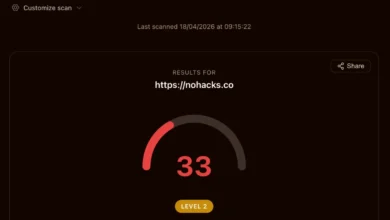
![AEO checker tools that measure answer engine visibility [2026]](https://no-cache.hubspot.com/cta/default/53/9dd5e54b-fbef-4dd0-bc44-1689feb1ea18.png)
Methodological Approaches to Manual and Automated Checks
For organizations beginning their AEO journey, manual verification serves as an essential baseline. This process involves defining a list of high-intent "priority queries"—specifically branded product terms and informational questions that represent the "bottom of the funnel" for the business.
- Defining the Scope: Identify the specific questions customers ask that lead to the purchase of a product or service.
- Execution and Sampling: Perform queries across multiple sessions, ensuring the removal of personalized search history. Because AI Overviews only appear when a system determines a summary adds value, developers must sample at scale to gain statistical significance.
- Logistics of Attribution: Unlike traditional SEO, where Search Console provides clear data, AI visibility is often fragmented. While Google introduced a generative AI performance report in June 2026, it offers limited visibility into the specific content cited. Therefore, manual logs or automated trackers remain the primary sources of truth for understanding why a competitor was cited instead of one’s own domain.
Market Landscape and Tool Selection
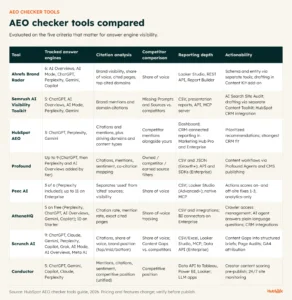
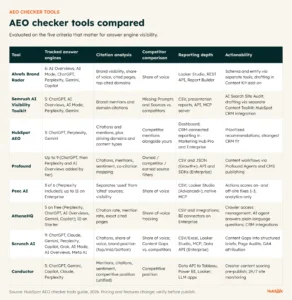
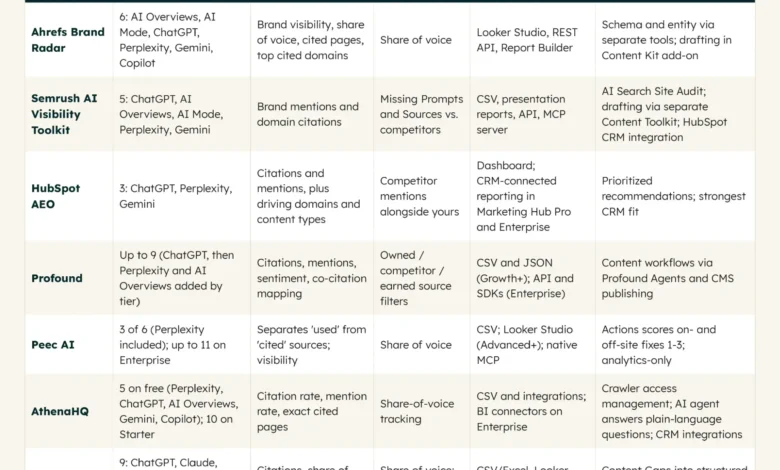
The current market for AEO tools is divided between comprehensive suites and platform-specific monitors. Ahrefs, for instance, has leveraged its massive index to launch "Brand Radar," which tracks AI Overview visibility based on real-world search intent. Semrush has similarly integrated an AI Visibility Toolkit that highlights which existing ranking keywords are prone to triggering AI-generated summaries.
On the other hand, tools like Peec AI and AthenaHQ focus heavily on Perplexity, offering deep-dive analytics into the citation patterns of that specific engine. For organizations seeking an all-in-one solution, platforms like HubSpot have pioneered the integration of AEO metrics directly into the CRM. This allows marketers to view the entire funnel—from the initial AI-generated citation to the eventual conversion of a lead—connecting the "invisible" influence of AI search to hard revenue metrics.
![AEO checker tools that measure answer engine visibility [2026]](https://53.fs1.hubspotusercontent-na1.net/hubfs/53/aeo-checker-2-20260903-852936.webp)
Technical Readiness: The Foundation of Visibility
Regardless of the tool used, the underlying requirement for AEO success remains rooted in traditional SEO fundamentals. AI models prioritize content that is highly structured, factually dense, and backed by verifiable primary sources. Consequently, technical readiness has become a paramount concern. Tools such as Scrunch AI and Conductor emphasize the importance of schema markup and site architecture, ensuring that AI crawlers can effectively render and parse a website’s content.
If an AI engine cannot "read" a page because of inefficient coding or a lack of semantic context, the site will fail to appear in citations, regardless of the brand’s authority. This technical optimization is no longer just about helping Google’s index; it is about providing the data that LLMs (Large Language Models) require to confidently attribute information to a specific brand.
Metrics that Define Success
Measuring the effectiveness of AEO requires a departure from traditional vanity metrics. Instead of just tracking impressions or clicks, companies should prioritize:
![AEO checker tools that measure answer engine visibility [2026]](https://53.fs1.hubspotusercontent-na1.net/hubfs/53/aeo-checker-3-20260903-8904553.webp)
- Citation Coverage: The percentage of target queries where the brand is explicitly cited.
- Competitor Share of Voice: A measurement of how often competitors are cited in place of the brand for shared keywords.
- Sentiment Alignment: An analysis of how the AI characterizes the brand when it is mentioned.
- AI-Referred Session Growth: The volume of traffic arriving from AI-search platforms, often tracked through sophisticated UTM tagging or CRM attribution.
Broader Implications and Future Outlook
The rise of AEO is not a temporary trend but a fundamental shift in the digital economy. As companies like OpenAI, Google, and Perplexity refine their models, the "black box" nature of AI answers will likely continue to evolve. Some industry analysts suggest that the next frontier of AEO will involve proactive content generation specifically tailored to meet the training requirements of future models.
However, the ethical and legal implications of this shift remain a subject of intense debate. Content creators and publishers have expressed concerns over "content scraping," where AI engines consume high-quality journalism or product research without providing a reciprocal link or traffic. While tools like AEO checkers help brands navigate this, the industry as a whole is moving toward a more complex negotiation between content producers and AI platform operators.
For the enterprise, the message is clear: the era of relying solely on blue links is over. Organizations must now treat their content as a source of truth for the machines that influence human decision-making. By adopting a rigorous, data-driven approach to AEO, businesses can move from being passive participants in the search landscape to active, cited entities within the future of the internet. Whether through automated software or structured manual testing, the ability to audit and optimize for the "answer engine" will soon be as essential to marketing success as the website itself.
Related posts: