The Remarkable Reinstatement of Jensen Huang: A Silicon Valley Power Play Reshaping the Tech Landscape

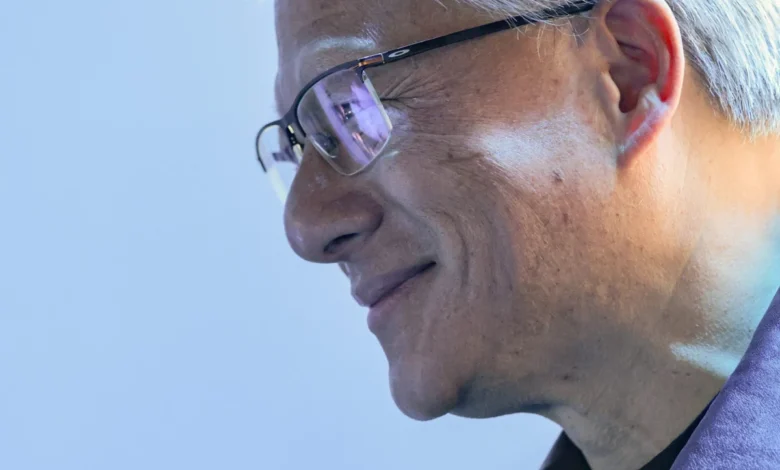
In a sequence of events that has left the global financial markets reeling and the halls of Washington D.C. in an uproar, Nvidia has officially reinstated Jensen Huang as Chief Executive Officer, ending an eleven-day corporate vacuum that threatened to destabilize the bedrock of the artificial intelligence revolution. The decision, finalized by a unanimous vote of the board of directors this past Monday, marks the conclusion of a tumultuous period defined by allegations of espionage, personal misconduct, and an unprecedented mobilization of political and industrial influence.
The chaos began in late October, when a report from the New York Times revealed that U.S. intelligence agencies had been tracking a sensitive relationship between Jensen Huang and Alice Huang, a senior executive at the Singapore-based firm Megaspeed. According to investigators, Alice Huang was allegedly serving as an intelligence conduit for the Chinese government, tasked with extracting proprietary information regarding Nvidia’s advanced chip architecture and lobbying for the circumvention of U.S. export controls. While Jensen Huang initially characterized these interactions as standard business relations, the situation spiraled when subsequent reports confirmed an intimate relationship between the CEO and Kimberly Powell, Nvidia’s vice president of health care, in direct violation of the company’s internal code of conduct.
A Chronology of the Crisis
The unfolding of the scandal followed a rapid, destabilizing trajectory that caught shareholders and regulators off guard.
- October 29: Intelligence officials publicize concerns regarding the relationship between Jensen Huang and Alice Huang, citing links to Chinese state interests.
- November 8: Amid intense scrutiny, Huang formally admits to personal misconduct and pledges full cooperation with an internal board investigation.
- November 11: The Nvidia board of directors, following an emergency session, announces Huang’s resignation. CFO Colette Kress is named interim CEO, while tech entrepreneur Harvey Jones assumes the role of board chair.
- November 12-16: A massive, orchestrated campaign for Huang’s return begins. An open letter demanding reinstatement garners over 206,000 signatures from industry leaders, including Elon Musk and various Silicon Valley CEOs.
- November 17: Despite "blockbuster" quarterly earnings of $115.8 billion—a 103% year-over-year increase—board chair Harvey Jones publicly declares that the company has no intention of rehiring Huang, citing the need for a fresh start.
- November 20: California Attorney General Rob Bonta issues subpoenas to Nvidia, widening the scope of the investigation into whether the company misled investors or compromised national security.
- November 24: President Donald Trump intervenes directly, reportedly dialing into a board meeting to advocate for Huang’s return.
- November 25: Nvidia officially confirms the reinstatement of Jensen Huang, citing the conclusion of a national security review that cleared the executive of wrongdoing.
The Role of Political and Industrial Pressure
The return of Huang was far from a standard corporate governance decision; it was the result of a concerted effort by the most powerful figures in the American technology sector. Elon Musk, who has been vocal in his support for Huang, compared the CEO’s dismissal to the Chicago Bulls parting ways with Michael Jordan during his prime. Musk’s advocacy, delivered both through public forums like the DealBook summit and his personal social media platform, underscored a growing sentiment in Silicon Valley: that the strategic necessity of Huang’s leadership outweighed the moral or regulatory concerns of his personal conduct.
The intervention of President Trump added a layer of geopolitical complexity to the internal corporate affair. White House communications director Steven Cheung confirmed that the President was "totally involved" in the negotiations, framing the decision to bring back Huang as a matter of national interest. This alignment between private sector giants and the executive branch highlights a shift in how modern tech conglomerates interact with federal oversight. By framing Huang’s leadership as essential for maintaining U.S. technological dominance over China, supporters successfully reframed a corporate governance crisis as a matter of national security.
Market Volatility and Investor Sentiment
The market reaction to the saga has been seismic. In the immediate aftermath of Huang’s resignation on November 11, Nvidia shares plummeted, wiping out approximately $600 billion in market capitalization within hours. The broader indices suffered significantly as well; the S&P 500 experienced its worst weekly performance since April 2025, dropping 8.6%, while the Nasdaq retreated 10% as investors scrambled to price in the instability of the primary engine of the AI boom.
However, the announcement of Huang’s reinstatement triggered a dramatic market correction. Upon the news on Monday, the Nasdaq surged 6.5%, and Nvidia shares climbed over 30% to close at $165.05. This "V-shaped" recovery suggests that the market continues to view Nvidia as synonymous with the broader AI trade, effectively insulating the company from traditional corporate governance risks that might sink a less strategically vital firm.
Internal and Regulatory Implications
Despite his return, Huang faces a significantly altered landscape. The SEC continues its investigation into whether the company’s disclosures misled investors regarding the risks associated with its China operations and the internal culture of the firm. Furthermore, the California Attorney General’s subpoena indicates that the legal ramifications of the scandal are far from resolved.
Internally, the company is grappling with a shift in power. The creation of a dedicated board committee on national security and export controls, chaired by Suzanne Nora Johnson, signals that the board intends to exert tighter oversight on future operations. This move is intended to placate regulators and ensure that the "second chance" offered to Huang comes with stringent safeguards.
The Broader Impact on Silicon Valley
The resolution of the Nvidia crisis has set a precedent that will likely be debated for years to come. By prioritizing the retention of a "singular person"—as Microsoft CEO Satya Nadella characterized Huang—over the strict enforcement of corporate conduct policies, the board has signaled that, at the highest levels of the tech industry, the concentration of knowledge and relationship capital can serve as a shield against standard executive accountability.
For the employees at Nvidia’s Santa Clara headquarters, the return of their founder was met with significant, albeit complicated, relief. Huang’s address to the staff, in which he pledged to be a "better CEO the second time around," acknowledged the gravity of the situation. However, the external pressures remain. With the Commerce Department now placing Megaspeed on a restricted blacklist, the company faces a new, more rigid regulatory environment that will test whether Huang can maintain the firm’s rapid growth while operating under the intense scrutiny of the federal government.
As the industry moves forward, the "Huang precedent" will likely influence how boards handle future scandals involving high-value leaders. The fusion of personal ambition, geopolitical strategy, and shareholder power has demonstrated that in the era of AI-driven supremacy, the lines between corporate governance and national statecraft have become irrevocably blurred. The question remains whether this culture of exceptionalism is sustainable, or if the events of the past three weeks are merely a prelude to further, more complex challenges for the world’s most influential chipmaker.