The Great Stagnation of the East: How China’s Market Crisis Threatens President Xi Jinping’s Artificial Intelligence Ambitions

As global investors grapple with the volatility of the U.S. tech sector and the cooling of the artificial intelligence boom, a far more profound financial contraction is unfolding within the borders of the People’s Republic of China. According to recent analysis from Yardeni Research, the speculative bubble in Chinese equities has not merely burst; it has triggered a systemic crisis that threatens to derail President Xi Jinping’s fundamental economic transition. While the Nasdaq has retreated from its record highs—suffering its most significant weekly losses since the onset of the COVID-19 pandemic—the damage in China is structural. The tech-heavy STAR 50 index has plummeted 44% from its summer peak, reflecting a deeper malaise that calls into question Beijing’s ability to pivot from a property-dependent economy to one fueled by high-tech innovation.
A Structural Economic Shift in Jeopardy
For decades, the Chinese economic miracle was built on the foundation of real estate. With approximately 70% of household wealth tied to property, the sector served as the primary store of value for the average Chinese citizen. However, the subsequent housing market collapse has left the economy in a state of precarious stagnation. Data from October highlights the severity of this contraction, with property investment cratering by nearly 22%. This retreat has stifled consumer demand, dragging the nation into bouts of intermittent deflation and forcing Beijing to reconsider its reliance on traditional infrastructure and housing-led growth.
President Xi’s proposed solution was ambitious: convert China’s vast pool of private savings into a reliable engine for the domestic stock market, specifically to finance the nation’s aggressive AI buildout. The goal was to pivot away from the state-owned enterprise (SOE) model that has dominated the Chinese landscape since the reforms of the early 2000s, toward a more dynamic, market-driven environment. Yet, the current market reality suggests this transition is failing. Without a buoyant, trustworthy stock market, the funding required for AI research and development risks being absorbed by the very state entities that Beijing has pledged to reform and shrink since 2013.
Chronology of a Market Disconnect
The disconnect between China’s economic output and its equity performance is historic. Despite the country’s GDP expanding nearly sixfold since 2007, the Shanghai Composite Index remains trapped well below its October 2007 peak. This long-term underperformance is rooted in a series of policy shifts and market shocks that have eroded investor confidence:
- 2007-2008: The Shanghai Composite hits record highs, followed by a sharp decline during the Global Financial Crisis, from which it has never fully recovered in real terms.
- 2015: A massive stock market crash triggers an aggressive intervention by the "national team"—a consortium of state-backed financial institutions—which leaves a lasting scar on the retail investor psyche.
- 2020: The government launches a sweeping regulatory crackdown on the tech sector, targeting industry titans and curbing the influence of private enterprise. This event marks the beginning of modern "financial PTSD" among Chinese households.
- 2023-2024: Faced with deflationary pressure, Beijing attempts to stimulate the market through state-directed capital injections, yet these efforts are undermined by cutthroat competition, rising energy costs, and escalating geopolitical tensions.
The Behavioral Barrier: Financial PTSD and the Casino Mentality
A significant hurdle for Beijing is the cultural perception of the Chinese stock market. For many Chinese households, the market is viewed not as a vehicle for long-term retirement planning, but as a rigged casino where the house—represented by the Politburo—always wins. This perception is reinforced by the frequent, heavy-handed interventions by state-backed entities.
Retail investors, who still account for the majority of trading volume in China, remain deeply skittish. When market volatility increases, these participants often engage in panic selling, fearing that their assets are being liquidated to serve state priorities rather than shareholder value. This behavior has created a feedback loop of instability. As households shy away from equities, the lack of private liquidity necessitates even more state intervention, which in turn deepens the perception that the market is uninvestable for the average citizen.
Official Responses and Policy Adjustments
The urgency of this crisis has reached the highest levels of the Chinese government. Premier Li Qiang recently signaled that the stabilization of capital markets is the top priority for the remainder of the year. In response, securities regulators have implemented a series of defensive maneuvers:
- Buyback Relaxation: Requirements for company share buybacks have been significantly eased to provide a floor for stock prices.
- IPO Restrictions: Regulators have discouraged new initial public offerings and large share sales to prevent dilution, a common trigger for retail selloffs.
- National Team Intervention: State-backed banks continue to deploy capital to prevent a total market collapse, though the efficacy of these measures is increasingly questioned by international analysts.
Despite these efforts, the structural risks persist. The combination of high tax burdens and the threat of tariffs from global trading partners—who are increasingly wary of China’s "export shock" strategy—has hampered the profitability of the very firms Beijing hopes will lead the AI revolution.
Geopolitical Pressures and the AI Bottleneck
The technological aspirations of China are further complicated by an intensifying geopolitical climate. The recent instability within the global chip supply chain, coupled with aggressive technology curbs imposed by the United States, has created a "computing gap." Analysts at Capital Economics have noted that by targeting both indirect chip shipments and access to overseas computing power, Western nations are effectively slowing the maturation of China’s leading AI models.
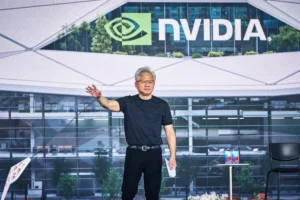
The "spy scandal" involving industry leadership has added a layer of unpredictability to the sector. As the Trump administration tightens export controls, Chinese firms are finding it increasingly difficult to access the advanced hardware required for the next generation of generative AI. For a nation attempting to leapfrog into a global leadership position in artificial intelligence, this technological isolation is a compounding factor that exacerbates the economic downturn.
Implications for the Future of Chinese Markets
The core conflict remains: China possesses the engineers, the industrial capacity, and the state-directed ambition to dominate the AI landscape, but it lacks the trust-based financial architecture required to sustain such an expensive endeavor. If the domestic market remains perceived as a volatile, state-managed casino, the transition from a property-led economy to an AI-led economy will likely remain an elusive objective.
Yardeni Research’s assessment is stark: if Beijing cannot foster a market environment that rewards innovation rather than political compliance, it risks folding its AI sector into the bloated SOE system. This would not only cement the stagnation of the private sector but would also signal the end of the market-led growth model that President Xi once envisioned. As 2024 draws to a close, the performance of the STAR 50 and the broader Chinese indices will serve as the definitive barometer for whether China can successfully navigate its most significant economic transition in half a century, or if it will be forced to retreat into an era of diminished expectations and rigid state control.
The stakes go beyond mere balance sheets; they involve the technological prestige and long-term economic legitimacy of the state. For now, the Chinese stock market continues to reflect a nation at a crossroads, balancing the desire for modern innovation against the weight of a broken property model and the limitations of an increasingly isolated technological ecosystem.